


Understanding 48V 100Ah to kWh for Sale: Your Guide to Smarter Energy Storage
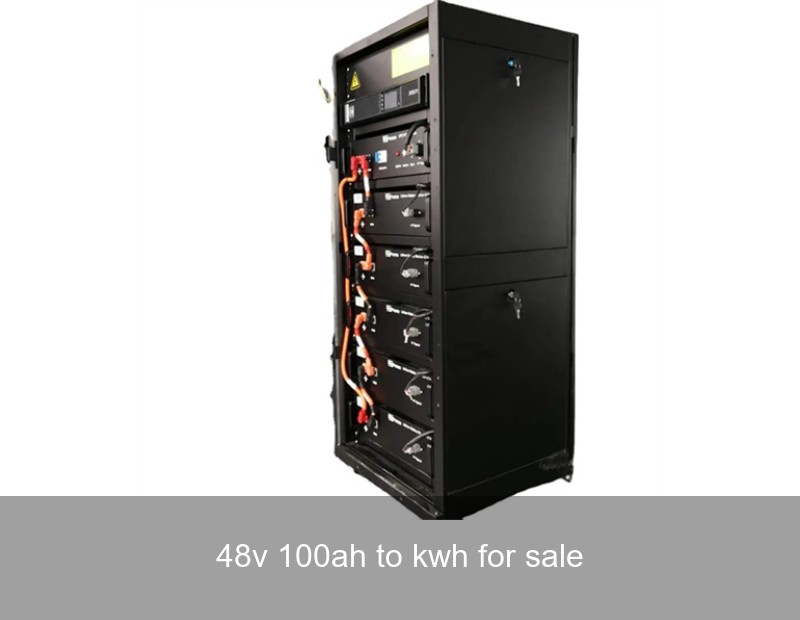
If you're exploring energy storage for your home, business, or off-grid project, you've likely come across listings for "48V 100Ah batteries for sale." But what does this common specification truly mean for your power needs? More importantly, how many kilowatt-hours (kWh) of usable energy does it actually provide? This isn't just technical jargon—it's the key to sizing a system that can keep your lights on, your business running, or your renewable energy flowing. As a global leader in advanced energy storage since 2005, Highjoule is here to demystify these terms and show you how modern systems turn these basic numbers into reliable, intelligent power.
Table of Contents
- From Volts and Amp-Hours to Kilowatt-Hours: The Essential Math
- Why "48V 100Ah for Sale" is Just the Starting Point
- Real-World Power: A Case Study from a California Winery
- Beyond the Battery: The Highjoule Intelligent System Advantage
- Choosing the Right Storage Solution for Your Needs
From Volts and Amp-Hours to Kilowatt-Hours: The Essential Math
Let's break down the basic calculation first. The energy capacity of a battery in kilowatt-hours (kWh) is found by multiplying its voltage (V) by its amp-hour capacity (Ah) and then dividing by 1000.
Formula: (Volts x Amp-hours) / 1000 = Kilowatt-hours
So, for a standard 48V 100Ah battery:
(48V x 100Ah) / 1000 = 4.8 kWh
This 4.8 kWh figure represents the theoretical total electrochemical energy stored. However—and this is a critical "however"—you cannot use all of it. Just as you wouldn't drive your car until the fuel tank is completely bone-dry, draining a battery to zero damages it. This is where Depth of Discharge (DoD) comes in. Most lithium-ion batteries, like the LiFePO4 chemistry Highjoule employs, have a recommended DoD of 80-95%. This means for a 4.8 kWh battery, your usable energy is typically around 3.8 to 4.5 kWh.

Furthermore, system efficiency matters. The inverter and conversion processes lose about 5-10% of the energy. So, from that original 4.8 kWh, you might reliably access 3.5 to 4.3 kWh to power your appliances. This gap between theoretical and usable energy is why understanding the complete system, not just the bare battery specs, is paramount.
Why "48V 100Ah for Sale" is Just the Starting Point
Searching for "48v 100ah to kWh for sale" often leads to standalone battery modules. While these are core components, they are just one piece of a functional energy ecosystem. Think of it like buying a powerful engine versus buying a complete, drivable car. The engine is vital, but you need a chassis, transmission, and controls to use it.
A reliable and safe energy storage system requires:
- A Battery Management System (BMS): The brain of the operation. It protects the cells from overcharge, deep discharge, and overheating, ensuring safety and longevity.
- An Inverter/Charger: Converts the battery's DC power to the AC power your home uses, and manages grid or solar charging.
- Thermal Management: Systems to keep the battery at an optimal temperature, crucial for performance and lifespan.
- System Integration & Smart Software: The intelligence that decides when to charge from solar, discharge to power your home, or export to the grid.
This is where Highjoule's integrated approach sets a new standard. We don't just sell battery cells; we engineer complete Highjoule PowerStack solutions. Our systems bundle high-density LiFePO4 battery modules with a sophisticated, integrated BMS and are designed to seamlessly connect with compatible inverters. This ensures you get every possible kilowatt-hour of usable energy safely and efficiently, year after year.
Real-World Power: A Case Study from a California Winery
Let's move from theory to practice. Consider a medium-sized winery in Sonoma County, California, facing frequent utility voltage fluctuations and high demand charges. Their goal was to ensure critical cooling systems remained operational and shave peak energy costs.
The Challenge: Provide backup power for 15 kW of critical refrigeration load for 4 hours and reduce peak grid demand.
The Math & Solution: 15 kW for 4 hours requires 60 kWh of usable energy. Accounting for system efficiency and a 90% DoD, they needed a total battery capacity of roughly 70 kWh. They could have purchased fourteen individual 48V 100Ah (4.8 kWh) modules to get 67.2 kWh of raw capacity. However, they opted for a Highjoule Commercial PowerStack system configured with scalable 10 kWh cabinet units.
The Outcome: By installing a 70 kWh Highjoule system, the winery achieved:
- Guaranteed backup for critical cooling, preventing spoilage.
- A 22% reduction in monthly demand charges by discharging the battery during utility peak periods.
- Remote monitoring and control via Highjoule's EnergyOS platform, allowing them to optimize for time-of-use rates.
The project paid for itself in under 5 years through savings alone. This case illustrates why the right system, with intelligent management, delivers value far beyond the simple "kWh for sale" equation. You can read more about the importance of system integration in commercial storage from the National Renewable Energy Laboratory (NREL).
Beyond the Battery: The Highjoule Intelligent System Advantage
At Highjoule, we believe energy storage should be smart, resilient, and sustainable. Our products, designed for residential, commercial, and microgrid applications, are built on this principle.
For homeowners, our Highjoule HomePower series offers plug-and-play systems that integrate with solar arrays. Imagine your 4.8 kWh module isn't just a passive store; it's an active asset. Our software can automatically run it on a schedule to avoid expensive peak electricity rates, a common concern in markets like Germany and the UK, or provide seamless backup during an outage.
For larger-scale needs, our PowerStack Commercial units are the building blocks for projects like the California winery. They are scalable, containerized, and feature industry-leading cycle life (over 6000 cycles at 80% DoD), which translates to a longer-lasting investment. We provide full lifecycle support, from design and commissioning to ongoing performance optimization.

The future of energy is adaptive. Our systems are designed to participate in Virtual Power Plants (VPPs), where aggregated home batteries provide grid stability services. This isn't science fiction; it's happening now in places like Texas and Australia, and it represents a potential revenue stream for system owners. The U.S. Department of Energy outlines the grid benefits of such distributed storage.
Choosing the Right Storage Solution for Your Needs
So, when you see "48V 100Ah to kWh for sale," use it as a starting point for a deeper conversation. Ask these questions:
| Consideration | Simple Battery Module | Integrated System (e.g., Highjoule) |
|---|---|---|
| Usable Energy | ~3.5-4.3 kWh (after DoD & losses) | Guaranteed usable kWh with efficiency factored into design |
| Safety & Longevity | Depends on external BMS and installation | Built-in multi-layer BMS, thermal controls, and safety certifications |
| Ease of Integration | Requires sourcing compatible inverters, wiring, and engineering | Pre-engineered, scalable, and designed for seamless integration |
| Smart Management | Limited or add-on | Included energy management software for optimization |
| Total Cost of Ownership | Lower upfront, potentially higher long-term due to mismatched components or shorter life | Optimized for performance and cycle life, maximizing ROI over decades |
Your energy needs are unique. Whether you're a homeowner looking for energy independence, a factory manager aiming to cut costs, or a community developing a microgrid, the solution must be tailored. Highjoule's team of experts works with you to model your load profile, analyze your energy goals, and design a system that delivers the right amount of usable power, reliability, and intelligence.
Ready to move beyond just kilowatt-hours and explore what a truly intelligent energy storage partnership can achieve for you? What's the first load you would secure if the grid went down tonight?
 Inquiry
 Online Chat