


Unlocking Value: Is a Cworth 200Ah Lithium Battery the Right Choice for Your Energy Needs?
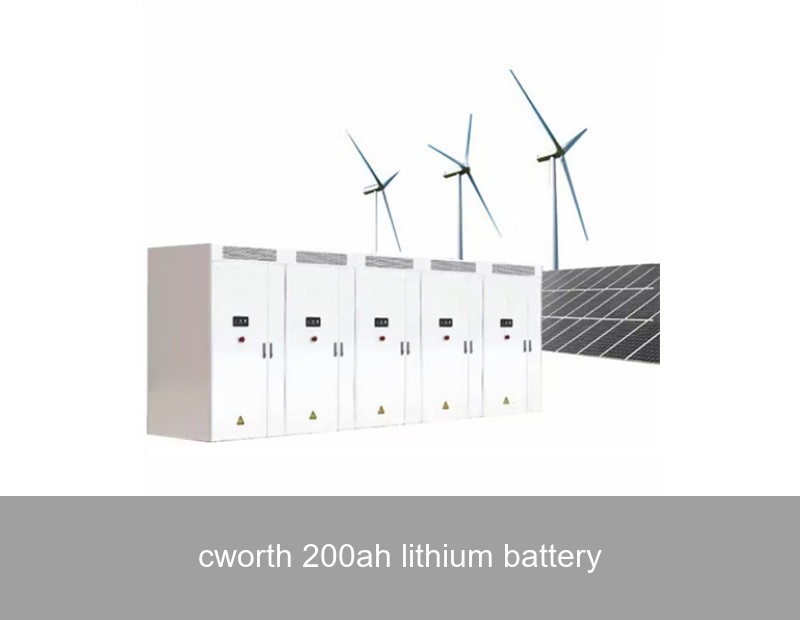
If you're researching energy storage, you've likely encountered the term "Cworth 200Ah lithium battery." It sounds like a specific product, but it often represents a category—a high-capacity, deep-cycle lithium battery promising substantial power for off-grid cabins, RVs, solar setups, or backup systems. But what does 200Ah truly mean for you, and is it the most cost-effective and reliable solution? As your friendly neighborhood energy storage experts at Highjoule, let's demystify the specs and explore what genuine value looks like in modern battery systems.
The "Ah" Obsession: More Than Just a Number
Amp-hours (Ah) measure capacity, like the size of a fuel tank. A 200Ah battery can, in theory, deliver 200 amps for one hour, or 10 amps for 20 hours. But here’s the first critical insight: with lithium batteries, especially LiFePO4 (Lithium Iron Phosphate), you can use almost all of that capacity. Unlike lead-acid batteries which degrade if discharged beyond 50%, a quality LiFePO4 battery can safely deliver 95%+ of its rated capacity. So, a 200Ah lithium battery effectively gives you over 200Ah of usable energy, while a lead-acid equivalent might only give you 100Ah. That instantly doubles its practical value.
Lithium vs. Legacy: The Core Technology Shift
Why has lithium, particularly LiFePO4, become the standard for advanced storage? The data is compelling:
| Feature | Lead-Acid Battery | LiFePO4 Battery (e.g., Highjoule Core) |
|---|---|---|
| Cycle Life (to 80% capacity) | 300 - 500 cycles | 6,000+ cycles |
| Depth of Discharge (DoD) | ~50% recommended | ~95% usable |
| Weight for 10kWh capacity | ~250-300 kg | ~100-120 kg |
| Charge Efficiency | ~70-85% | >98% |
This isn't just incremental improvement; it's a revolution. The longevity alone means the levelized cost of storage—the total cost over the battery's lifetime—is often lower for lithium, even with a higher upfront price. At Highjoule, our ResiCore and CommCore battery systems are built on this robust LiFePO4 chemistry, engineered not just as standalone cells but as intelligent, integrated systems with built-in Battery Management Systems (BMS) for safety and longevity.
Real-World Math: What Can 200Ah *Actually* Power?
Let's move from theory to practice. A 200Ah battery at 12V stores about 2.4 kWh of energy (200Ah * 12V = 2400Wh). Here’s a realistic daily load scenario for a small off-grid cabin or a critical backup circuit:
- LED Lights (20W for 5 hours): 100Wh
- Refrigerator (efficient model, 50W running 8 hours): 400Wh
- Laptop & Phone Charging: 150Wh
- Water Pump (300W for 30 mins): 150Wh
- Microwave (800W for 15 mins): 200Wh
Total Daily Use: ~1,000Wh (1 kWh). This means a single 200Ah battery could, in this setup, provide power for over two days without sun or grid charging. For larger needs—like a family home or a commercial site—multiple batteries are used in parallel. This is where modular systems shine. Highjoule's architecture allows you to start with a core unit and seamlessly expand, a far cry from dealing with individual "Cworth" cells.

Image: A modular home battery system, similar to Highjoule's ResiCore line, allows for clean, scalable energy storage. Source: Unsplash
Case Study: From Theory to Field - A Bavarian Farm's Transformation
Let's look at a real project from our European operations. A dairy farm in Bavaria, Germany, faced unreliable grid power and wanted to maximize their 30kW rooftop solar array. Their goal: energy independence for critical cooling and milking equipment.
The Challenge: They needed reliable overnight power for refrigeration (15kWh daily) and surge capacity for pumps. Initial quotes for a lead-acid bank required a large, ventilated room and projected replacement in 5 years.
The Highjoule Solution: We installed a modular Highjoule IndusCore system with an initial capacity of 40kWh (scalable to 80kWh), using LiFePO4 technology. The system's high charge efficiency (>98%) meant they captured more of their solar yield. The integrated smart BMS provided precise monitoring and safety.
The Data-Driven Outcome (18 months post-installation):
- Grid Independence: Achieved 92% self-consumption of solar power, up from 35%.
- Cost Savings: Eliminated peak-demand charges and reduced energy bills by €4,200 annually.
- Reliability: Zero downtime for critical equipment, even during two prolonged grid outages.
- Space & Maintenance: System occupied 60% less space than the lead-acid alternative and requires no maintenance.
This case moves beyond the "200Ah" spec to the outcome: operational resilience and financial return. The farmer isn't talking about amp-hours; he's talking about a secure, profitable operation.
Beyond the Cell: The System Makes the Difference
Focusing solely on a "Cworth 200Ah" cell is like buying a powerful engine without the car's transmission, cooling, and electronics. The true performance and safety lie in the complete system:
- Battery Management System (BMS): The brain. It ensures cell balancing, protects from over/under-voltage, overheating, and short circuits. Highjoule's proprietary BMS includes active balancing for maximum cell life.
- Thermal Management: Lithium batteries perform best within a temperature range. Our systems feature passive and active cooling designs to maintain optimal performance from Scandinavian winters to Southern European summers.
- Integration & Software: A battery must communicate seamlessly with inverters, solar controllers, and the grid. Highjoule systems are designed for universal compatibility and come with our EnergyOS platform for monitoring, control, and optimizing energy flows based on tariffs and consumption patterns.

Image: Centralized monitoring and control is key for commercial systems. Source: Unsplash
Making an Informed Choice for Your Project
So, when you see "Cworth 200Ah lithium battery," think of it as a starting point for a deeper conversation. Ask yourself:
- What is my daily energy consumption in kWh, and what are my peak power demands?
- Do I need a simple drop-in replacement or a future-proof, scalable system?
- How important are long-term warranties (like Highjoule's 10-year warranty), local service, and system intelligence?
For residential applications, our Highjoule ResiCore offers a sleek, quiet, and safe plug-and-play solution. For businesses and microgrids, the IndusCore series provides rugged, scalable power with advanced grid-support functions. We don't just sell batteries; we deliver comprehensive energy resilience.
To dive deeper into the technical advantages of LiFePO4, the U.S. Department of Energy provides excellent resources, and real-world performance data is often published by institutions like the Fraunhofer Institute in Europe.
Ready to Calculate Your True Power Needs?
We've explored the numbers, seen a real-world case, and unpacked the technology. The question now isn't just "Is a 200Ah battery right for me?" but "What integrated energy storage system will deliver the highest reliability and return for my specific home or business over the next decade?" What's the one critical load you absolutely cannot afford to lose power to?
 Inquiry
 Online Chat