


Understanding the 4kV Solar Energy Storage Cabinet Price: A Comprehensive Guide
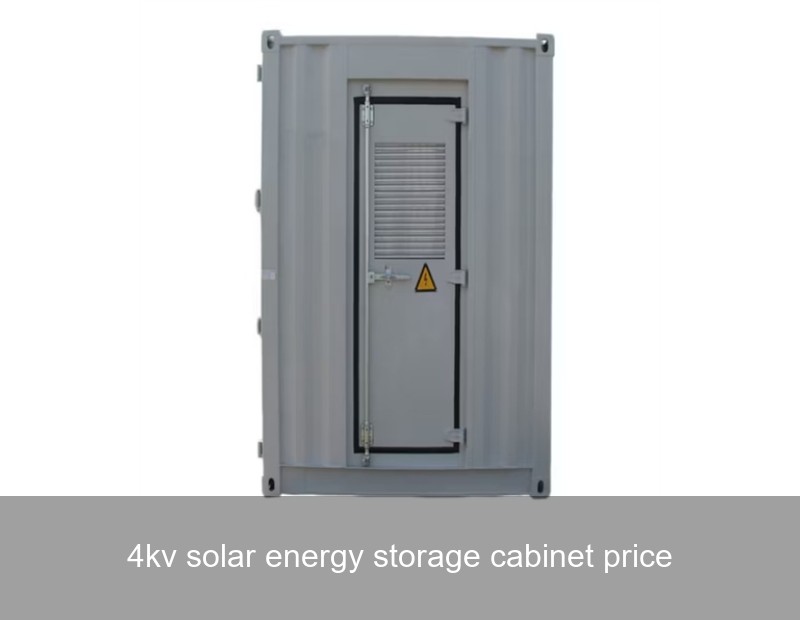
So, you're exploring the world of large-scale solar energy storage, and the term "4kV solar energy storage cabinet" keeps popping up. It's a significant investment, and naturally, one of your first questions is: "What's the price?" If you're a business owner, facility manager, or project developer in Europe or the US, you know that answer is rarely a simple number on a tag. The price of a 4kV cabinet is a gateway to understanding value, system performance, and long-term return on investment. It's not just a piece of equipment; it's the heart of a sophisticated energy resilience strategy. Let's demystify the costs and explore what truly drives the value of these powerful systems.
Table of Contents
What is a 4kV Solar Energy Storage Cabinet?
Let's start with the basics. A 4kV (4000 Volt) solar energy storage cabinet is a containerized, high-voltage battery energy storage system (BESS). Think of it as a massive, intelligent power bank for commercial, industrial, or microgrid applications. The "4kV" refers to its direct current (DC) operating voltage, which is significantly higher than typical residential systems. This high-voltage design is key to its efficiency and scale. By operating at 4000V, these systems reduce electrical current for the same power level, which minimizes energy losses, allows for thinner cables, and improves overall system economics, especially for installations requiring hundreds of kilowatt-hours (kWh) to multiple megawatt-hours (MWh) of storage.
These cabinets are not just batteries in a box. They are integrated solutions housing lithium-ion battery modules (often using Lithium Iron Phosphate or LFP chemistry for safety and longevity), a sophisticated battery management system (BMS), thermal management (cooling/heating), fire suppression, and power conversion systems. They are designed for seamless integration with large solar PV arrays, enabling businesses to store excess solar generation for use during peak price periods, at night, or during grid outages.
Key Factors Influencing 4kV Solar Energy Storage Cabinet Price
Asking for the price of a 4kV cabinet is like asking for the price of a commercial truck—it depends on the engine, capacity, features, and brand. The core price is influenced by several interconnected factors:
- Energy Capacity (kWh): This is the single largest cost driver. A cabinet with 500 kWh of usable storage will cost significantly less than one configured for 1 MWh. Prices are often discussed in terms of cost per kilowatt-hour ($/kWh).
- Power Rating (kW): How much power the system can discharge at once. A cabinet that can deliver 250 kW of power costs more than one rated for 150 kW, as it requires more robust inverters and electrical components.
- Battery Chemistry: While LFP is the industry standard for such applications due to its safety and cycle life, variations in cell quality, brand, and manufacturing origin can affect price and performance.
- Level of Integration: A basic "battery rack" price differs vastly from a fully integrated, plug-and-play cabinet that includes climate control, fire safety, monitoring software, and grid-forming capabilities.
- Certifications & Compliance: Meeting stringent standards like UL 9540 in the US or IEC 62619 in Europe adds to engineering and testing costs but is non-negotiable for safe, insurable, and permit-able installations.
- Scalability & Modularity: Systems designed for easy future expansion may have a slightly higher initial cost but provide tremendous long-term value.
As a ballpark, for a fully integrated, high-quality 4kV system from a reputable provider, you can expect the cabinet hardware (excluding installation and balance of system) to range from $250 to $450 per kWh, depending on the above factors. This means a 500 kWh cabinet could range from $125,000 to $225,000 for the core unit.
Beyond the Cabinet: Total System Cost Breakdown
The cabinet price is just one piece of the puzzle. The total installed cost (TIC) is what you need to budget for. Here’s a typical breakdown:
| Cost Component | Approximate Share of TIC | Description |
|---|---|---|
| Storage Cabinet & Power Conversion | 50-60% | The core 4kV cabinet and its integrated or separate inverter/transformer. |
| Balance of System (BOS) | 15-25% | Switchgear, transformers (if not included), cabling, conduits, and mounting pads. |
| Design, Engineering & Permitting | 10-15% | Site assessment, electrical design, utility interconnection studies, and permit acquisition. |
| Installation & Commissioning | 10-20% | Labor, crane operation, electrical work, and system activation. |
This is why working with a full-service provider like Highjoule is critical. We manage this entire process, delivering a turnkey solution with a predictable total cost. Our HPS Series 4kV Energy Storage Cabinets are engineered to reduce BOS and installation costs through pre-integration and modular design, ensuring your project's financials remain clear and controlled from day one.
Real-World Impact: A German Manufacturing Case Study
Let's move from theory to practice. Consider a mid-sized automotive parts manufacturer in Bavaria, Germany. They had a 1.2 MW rooftop solar array but were still paying high electricity costs during evening shifts and had no backup power.
Phenomenon: High grid consumption during peak hours and solar curtailment on weekends.
Data & Solution: Highjoule deployed a scalable system centered around two of our 4kV HPS cabinets, with a total capacity of 800 kWh and a power output of 400 kW. The system was configured for peak shaving and self-consumption optimization.
- Grid Peak Demand Reduction: 35%, leading to significant capacity charge savings.
- Solar Self-Consumption Rate: Increased from 55% to over 90%.
- Annual Electricity Bill Savings: €68,000.
- ROI Period: Projected under 6 years, factoring in German federal funding (Bundesförderung) for stationary storage systems.
Insight: For this manufacturer, the "price" of the 4kV cabinets transformed from a capital expense into a strategic investment with a clear, quantifiable payback. The value was not in the kWh stored, but in the euros saved and operational resilience gained.

Image: Industrial solar installations, like this one, are prime candidates for 4kV storage solutions. (Photo by American Public Power Association on Unsplash)
The Highjoule Approach: Engineering Value Beyond Price
At Highjoule, with nearly two decades of experience since 2005, we believe the discussion should start with value, not just price. Our 4kV HPS Series cabinets are built with this philosophy.
- Intelligence by Design: Our proprietary Energy Management System (EMS) is the brain of the operation. It doesn't just store and release energy; it forecasts energy prices (leveraging time-of-use rates in California or dynamic tariffs in Europe), predicts solar production, and automates dispatch to maximize savings. This software intelligence often delivers more financial return than the hardware itself.
- Safety as a Foundation: Our cabinets are built with multi-layered protection—from cell-level fusing and active BMS monitoring to gas-based fire suppression and 24/7 remote surveillance. This ensures compliance and, more importantly, peace of mind.
- Grid-Forming Capability: A premium feature that sets systems apart. In the event of a grid outage, our systems can "island" critical loads and restart without the grid, providing true backup power—a key differentiator from basic grid-tied systems.
We provide more than a cabinet; we provide a long-term partnership, including performance monitoring, warranty support, and optional service plans to ensure your system delivers optimal returns for its entire 15+ year lifespan.
Complementary Highjoule Services
To ensure your investment succeeds, our service portfolio includes:
- Feasibility & Financial Modeling: We analyze your load profile, solar data, and utility bills to model the optimal system size and project precise savings and ROI.
- Turnkey Project Delivery: From site design and utility interconnection management to installation and commissioning, we handle it all.
- O&M and Remote Monitoring: Proactive system health checks and performance optimization through our secure cloud platform.

Image: Advanced monitoring is crucial for maximizing storage system value. (Photo by ThisisEngineering on Unsplash)
Making the Right Investment Decision
When evaluating a 4kV solar energy storage cabinet price, shift the conversation. Instead of "What does it cost?", ask:
- What is my total cost of ownership over 15 years?
- How will this system specifically reduce my operational expenses (OpEx)?
- What is the value of avoiding a 4-hour production halt during a grid outage?
- How does the provider's technology and software ensure I adapt to future energy market changes?
We encourage you to look at credible, third-party sources to understand the broader market and technology trends. For instance, the National Renewable Energy Laboratory (NREL) regularly publishes cost benchmarks for storage systems, and the Energy-Storage.news site provides valuable industry insights.
Given your specific site, energy goals, and local incentives, what would be the first operational challenge you'd want a 4kV storage system to solve for your business?
 Inquiry
 Online Chat