


Understanding the True Cost of a 500 Watts Solar Panel
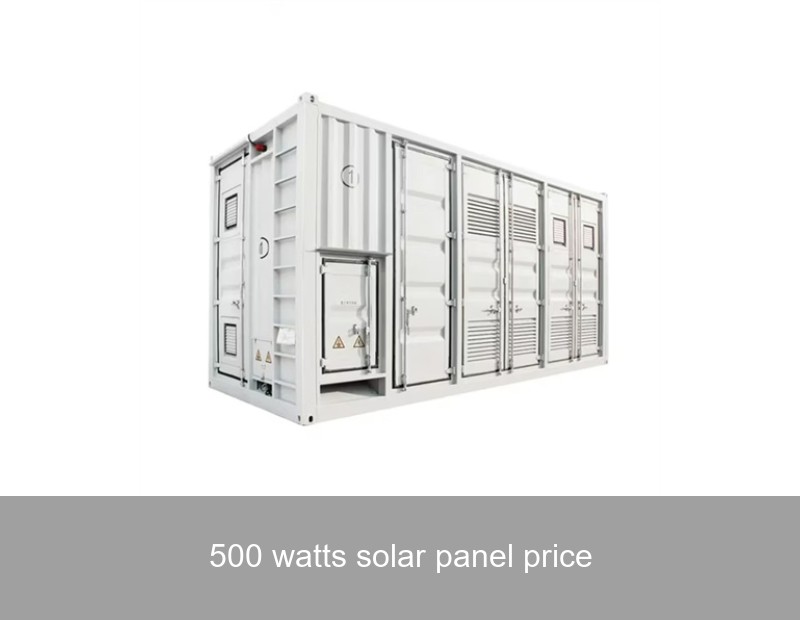
If you're searching for the "500 watts solar panel price," you're already on a smart path. You're thinking in terms of power output, not just size, which is the right way to evaluate solar. But here's the crucial insight: the price tag on the panel itself is just the beginning of the story. The true value—and the real cost—of solar energy lies in the complete system's performance, durability, and intelligence over its 25+ year lifespan.
The Price Puzzle: More Than Just a Sticker
Let's address the initial question directly. As of 2024, a standalone, high-efficiency 500-watt monocrystalline solar panel from a reputable manufacturer can have a wholesale price ranging from $250 to $400, depending on brand, technology (like PERC or N-type), and purchase volume. You might see online listings that seem lower, but buyer beware. However, and this is a big however, you cannot simply buy a panel and plug it in. This module price is a single piece of a much larger energy puzzle.
The phenomenon we see is a focus on the commodity component, while the system's brains and long-term value are overlooked. This often leads to underperformance and "sticker shock" when the full system quote arrives.
The Components You're Actually Paying For
A functional, safe, and grid-compliant solar system requires a symphony of components working together:
- The Solar Panels (Modules): The 500W generators.
- Inverters: The "brains" that convert DC solar power to usable AC power for your home.
- Racking & Mounting: The engineered structure that secures panels to your roof for decades.
- Electrical Hardware: Wiring, combiners, disconnects, and safety equipment.
- Monitoring Software: The dashboard for your energy production.
- Permits, Design, & Installation: Professional labor and expertise to ensure it's done right.

Image source: Unsplash - Professional installation is key to long-term performance.
The Real Cost Breakdown of a 500W Solar System
To understand value, we need to look at the total installed cost per watt, the industry's standard metric. For a premium residential system in the U.S. or Europe, the average cost is between $2.80 and $3.50 per watt before incentives.
| System Component | Approx. % of Total Cost | Why It Matters |
|---|---|---|
| Solar Panels (e.g., 10 x 500W = 5kW system) | 20-25% | Quality dictates efficiency and degradation rate. |
| Inverter(s) & Power Electronics | 15-20% | The heart of system efficiency and reliability. |
| Racking, Mounting, & Hardware | 10-15% | Ensures structural integrity and weather resistance. |
| Installation Labor & Permits | 25-30% | Expertise guarantees safety, code compliance, and optimal yield. |
| Sales, Design, & Overhead | 15-20% | Supports proper system engineering and customer service. |
So, a 5kW system (using ten 500W panels) at $3.00/watt would have a gross cost of ~$15,000. After applying the 30% federal tax credit in the U.S. (or similar incentives in parts of Europe), the net investment drops significantly. The key takeaway? The panel cost is a fraction. The real value is created by the integration and intelligence of the entire system.
A Real-World Case: From Bill Shock to Energy Independence
Let's look at a concrete example from Germany, a leader in residential solar adoption. The Müller family in Bavaria had an annual electricity consumption of 4,800 kWh and faced rising energy prices. They were quoted a "cheap" system based on low-cost panels with a basic inverter.
Instead, they opted for a premium solution featuring high-efficiency 500W bifacial panels and an advanced hybrid inverter system that included battery readiness. Their 6kW system (twelve 500W panels) had a higher upfront cost—€18,000 installed. However:
- Data Point 1: The system's superior performance ratio, due to better components and design, yields 6,900 kWh annually, exceeding standard estimates by 15%.
- Data Point 2: With Germany's feed-in tariffs and self-consumption savings, their payback period is calculated at 8 years, not the 10+ years of the cheaper alternative.
- Data Point 3: The system's design includes a "DC-coupled" architecture, making the future addition of a battery extremely efficient and cost-effective, future-proofing their investment.
This case underscores that the Levelized Cost of Energy (LCOE)—the total lifetime cost divided by total energy produced—is the ultimate metric. A slightly higher initial investment in quality components dramatically lowers LCOE, maximizing return for decades. You can explore LCOE models from the National Renewable Energy Laboratory (NREL) for deeper analysis.
Thinking Beyond the Panel: The Smart System Advantage
The modern energy landscape demands more than just generation. What happens when the sun sets, or during a grid outage? This is where the conversation evolves from solar panels to a comprehensive energy management system.
An intelligent system doesn't just produce power; it stores it, manages its flow, and optimizes consumption. Think of it this way: a 500W panel is a fantastic water pump. But without a storage tank (a battery) and smart valves to direct water where and when it's needed (an energy manager), much of its potential is wasted.

Image source: Unsplash - A complete home energy system with storage.
The Highjoule Approach: Integrated, Intelligent Energy
This is precisely where Highjoule, as a global leader in advanced energy storage systems, transforms the equation. We don't just sell solar panels; we provide integrated, smart power solutions. For a homeowner considering high-output 500W panels, pairing them with a Highjoule system unlocks the full potential of every watt generated.
Our HES (Home Energy System) series is designed around this principle. It seamlessly integrates with high-power solar arrays, featuring:
- High-Density Battery Storage: Store your excess solar energy for use at night or during peak rate periods, increasing self-consumption from ~30% to 70% or more.
- AI-Powered Energy Manager: Our system learns your consumption patterns and automatically optimizes energy flow between solar, battery, grid, and home appliances to maximize savings and comfort.
- Grid Services & Resilience: In regions with time-of-use rates or unreliable grids, the system can provide backup power and participate in virtual power plants, creating potential revenue streams. Learn how grid interaction works from the U.S. Department of Energy.
For commercial and industrial clients, our CES (Commercial Energy Storage) solutions scale this intelligence, managing demand charges and providing critical backup power. By focusing on the system's intelligence, we ensure that the investment in premium 500W panels pays the highest possible dividend.
Why the Inverter and Battery Chemistry Matter
When you choose Highjoule, you're investing in top-tier lithium iron phosphate (LFP) battery chemistry, renowned for its safety, longevity (over 10,000 cycles), and stability. Coupled with our advanced hybrid inverters, the overall system efficiency remains high, ensuring you get the most out of every sunbeam that hits your 500W panels.
Is Your Roof Ready for 500 Watts of Power?
So, the next time you search for "500 watts solar panel price," reframe the question. Ask instead: "What is the cost of achieving true energy independence and maximum long-term savings for my home or business?" The answer lies not in a commodity price list, but in a personalized plan that combines high-performance generation with intelligent storage and management.
What's the single biggest energy challenge you're hoping to solve with solar—is it reducing a volatile monthly bill, achieving resilience against outages, or simply taking a definitive step toward a sustainable lifestyle? Your goal should define the system, not just the panel.
 Inquiry
 Online Chat