


Decoding the 510 Watt Solar Panel Price: A Smart Buyer's Guide for 2024
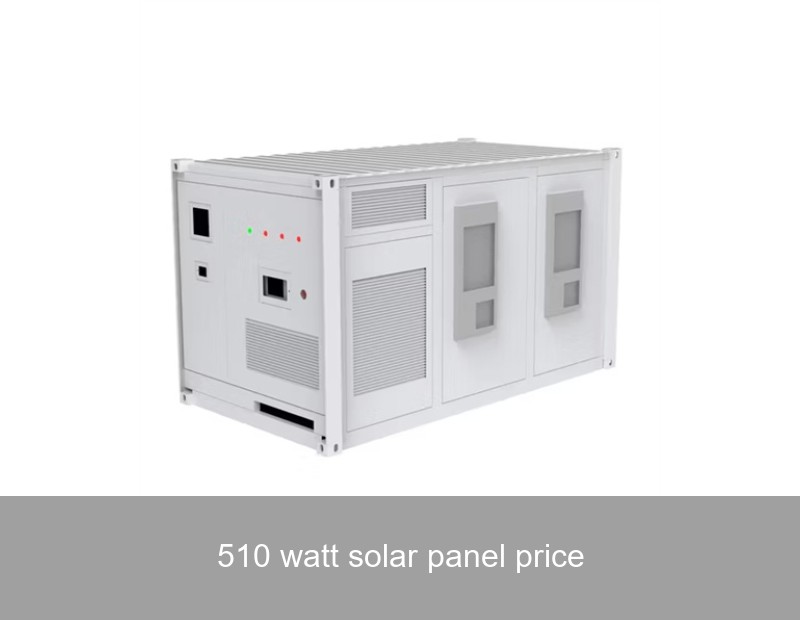
So, you're looking at a 510 watt solar panel price and wondering, "Is this a good deal?" It's a smart question. In today's market, high-efficiency panels like the 510W class are the gold standard for residential and commercial installations, promising more power from your precious roof space. But the sticker price you see for the panel itself is just the tip of the iceberg. The true value—and the ultimate return on your investment—lies in understanding the total system cost, performance over decades, and the intelligence of the energy ecosystem you build around it. Let's peel back the layers.
The Real Cost: A Price Breakdown of a 510W Solar System
Focusing solely on the per-panel cost can be misleading. As of mid-2024, a premium 510-watt monocrystalline panel might range from $250 to $350 per panel, but that's a single component. The real investment is in a complete, functioning power plant for your property.
A more holistic view includes:
- Hardware & Components: Solar panels, inverters (the critical brain that converts DC to AC), racking/mounting systems, and crucially—a battery storage system.
- Soft Costs: Permitting, design, engineering, and installation labor. These can vary significantly between the US and Europe.
- Long-Term Performance: The panel's degradation rate (how much output it loses per year), warranty terms, and its real-world performance in your local climate.
Think of it this way: buying a 510W panel without planning for an inverter and storage is like buying a high-performance engine without a transmission or fuel tank. You need the complete system to go anywhere.
Why System Balance is Everything
A 510W panel produces a high current. Pairing it with an undersized or incompatible inverter can clip its power, wasting your investment. Furthermore, without storage, excess solar energy produced midday is often exported to the grid at a low rate, only for you to buy it back at night at a higher price. This is where the system approach creates true savings.
Maximizing Your Investment: The System Approach
The goal isn't just to buy panels; it's to achieve the highest degree of energy independence and the lowest lifetime cost of electricity. This requires integrating generation, storage, and smart management.
| Focus | Traditional Approach | System-Optimized Approach |
|---|---|---|
| Core Purchase | Solar panels only | Integrated solar + storage + energy management |
| Financial Return | Relies heavily on grid feed-in tariffs | Maximizes self-consumption, reduces grid purchases |
| Grid Reliance | High - system offline during blackouts | Low - backup power capability |
| Diminishes as tariffs fall | Increases as grid prices rise |
From Theory to Reality: A German Case Study
Let's look at real data. A mid-sized manufacturing facility in Bavaria, Germany, faced rising energy costs and sought predictability. In 2022, they installed a 102 kW system using 200 of the latest 510W panels.
- Initial Panel-Only Focus: The quoted 510 watt solar panel price was competitive, but the standalone system would only cover 30% of their daytime load, exporting surplus.
- Integrated Solution: They opted for a full turnkey solution including a 240 kWh battery storage system and advanced energy management software.
- Results (12-month data):
- Self-Consumption Rate: Increased from an estimated 35% to over 80%.
- Grid Energy Cost Reduction: 72% reduction in purchased electricity.
- Backup Power: Critical operations can run for 8+ hours during an outage.
- ROI Timeline: Projected payback period improved by 2 years due to avoided peak-time charges and increased self-use.
This case, documented in part by the Fraunhofer Institute for Solar Energy Systems, highlights that the panel price is merely the entry ticket. The real financial engineering happens at the system level.

Image: A commercial rooftop solar installation. Maximizing the value of high-wattage panels requires integrated system design. Source: Unsplash
The Highjoule Advantage: Smart Systems, Not Just Panels
At Highjoule, with nearly two decades of experience, we view the 510 watt solar panel as a superb component within a smarter whole. Our expertise lies in designing Advanced Energy Storage Systems (ESS) that unlock the full potential of your solar investment.
Our HPS-Stack commercial and industrial battery systems and HPS-Residential solutions are engineered for seamless integration with high-efficiency solar arrays. They don't just store energy; they intelligently manage it based on your consumption patterns, utility rate schedules, and weather forecasts.
- Dynamic Energy Routing: Our AI-driven platform automatically decides the most economical moment to store solar energy, use it directly, or export it, responding in real-time to grid signals.
- Future-Proof Design: Our systems are built with scalability in mind. You can start with a configuration that fits today's 510 watt solar panel price and budget, and easily expand storage capacity as your needs grow.
- Unmatched Reliability: Founded in 2005, our technology is proven across thousands of microgrid, industrial, and residential installations globally, ensuring your system delivers for its entire 25+ year lifespan.
By choosing a provider like Highjoule, you're not buying components—you're investing in a guaranteed energy outcome: resilience, independence, and long-term cost control.
Looking Beyond the Price Tag: Long-Term Value and Resilience
The energy landscape is shifting. According to the U.S. Energy Information Administration (EIA), electricity prices are volatile and generally trending upward. Simultaneously, climate-related grid instability is a growing concern in both Europe and North America.
This changes the calculus. The premium for a fully integrated, storage-enabled system is not just an extra cost; it's an insurance policy and a financial hedge.
- Price Arbitrage: Store cheap solar power, use it during expensive peak periods.
- Resilience: Keep lights on, businesses running, and homes safe during outages—a value that's hard to quantify until you need it.
- Grid Support: In some markets, you can even earn revenue by providing grid services with your storage system.

Image: A modern, wall-mounted home battery storage system, a key component for maximizing solar investment. Source: Unsplash
The Final Question to Ask Yourself
When you evaluate that 510 watt solar panel price, are you looking for a simple commodity, or are you seeking a strategic partner to build a comprehensive, resilient, and intelligent energy solution for the next quarter-century? The choice you make will define your energy costs and security for decades to come.
What is the one critical energy challenge for your home or business that a smarter, storage-backed solar system could solve starting this year?
 Inquiry
 Online Chat