


51.2V 100Ah Lithium Battery Backup Time: What Can You Really Power and For How Long?
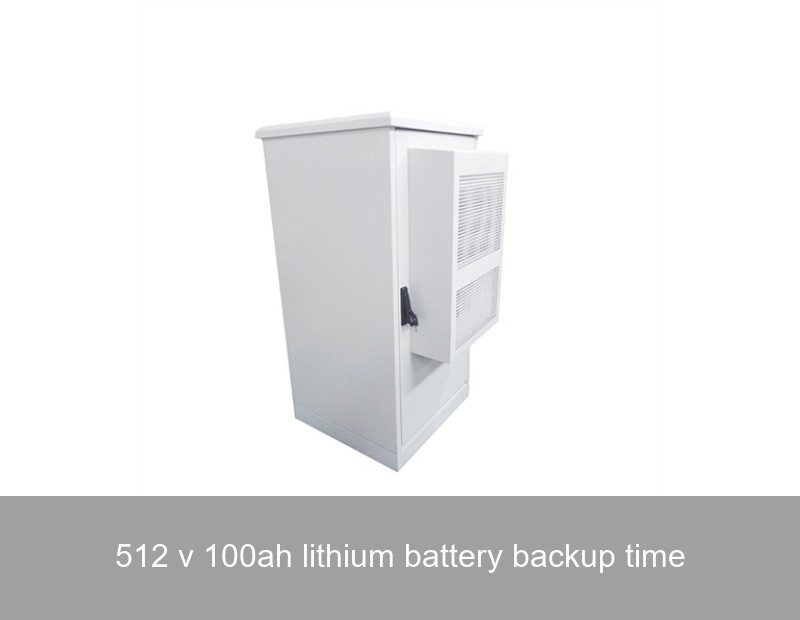
You're considering a lithium battery for your home solar system, off-grid cabin, or critical business backup. You've seen the specs: a 51.2V 100Ah lithium iron phosphate (LiFePO4) battery. The first question that pops into your mind is a practical one: "How long will this 51.2V 100Ah lithium battery backup time last when I need it most?" It's a crucial question, and the answer isn't just a single number. As a leader in advanced energy storage since 2005, Highjoule understands that true energy security comes from knowing exactly what your system can deliver. Let's demystify the backup time calculation and explore what factors turn a theoretical capacity into reliable, real-world power.
Understanding the 51.2V 100Ah Lithium Battery Basics
First, let's break down what "51.2V 100Ah" actually means. Think of it as the battery's potential energy reservoir. Voltage (V) is like the water pressure in a pipe, while Amp-hours (Ah) is the volume of water in the tank. Multiplying them gives you the total energy capacity in Watt-hours (Wh).
- Nominal Voltage: 51.2V is the standard nominal voltage for a 16-cell LiFePO4 battery stack, a common and efficient configuration for residential and commercial energy storage systems.
- Capacity: 100Ah (Amp-hours) indicates the battery can, in theory, deliver 100 amps of current for one hour at its nominal voltage.
The simple math gives us: 51.2V x 100Ah = 5,120 Watt-hours (or 5.12 kWh). This means the battery holds roughly the same energy as running a 1,000-watt space heater for just over 5 hours. But here's the key insight: you will never use 100% of that energy. For battery longevity, especially with high-quality systems like those from Highjoule, a depth of discharge (DoD) of 80-90% is recommended. So, your usable energy is typically around 4.1 to 4.6 kWh.

Image Source: Unsplash - A modern LiFePO4 battery module similar to those used in Highjoule systems.
The Real-World Math: Calculating Your Backup Time
Now, let's get to your specific backup time. The formula is straightforward:
Backup Time (hours) = (Usable Energy in Wh) / (Total Load in Watts)
Let's create a practical table for a typical home scenario using 4.6 kWh of usable energy:
| Appliance/Load | Estimated Power (Watts) | Quantity | Total Power (Watts) | Estimated Backup Time |
|---|---|---|---|---|
| LED Lights | 10 | 10 | 100 | 46 hours |
| Refrigerator (Cycling) | 150 | 1 | 150 | 30.7 hours |
| Wi-Fi & Modem | 20 | 1 | 20 | 230 hours |
| Essential Circuits Subtotal | 270W | ~17 hours | ||
| + Adding a 900W Space Heater | 900 | 1 | 900 | |
| New Total Load | 1,170W | ~3.9 hours |
See the dramatic difference? Your 51.2V 100Ah lithium battery backup time is entirely dependent on what you power. Prioritizing essential, low-wattage loads can provide security for a full night or even a day. High-wattage appliances like heaters, air conditioners, or stoves will deplete the battery rapidly.
Beyond the Spec Sheet: Key Factors Influencing Runtime
Several technical and environmental factors can influence the actual backup time you experience:
- Battery Efficiency & BMS: No system is 100% efficient. Energy is lost as heat during conversion (DC to AC) and due to internal resistance. A high-quality Battery Management System (BMS), like the one integrated into every Highjoule unit, is crucial. It protects the cells but also consumes a small amount of power. System round-trip efficiency for a good LiFePO4 setup is typically 95-98%.
- Discharge Rate (C-rate): Drawing power at a very high rate (e.g., starting a motor) can reduce the total usable capacity due to voltage sag, a phenomenon explained in resources from the U.S. Department of Energy.
- Temperature: Lithium batteries, particularly LiFePO4, perform best at room temperature (20-25°C / 68-77°F). In a cold garage (0°C / 32°F), you might see a 20-30% reduction in available capacity.
- Battery Age and Health: Over years and thousands of cycles, capacity gradually fades. Highjoule's LiFePO4 batteries are designed for over 6,000 cycles at 80% DoD, ensuring minimal degradation for well over a decade of daily use.
A Real-World Case Study: The Berlin Bakery
Let's look at a concrete example from our European operations. A family-run bakery in Berlin installed a Highjoule commercial energy storage system centered on a 51.2V 300Ah battery bank (three 100Ah units in parallel) paired with a 15kW inverter. Their goal: protect against short grid outages that could ruin proofing dough and disrupt sales.
The Challenge: Power essential refrigeration (2.5kW), the proofing cabinet (1.2kW), POS systems, and lighting (0.8kW) for critical 3-4 hour periods.
The Highjoule Solution: Our system was configured to automatically shed non-essential loads (like exterior signage) during an outage. The total critical load was managed at ~4.5kW.
The Data & Result: With a usable energy pool of approximately 13.8 kWh (from the three batteries), the calculated 51.2V 100Ah lithium battery backup time equivalent for this load was just over 3 hours. In a recorded outage last winter, the system seamlessly took over and maintained operations for 3 hours and 22 minutes until grid power was restored, preventing an estimated €2,800 in lost product and sales. This case highlights how professional design and load management are as important as the battery's raw specs.

Image Source: Unsplash - Example of a commercial bakery with critical cooling and proofing loads.
Highjoule's Smart Solutions: Maximizing Your Energy Security
At Highjoule, we believe your battery's backup time should be predictable and maximized. That's why our products are engineered with intelligence beyond the cells.
- Highjoule H-Stack Modular Series: Our 51.2V 100Ah module is designed for seamless expansion. Start with one for essential circuits, and add more modules as your needs grow. Each module features integrated, high-efficiency thermal management and a precision BMS that communicates with our central inverter for optimal performance.
- Intelligent Energy Management System (EMS): This is the brain of the operation. Our EMS doesn't just react to an outage; it learns your consumption patterns. It can prioritize loads, integrate with solar production forecasts (if you have panels), and even leverage time-of-use electricity rates to save you money daily, all while ensuring your backup capacity is always ready. You can monitor and control everything via a simple smartphone app.
- Professional Design & Support: We don't just sell hardware. Our network of certified installers in Europe and the U.S. conducts a detailed load audit for your property. They help you define your "critical loads panel," ensuring your system is perfectly sized to meet your expected 51.2V 100Ah lithium battery backup time goals, avoiding both under-sizing and costly over-sizing.
Choosing the Right System for Your Needs
So, is a single 51.2V 100Ah battery right for you? Ask yourself these questions:
- What are my essential loads? Make a list with their wattages (often found on a label).
- How long do I need to power them? Is it for short 2-3 hour grid glitches, or do you need overnight coverage?
- Is this for daily solar self-consumption or purely for backup? Daily cycling benefits from the superior cycle life of LiFePO4 technology, a point underscored by research from institutions like the National Renewable Energy Laboratory (NREL).
For a small home office or critical circuit backup, one module may suffice. For whole-home coverage during extended outages, a multi-module Highjoule system is the reliable solution. The beauty of a modular system is that you can start with a foundation and expand your capacity as your needs or budget grow.
Now that you understand the variables behind backup time, what's the first load you would prioritize to secure in your own home or business, and how long would you want it to last?
 Inquiry
 Online Chat