


Understanding the Energy Storage Cabinet Battery in EMI: A Guide for Modern Power Systems
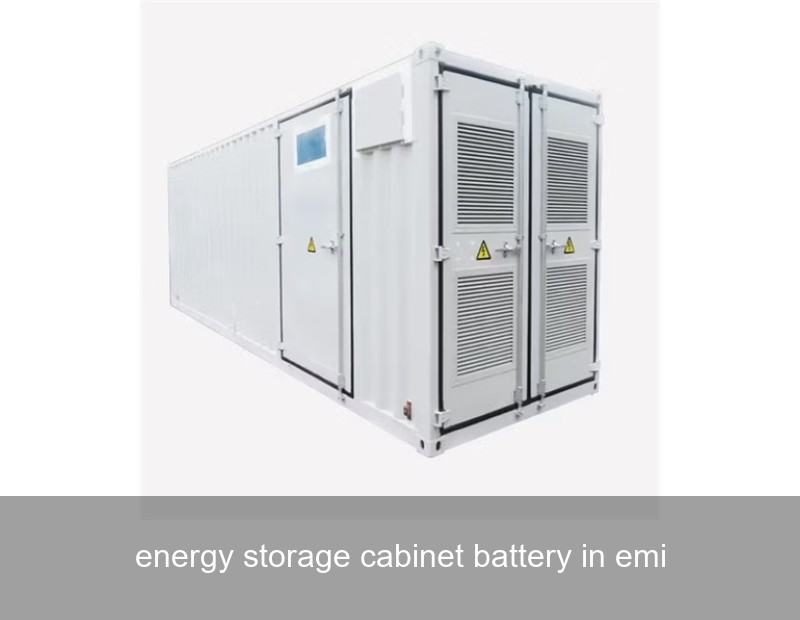
As the world accelerates its transition to renewable energy, a critical but often overlooked challenge emerges in the background: electromagnetic interference, or EMI. For facility managers, energy consultants, and homeowners integrating solar-plus-storage, the performance and safety of an energy storage cabinet battery in EMI-heavy environments is paramount. An energy storage cabinet isn't just a metal box holding batteries; it's a sophisticated shield, the first line of defense ensuring that the sensitive electronics within can operate reliably without disrupting—or being disrupted by—the surrounding electrical ecosystem. This article delves into why EMI management is non-negotiable for modern energy storage and how choosing the right solution safeguards your investment.
Table of Contents
- What is EMI and Why Should You Care?
- The Hidden Risks: How EMI Impacts Battery Storage Systems
- The Shield: Key Design Principles for EMI-Resistant Cabinets
- The Highjoule Approach: Engineering Resilience from the Ground Up
- Case Study: A European Manufacturing Plant's Success
What is EMI and Why Should You Care?
Let's start with the basics. Electromagnetic Interference (EMI) is a disturbance generated by an external source that affects an electrical circuit. It's all around us—from the hum of industrial motors and variable frequency drives (VFDs) to the switching of solar inverters and even everyday Wi-Fi routers. Think of it as "electrical noise." Now, an energy storage cabinet battery in EMI-prone settings, like a factory floor or a site with multiple inverters, must perform a delicate dance. It must contain its own internal electrical noise (to meet regulatory standards) and simultaneously protect its battery management system (BMS) and power conversion systems from external noise that could cause data corruption, erratic behavior, or even system shutdowns.
The Hidden Risks: How EMI Impacts Battery Storage Systems
Ignoring EMI mitigation is like building a state-of-the-art server room without a lock. The consequences are tangible:
- Data Integrity Loss: The BMS relies on precise voltage and temperature readings. EMI can distort these sensor signals, leading to inaccurate state-of-charge calculations, improper cell balancing, and reduced battery life.
- Communication Failures: Most cabinets use internal communication buses (like CAN or RS485). EMI can disrupt these signals, causing the BMS to "lose touch" with modules, potentially triggering safety disconnects.
- Reduced Efficiency: Noise on DC or AC lines can force inverters and converters to work harder, leading to increased heat generation and lower overall round-trip efficiency.
- Safety and Compliance Issues: Excessive EMI emissions can violate strict regional electromagnetic compatibility (EMC) regulations (like FCC in the US or CE/EN standards in Europe), resulting in fines and failed inspections.
A study by the Institute of Electrical and Electronics Engineers (IEEE) highlights that power quality issues, including EMI, account for a significant percentage of unexplained malfunctions in distributed energy systems.

Image: The interior of a modern energy storage cabinet requires careful design to mitigate EMI. (Source: Unsplash, Representative Image)
The Shield: Key Design Principles for EMI-Resistant Cabinets
So, what separates a standard cabinet from an EMI-hardened one? It's a multi-layered approach:
| Design Layer | Purpose | Key Features |
|---|---|---|
| Enclosure & Sealing | Acts as a Faraday cage to block radiated EMI. | Continuous welded seams, EMI gaskets on doors, conductive coatings. |
| Filtering & Grounding | To suppress conducted EMI traveling on power and signal cables. | AC/DC EMI filters, single-point star grounding, shielded cable conduits. |
| Internal Layout & PCB Design | To minimize noise generation and coupling internally. | Separation of high-power and low-power circuits, optimized component placement, use of ferrite chokes. |
It's this holistic engineering that ensures the energy storage cabinet battery in EMI scenarios functions not just as storage, but as a resilient and intelligent grid asset.
The Highjoule Approach: Engineering Resilience from the Ground Up
At Highjoule, with nearly two decades of experience powering commercial, industrial, and residential projects globally, we build EMI resilience into our DNA. Our product philosophy recognizes that a storage system must thrive in real-world conditions, not just in a test lab.
Our H-Cube Commercial & Industrial (C&I) Series of energy storage cabinets is a prime example. Designed for the demanding environments of factories, data centers, and large-scale solar farms, the H-Cube integrates military-grade EMI suppression techniques:
- Unibody Sealed Enclosure: A robust, welded steel structure with proprietary conductive seals ensures >60dB of shielding effectiveness across a wide frequency range.
- Active Harmonic Filtering: Beyond passive filters, our integrated smart inverters actively cancel out harmonic noise, protecting both the battery and the upstream grid connection. This is crucial for maintaining power quality standards like IEEE 519.
- Isolated BMS Compartment: The critical Brain of the system is housed in a separate, internally shielded compartment within the cabinet, ensuring sensor signal purity.
This isn't an add-on; it's foundational. By addressing EMI at the design stage, Highjoule systems deliver predictable performance, extended hardware lifespan, and seamless integration, whether you're in bustling Rotterdam or sunny California.

Image: Highjoule H-Cube energy storage systems deployed in an industrial setting. (Source: Highjoule Product Gallery)
Case Study: Mitigating EMI in a Bavarian Automotive Parts Plant
The Challenge: A major automotive supplier in Bavaria, Germany, installed a 500 kW solar array and sought a 1 MWh battery system for peak shaving and backup power. The initial proposal from another vendor faced repeated faults: the BMS would sporadically disconnect, and the system failed EMC testing due to interference from the plant's massive robotic welding arms and VFD-controlled assembly lines.
The Highjoule Solution: Our team conducted an on-site EMI audit. We specified two of our H-Cube 500 kWh cabinets, with a custom filtering package tuned to the specific harmonic profile of the welding equipment. Crucially, we designed a dedicated, low-impedance grounding scheme separate from the plant's noisy grounding grid.
- EMC Compliance: The system passed CE (EN 61000-6-2, EN 61000-6-4) testing on the first attempt.
- System Uptime: Achieved 99.8% operational availability over the first 12 months, with zero EMI-related faults.
- Financial Impact: The plant realized its expected €120,000 annual savings from peak demand charge reduction, which had been jeopardized by the previous system's unreliability.
This case, documented in part with guidelines from the U.S. Department of Energy's Solar Energy Technologies Office, underscores that a properly engineered energy storage cabinet battery in EMI-complex sites is not a cost but a value driver.
Future-Proofing Your Storage: Questions to Ask Your Provider
The landscape of energy storage is evolving rapidly. As systems become more interactive with the grid (providing services like frequency regulation), their electronic complexity increases, and so does EMI sensitivity. When evaluating a storage solution, your due diligence must include electromagnetic compatibility.
Here are critical questions to pose:
- "Can you provide the specific EMC test reports (e.g., for emissions and immunity) for this cabinet model?"
- "What is your design process for mitigating site-specific EMI, like from large motor loads or radio transmitters?"
- "How is the BMS shielded from internal high-frequency switching noise generated by the inverters within the same cabinet?"
Your choice in an energy storage partner defines the resilience of your power strategy for the next 15-20 years. At Highjoule, we believe that true intelligence in energy storage isn't just about software; it's about hardware that can think clearly in the noisiest of environments. What specific electromagnetic challenges is your facility facing, and how can a thoughtfully engineered storage system turn that challenge into a competitive advantage?
 Inquiry
 Online Chat