


Finding the Right 550W Panel Supplier for Your High-Performance Solar Project
If you're planning a commercial or industrial solar installation today, you're likely hearing a lot about 550-watt solar panels. These high-wattage modules are rapidly becoming the new standard, promising more power from the same rooftop or land area. But with so many manufacturers claiming to be the best 550W panel supplier, how do you choose? More importantly, how do you ensure that these powerful panels are perfectly integrated into a system that maximizes their potential for decades? The answer lies not just in the panel itself, but in the expertise of the system provider that brings it all together.
Table of Contents
The Rise of the 550W Solar Panel
The solar industry's trajectory has been clear: constantly pushing for higher efficiency and power output per panel. We've moved from 300W to 400W, and now 550W and beyond are mainstream for large-scale projects. This leap is primarily driven by advances in cell technology—like half-cut cells, PERC (Passivated Emitter and Rear Cell), and the shift towards larger wafer sizes (M10, G12). The immediate benefit is compelling: you need fewer panels, less mounting hardware, and potentially lower labor costs to achieve the same total system capacity. It's a compelling value proposition on paper.
However, this shift presents new challenges. These larger, more powerful panels operate at higher currents and voltages. This means every other component in your photovoltaic (PV) system—from inverters and combiners to wiring and safety devices—must be carefully selected to handle these increased electrical parameters. A mismatch can lead to significant energy losses, safety risks, and a subpar return on investment. Choosing a 550W panel supplier is just the first step; the real magic happens in the system design.
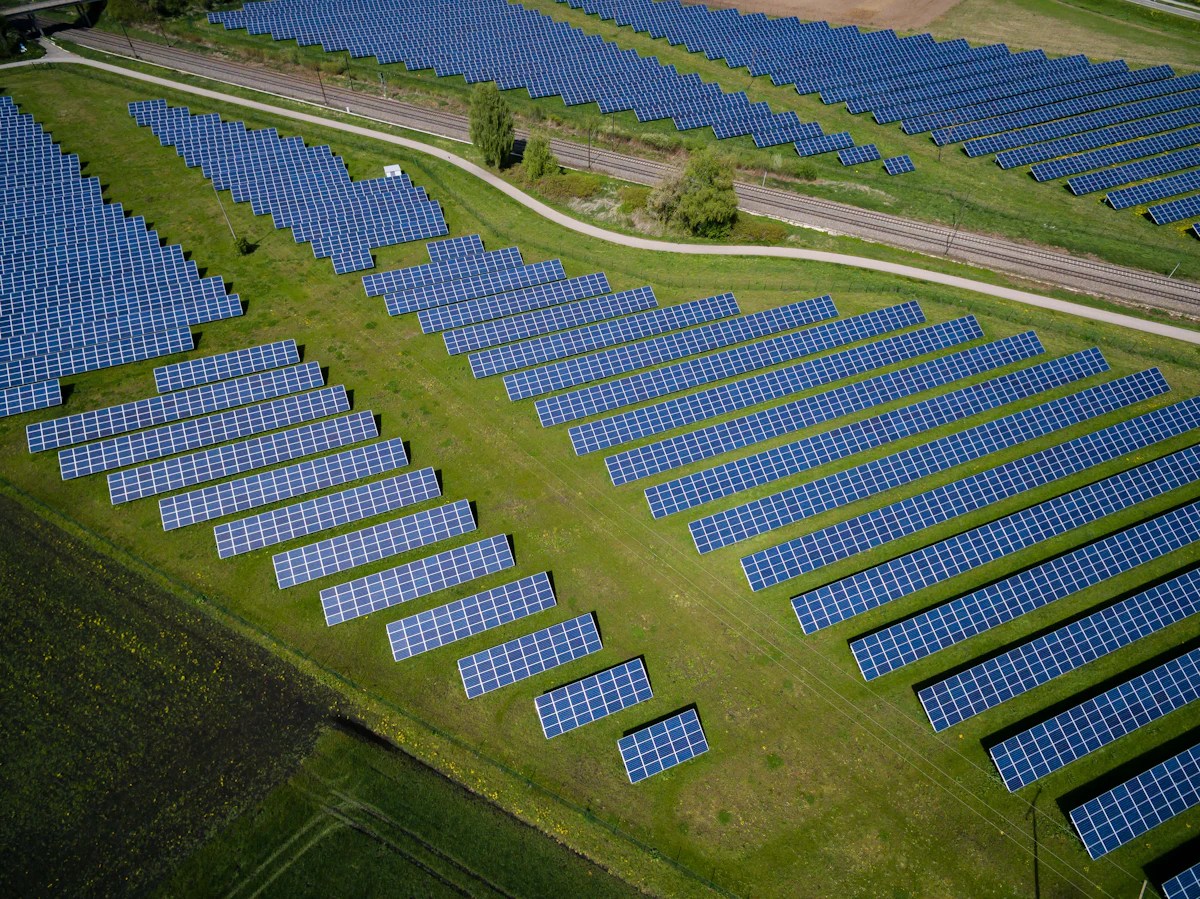
Image Source: Unsplash - Professional solar installation
Beyond Supplier: The System Integration Imperative
Think of a 550W panel as a powerful engine. You wouldn't put a race car engine into a chassis built for a compact car, would you? The same principle applies to solar energy systems. The integration is everything. A high-quality panel from a reputable supplier is crucial, but its performance is ultimately dictated by the balance of system (BOS) components and the intelligence of the overall energy management.
This is where the conversation must evolve from simply "procuring panels" to "designing an optimized power plant." Key considerations include:
- Inverter Compatibility: Not all string inverters are optimized for the high current of modern 550W panels. You need an inverter with a high enough input current rating to avoid "clipping," where excess power is literally wasted because the inverter can't process it.
- String Sizing & Voltage: With higher open-circuit voltages (Voc), you can hit inverter maximum voltage limits with fewer panels in a string, especially in cold climates. Precise calculation is non-negotiable.
- Storage Synergy: The real potential of high-yield solar is unlocked when paired with storage. Excess daytime power from these efficient panels can be stored for use in the evening, maximizing self-consumption and grid independence.
Case Study: Maximizing Yield at a German Logistics Hub
Let's look at a real-world application. A major logistics company near Frankfurt, Germany, aimed to cover 85% of its warehouse energy needs with solar. Their new-build facility had a vast, unobstructed roof—perfect for solar. The initial plan was to use standard 450W panels.
Highjoule's engineering team was engaged to review the design. We proposed a shift to premium 550W bifacial panels. While the panel cost was slightly higher, our integrated system design showed a superior lifetime value:
- System Size: 750 kWp target capacity.
- 450W Design: Required 1,667 panels, demanding more racking, longer installation time. 550W Design (Highjoule): Required only 1,364 panels, reducing balance-of-system costs by an estimated 18%.
But we didn't stop at the panels. We paired them with our Highjoule HPS Series commercial string inverters, specifically chosen for their wide MPPT voltage range and high input current capability, perfectly matching the 550W panel characteristics. Crucially, we integrated a 1.2 MWh Highjoule BESS (Battery Energy Storage System) to capture midday surplus.
The Result? The system not only met the 85% target but consistently achieves over 92% self-sufficiency year-round. The higher per-panel output and optimized inverter pairing reduced the LCOE (Levelized Cost of Energy) by 11% compared to the initial 450W design. The storage system provides critical backup for refrigeration units and allows the facility to participate in grid-balancing services, creating a new revenue stream. This case underscores that the value isn't just in the panel supplier, but in the provider who can holistically design for performance and profitability. For more on system sizing and LCOE, the National Renewable Energy Laboratory (NREL) provides excellent resources.
Key Criteria for Evaluating a 550W Panel Partner
When assessing a 550W panel supplier, technical specifications are your guide. Look beyond the headline wattage.
| Specification | What to Look For | Why It Matters |
|---|---|---|
| Panel Efficiency | 21.5% or higher | Directly impacts power density and space utilization. |
| Temperature Coefficient (Pmax) | -0.30%/°C or better | Indicates better performance on hot days, crucial for consistent summer output. |
| Performance Warranty | 92% output after 25 years | A strong warranty reflects confidence in long-term degradation rates. |
| Product Warranty | 15+ years | Covers material and workmanship defects. |
However, the most critical question is: Can this supplier provide a complete, performance-guaranteed system? A panel is a commodity; a reliable, high-yielding power plant is an asset.
Highjoule's Role: From Panel to Complete Power Solution
Since 2005, Highjoule has evolved from an advanced battery provider to a global leader in integrated smart energy systems. We don't manufacture panels, but we leverage our deep partnerships with top-tier 550W panel suppliers to serve as your single point of accountability. Our value is in the curation and integration.
For a project centered on 550W panels, we provide:
- Expert System Design & Simulation: Using tools like PVsyst, we model your specific site with 550W panels, optimizing string layout, inverter selection, and shading mitigation to extract every possible kilowatt-hour.
- Optimized Balance of System: We supply compatible, high-efficiency inverters (like our HPS Series), smart combiners, and monitoring hardware designed for high-power arrays.
- Seamless Storage Integration: This is our core expertise. Our Highjoule BESS, built with LiFePO4 chemistry for safety and longevity, is natively integrated with our energy management system (EMS). The EMS intelligently decides when to store solar energy, when to discharge it, and when to sell it back to the grid based on your usage patterns and tariff structures.
- Microgrid Capability: For industrial campuses or communities, we can design systems that island from the grid, using solar, storage, and backup generators managed by our advanced controller for ultimate resilience.
We act as the technical conductor, ensuring the panel "engine," the inverter "transmission," and the storage "fuel tank" work in perfect harmony. For independent verification of technical claims, consulting resources like the International Energy Agency (IEA) reports on PV supply chains is advisable.

Image Source: Unsplash - Battery storage system
Future-Proofing Your Investment
The energy landscape is dynamic. Electricity prices fluctuate, grid regulations change, and your own energy needs evolve. A system built only on today's panel specs is vulnerable. A system built on an intelligent, flexible platform is an investment that adapts.
By choosing a partner like Highjoule, you're not just buying a set of 550W panels and hardware. You're acquiring a smart energy ecosystem. Our EMS receives software updates that can respond to new grid service markets or optimize for new tariff structures. The modular nature of our storage allows for capacity expansion as your needs grow. The data from our monitoring platform provides insights for further efficiency gains across your operations.
So, as you evaluate your options for a 550W panel supplier, ask yourself and potential partners this: How will your integrated solution ensure my high-performance panels deliver their promised financial and operational returns for the next 25 years, not just on day one? We invite you to share the key challenges you're facing in your project's planning phase.
 Inquiry
 Online Chat