


Choosing the Right Supplier of BMS for Lithium-Ion Batteries: A Guide for Energy Professionals
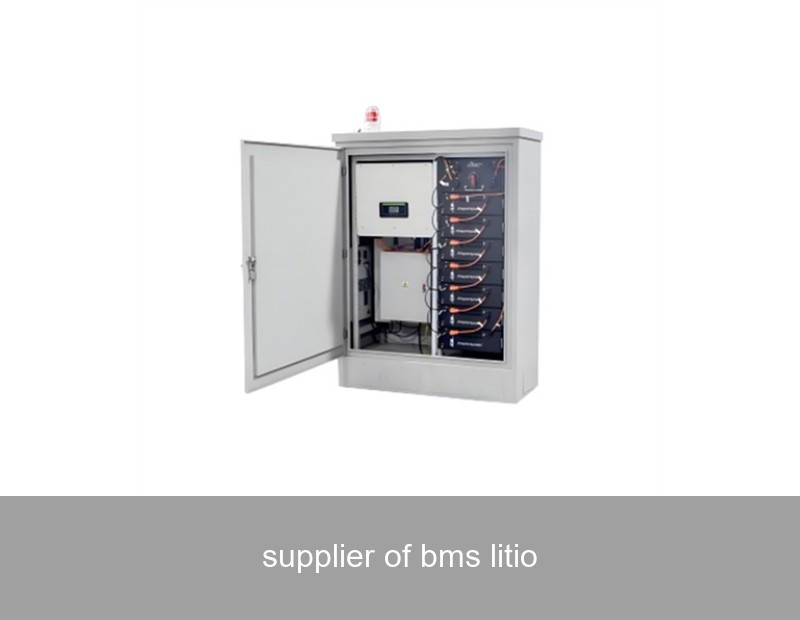
If you're in the market for a lithium-ion battery energy storage system (BESS), you're likely focused on capacity, cycle life, and price. But here's a crucial insight: the true brain and guardian of your system isn't the cell itself—it's the Battery Management System, or BMS. Selecting a reliable supplier of BMS for lithium-ion batteries is arguably the most critical decision for ensuring safety, maximizing performance, and securing your investment's long-term return. This article will guide you through why the BMS is indispensable, what to look for in a supplier, and how this choice directly impacts the success of your commercial, industrial, or residential energy project.
Table of Contents
- The Unsung Hero: What a BMS Actually Does
- Key Criteria for Evaluating a BMS Supplier
- Future-Proofing Your Investment with Advanced BMS
- What's Your Biggest BMS Integration Challenge?
The Unsung Hero: What a BMS Actually Does
Think of a lithium-ion battery pack as a highly trained orchestra. Each cell is a musician. Without a conductor ensuring they all play in harmony, at the right tempo and volume, the result would be chaotic and potentially damaging. The BMS is that conductor. Its core functions are often summarized by the three S's:
- Safety: Continuously monitors cell voltage, temperature, and current to prevent operation outside safe limits (overcharging, deep discharge, overheating). It is the primary defense against thermal runaway.
- State: Accurately calculates critical State-of-Charge (SOC) and State-of-Health (SOH), providing you with a reliable "fuel gauge" and long-term prognosis for your battery asset.
- System Longevity: Actively balances the charge across individual cells, ensuring the entire pack ages evenly and delivers its promised cycle life.
A weak or poorly integrated BMS can lead to significant underperformance. Industry data suggests that improper battery management can reduce a system's usable capacity by 20% or more and accelerate degradation by up to 30% compared to a well-managed system. This isn't just about specs on a datasheet; it's about real-world financial outcomes.

Image: A sophisticated BMS provides the vital monitoring interface for complex energy storage systems. Credit: Unsplash / ThisisEngineering
Key Criteria for Evaluating a Supplier of BMS for Lithium-Ion
Not all BMS suppliers are created equal. When evaluating a partner, move beyond the component view and assess their system-level expertise and support. Here are the essential factors:
| Criteria | Why It Matters | Key Questions to Ask |
|---|---|---|
| Depth of Integration | A BMS that doesn't communicate seamlessly with the inverter and energy management system (EMS) creates data silos and control lag. | Is the BMS protocol (e.g., CAN, Modbus) fully compatible with my chosen inverter? Does the supplier offer pre-integrated solutions? |
| Cybersecurity & Data Integrity | As a connected device, the BMS is a potential entry point for cyber threats. Robust security is non-negotiable. | What encryption and authentication protocols are used? How is firmware update security handled? |
| Proactive Monitoring & Analytics | Moving from simple fault logging to predictive analytics can prevent downtime and schedule maintenance. | Does the BMS software offer trend analysis, SOH tracking, and alerting for anomalous cell behavior? |
| Compliance & Certification | Certifications are your assurance of rigorous third-party testing for safety and performance. | Does the BMS hold relevant regional certifications (e.g., UL 9540, IEC 62619, UN 38.3 for transport)? |
This is where a holistic system provider like Highjoule differentiates itself. We don't just source BMS units; we design and manufacture our own intelligent BMS technology that is deeply integrated into every Highjoule EverSafe™ battery storage system. Our BMS is engineered from the cell level up, featuring multi-layer safety architecture, advanced active balancing, and cloud-connected analytics via our Highjoule Horizon™ platform. This vertical integration ensures reliability, provides a unified data dashboard, and gives our customers a single point of accountability—a significant advantage over piecing together components from multiple suppliers.
Case Study: Enhancing Grid Stability at a German Industrial Park
Let's look at a real-world application. A major industrial park in North Rhine-Westphalia, Germany, faced two challenges: high peak demand charges and a need to contribute to local grid stability as required by the German Federal Network Agency (Bundesnetzagentur).
Their solution was a 2.5 MWh containerized BESS. The project's success hinged on a BMS capable of ultra-fast, millisecond-level response to grid frequency signals while meticulously managing the health of over 5,000 lithium-ion cells.
- Project Goal: Peak shaving & primary control reserve (PCR) provision.
- Core Challenge: The BMS needed to execute rapid charge/discharge commands for grid services without compromising long-term battery health or safety.
- The Highjoule Solution: The park selected a Highjoule Megapack system, largely due to our proprietary BMS's proven track record. Our BMS's high-speed communication bus and sophisticated algorithms allow it to participate in the automatic frequency restoration reserve (aFRR) market, reacting to grid signals in under 30 seconds, all while continuously performing cell balancing and thermal management.
- Result: In the first 18 months of operation, the system achieved a 99.8% availability rate for grid service calls. The precise SOH tracking by the BMS confirmed degradation was within 2% of the projected model, ensuring accurate financial forecasting for both demand charge savings and grid service revenue. This case exemplifies how the right supplier of BMS for lithium-ion systems enables not just energy storage, but profitable, grid-interactive energy assets. (Fraunhofer ISE studies on battery storage value streams).
Future-Proofing Your Investment with Advanced BMS
The energy landscape is evolving. Today's BESS may need to provide backup power, time-of-use arbitrage, and grid services tomorrow. A flexible, software-upgradable BMS is key to adapting to new revenue streams and regulations.
Consider the growing importance of second-life applications. When a battery retires from demanding grid service, its remaining capacity can be repurposed for less strenuous duties. A BMS that has meticulously logged accurate, granular data over the battery's first life is invaluable; it provides a verifiable health passport, maximizing the residual value of the asset. Highjoule's BMS architecture is designed with this circular economy in mind, ensuring data transparency and facilitating a sustainable lifecycle for our battery systems.
Furthermore, as virtual power plants (VPPs) become more prevalent, the BMS's role as a secure, reliable communication node becomes paramount. It must aggregate data and execute commands within a vast network of distributed assets. Choosing a supplier of BMS for lithium-ion batteries with proven, scalable cloud connectivity, like Highjoule's integrated Horizon™ platform, is no longer a luxury—it's a strategic necessity for future revenue generation. (U.S. Department of Energy on BMS and resilience).

Image: Advanced BMS data fuels analytics platforms for optimizing energy asset performance. Credit: Unsplash / Austin Distel
Highjoule's Integrated Approach: More Than a Component
At Highjoule, we believe the BMS should be an invisible, flawless guardian. Our philosophy is to deliver complete, performance-guaranteed storage solutions. For our residential EverSafe Home series, our compact BMS offers plug-and-play safety and smart home integration. For our commercial & industrial EverSafe C&I modular units and large-scale Megapack solutions, the BMS evolves into a distributed master-slave architecture capable of managing thousands of cells with military-grade precision.
By being our own supplier of BMS for lithium-ion technology, we control the entire stack—from cell selection and pack design to firmware and cloud analytics. This allows us to offer industry-leading warranties and performance guarantees because we have unparalleled visibility and control over the core technology. (IEA Report on Energy Storage).
What's Your Biggest BMS Integration Challenge?
Whether you're an EPC contractor wrestling with interoperability, a facility manager concerned about long-term reliability, or a developer modeling the financials of a new storage project, the BMS sits at the heart of your concerns. The choice of supplier will echo through the decades-long lifecycle of your asset.
We invite you to reflect: Is your current approach to battery management giving you the data clarity, control, and confidence you need to meet both today's and tomorrow's energy challenges? What specific hurdle are you facing in ensuring your battery systems are as smart, safe, and profitable as possible?
 Inquiry
 Online Chat