


Unlocking Energy Independence: A Deep Dive into 5kW Solar Power Generation
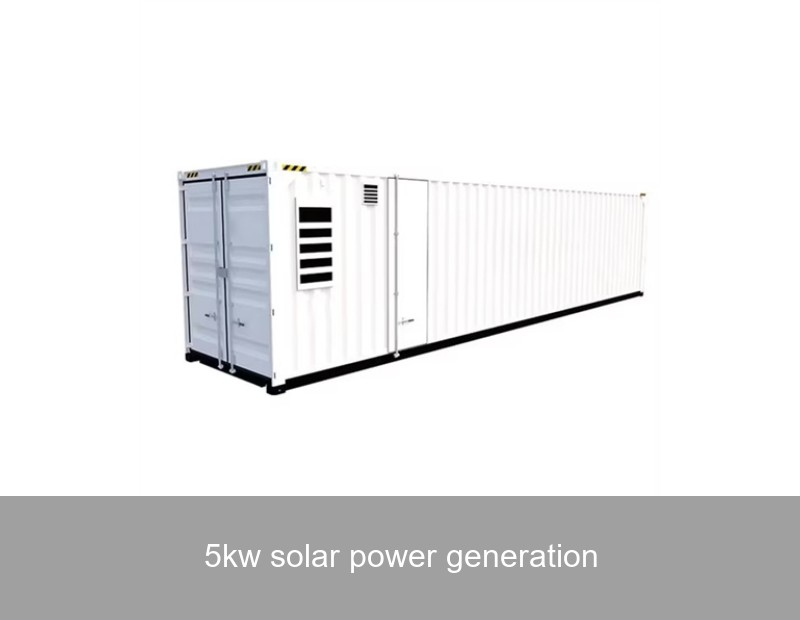
Have you ever looked at your electricity bill and wondered, "What if I could generate my own clean power?" You're not alone. Across Europe and the US, homeowners and businesses are turning to solar energy for control, savings, and sustainability. At the heart of this movement for many is a versatile and powerful solution: the 5kW solar power generation system. It's not just a set of panels on a roof; it's a gateway to energy autonomy. But how much power does it really produce, and is it the right fit for your needs? Let's demystify the 5kW solar system, from its daily output to its real-world impact, and explore how pairing it with smart storage, like solutions from Highjoule, is revolutionizing how we use energy.
Table of Contents
What Exactly is a 5kW Solar Power Generation System?
A 5kW (kilowatt) solar system refers to its peak DC (Direct Current) power output under ideal laboratory conditions. In simpler terms, when the sun is at its strongest and panels are perfectly angled, the system can generate 5,000 watts of power at that moment. A typical residential setup consists of 12-18 high-efficiency solar panels, mounting equipment, DC-to-AC inverters, and all necessary electrical components. It's a popular size because it often aligns well with the average household's energy consumption, offering a significant reduction in grid dependence without requiring an excessively large roof space.
From Peak to Practical: How Much Energy Does a 5kW System Produce?
Here's where many get confused. Your 5kW system won't produce 5kW every hour of the day. Production depends heavily on your geographic location (solar irradiance), roof orientation, tilt, shading, and local weather. We move from power (kW, the rate) to energy (kWh, the total).
On average, a well-installed 5kW solar power generation system in sunnier parts of the US (like Arizona or California) can produce between 20-25 kWh per day. In Europe, a system in southern Spain will outperform one in northern Germany. The UK or Benelux regions might see annual averages of 3,500 to 4,500 kWh from a 5kW array, while a German system could produce 4,500-5,500 kWh, according to data from the EU Energy Observatory.
| Region | Summer Day (Sunny) | Winter Day (Clear) | Annual Average Day |
|---|---|---|---|
| Southern California, USA | 30-35 kWh | 15-20 kWh | ~24 kWh |
| Florida, USA | 28-32 kWh | 18-22 kWh | ~22 kWh |
| Southern Spain/EU | 28-33 kWh | 12-16 kWh | ~21 kWh |
| Germany/EU | 25-30 kWh | 5-10 kWh | ~15 kWh |
From Numbers to Narrative: A Residential Case Study in Bavaria
Let's bring this to life. The Schmidt family in Munich, Germany, installed a 5.2kW solar power generation system on their south-facing roof in 2022. Their primary goal was to reduce rising energy costs and their carbon footprint. In its first full year, the system produced 5,810 kWh of electricity. However, they faced a common challenge: they were often away at work during the sunniest hours, exporting excess power to the grid at a low feed-in tariff, while buying expensive electricity in the evenings.
The turning point came in 2023 when they integrated a Highjoule HES-10 battery storage system. This 10 kWh capacity battery stores their daytime surplus. Now, their self-consumption rate jumped from 35% to over 80%. "The solar panels were only half the solution," Mr. Schmidt noted. "The Highjoule battery allowed us to actually use the clean power we produce, especially for our evening load with cooking, lighting, and EV charging. Our grid purchases have fallen by another 60%." This combination not only maximized their 5kW investment but also provided critical backup power during two short grid outages.

Image Source: Unsplash (Representative image of a residential solar installation)
The Generation Gap: Why Solar Alone Isn't Enough
The Schmidts' experience highlights a universal truth in renewable energy: generation and consumption are often out of sync. A 5kW solar power generation system is a prolific producer at noon, but home energy demand typically peaks in the morning and evening. Without storage, this mismatch forces you to rely on the grid precisely when it's most strained and expensive.
This is where the modern energy ecosystem evolves. The true potential of your solar array is unlocked not just by panels, but by intelligent energy management. Think of it this way: solar panels are your personal power plant, but a battery storage system is your personal energy bank, allowing you to save your solar "income" for a rainy day—or rather, a dark evening.
Intelligent Energy Management: Integrating Highjoule's Solutions
This is the core of what we at Highjoule, a global leader in advanced energy storage since 2005, specialize in. A 5kW solar array is a powerful asset, but its value multiplies when paired with our smart storage systems. Our solutions, like the Highjoule HES Series for residential and commercial use, are designed to seamlessly integrate with new or existing solar installations.
Highjoule systems go beyond simple storage. They feature:
- AI-Powered Energy Forecasting: Our technology predicts solar production and consumption patterns, optimizing charge/discharge cycles to maximize self-use and savings.
- Seamless Integration: Whether you have a 5kW or a larger system, our battery systems are scalable and compatible with major inverter brands.
- Grid Services & Resilience: In areas with unstable grids or for critical operations, our systems provide uninterrupted backup power, ensuring your lights stay on.
- User-Centric Monitoring: An intuitive app lets you track your energy flow in real-time—from your 5kW solar power generation to household consumption and battery status—putting you in full control.

Image Source: Unsplash (Representative image of a modern home battery system)
Is a 5kW Solar System Right for You? Key Considerations
Deciding to invest in a 5kW solar power generation system requires looking at your unique situation. Ask yourself:
- Energy Consumption: Review your last 12 months of utility bills. A 5kW system often offsets a significant portion of a household consuming 4,000-6,000 kWh annually.
- Roof Space and Orientation: You'll need approximately 25-35 sq. meters of unshaded roof area, ideally facing south in the Northern Hemisphere.
- Local Incentives: Research federal, state, and local incentives (like the US Investment Tax Credit or various EU grants) which can dramatically improve ROI.
- Future-Proofing: Are you planning to buy an electric vehicle or a heat pump? Your energy needs will grow. Designing a system with expandable storage, like Highjoule's modular platforms, is a wise strategy.
The journey to energy independence is both an environmental statement and a practical financial decision. A 5kW solar power generation system is a fantastic starting point, but its true genius is realized when it's part of a smarter, integrated home energy system. As grid dynamics shift and electricity prices continue to fluctuate, the ability to generate, store, and manage your own power is becoming less of a luxury and more of a cornerstone of modern, resilient living.
What will your first step be—understanding your consumption patterns, exploring solar potential for your roof, or designing a complete energy system that can power your home, day and night?
 Inquiry
 Online Chat