


Decoding the Luminous 2.5 KVA Solar Inverter Price: Value, Features, and Smart Alternatives
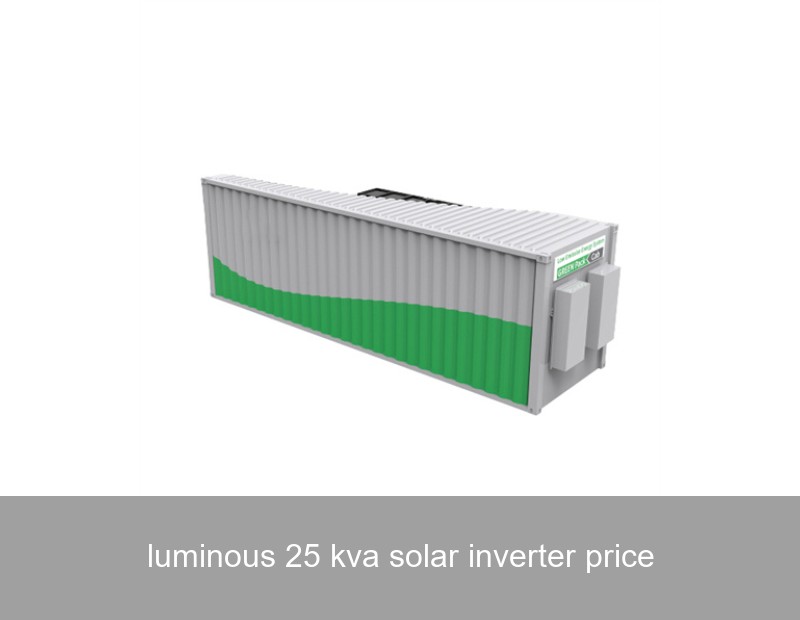
If you're researching solar for your home or small business, you've likely typed "luminous 2.5 kva solar inverter price" into a search engine. That number on the screen is just the starting point. The real question isn't simply "what does it cost?" but "what am I getting for my investment, and is there a better path to reliable, clean energy?" As a product technology expert in the renewable energy sector, I see this daily. The price tag is a single data point in a much larger equation involving efficiency, longevity, system compatibility, and intelligent energy management. Let's unpack what truly determines value in a 2.5 KVA solar inverter and explore how modern solutions are redefining expectations.
Understanding What Drives a 2.5 KVA Solar Inverter's Price
At its core, a solar inverter's job is to convert the direct current (DC) electricity from your panels into the alternating current (AC) that powers your appliances. A 2.5 KVA (or roughly 2,000-watt) unit is a popular size for residential setups, capable of handling essential loads like lighting, fans, TVs, and a refrigerator. The price variation you see isn't arbitrary; it's built on several technical and commercial pillars.
- Technology Type: Is it a basic off-grid inverter, a more versatile hybrid model (which can work with both solar and the grid/battery), or a premium grid-tie inverter? Hybrid models, offering backup capability, typically command a higher price.
- Component Quality & Efficiency: The quality of the transformers, capacitors, and MOSFETs/IGBTs inside directly impacts performance and lifespan. A 95% efficient inverter versus an 88% efficient one means significantly more harvested solar energy over its lifetime, offsetting a higher upfront cost.
- Brand Value & Warranty: Established brands invest in research, testing, and after-sales support. A comprehensive 5-year warranty, as opposed to a 1-year warranty, is a cost factor that provides long-term peace of mind.
- Additional Features: Does it have a built-in Maximum Power Point Tracker (MPPT) charge controller? A user-friendly digital display? Remote monitoring via Wi-Fi/Bluetooth? These features add convenience and control, influencing the final price.
Key Features That Truly Affect Your Investment
When comparing prices, scrutinize these specifications. They are the levers of value:
| Feature | What It Means | Impact on Price & Value |
|---|---|---|
| Waveform | Pure Sine Wave vs. Modified Sine Wave | Pure sine wave inverters are more expensive but safely and efficiently power sensitive electronics (laptops, medical devices, variable-speed motors). Modified sine wave units are cheaper but can cause humming, overheating, or damage to such devices. |
| MPPT vs. PWM Charge Controller | Maximum Power Point Tracking vs. Pulse Width Modulation | An integrated MPPT controller can be 30% more efficient at harvesting solar energy, especially in variable weather, justifying a higher price through greater energy yield. |
| Battery Voltage Compatibility | 12V, 24V, or 48V system | Inverters for higher voltage battery banks (e.g., 48V) often use better components and are more suitable for scalable systems, affecting cost. |
| Grid-Interaction Capability | Hybrid Functionality | The ability to seamlessly blend solar, battery, and grid power requires sophisticated software and hardware, increasing price but offering unmatched flexibility and potential for energy bill savings. |
A Real-World Look: Market Analysis & The "Luminous" Context
In markets like India and parts of Asia, Luminous is a well-known brand for inverters and batteries. The "Luminous 2.5 KVA solar inverter price" often reflects a competitive entry point for a hybrid or off-grid system. However, for homeowners in Europe or North America, the considerations shift. Here, the regulatory environment (like grid interconnection standards), the prevalence of net metering, and the demand for whole-home backup solutions require a different class of product.
Let's consider a case study from Germany, a leader in residential solar adoption. A homeowner in Bavaria installed a standard 4.6 kWp solar system with a basic string inverter in 2018. By 2022, they added a home battery. The system worked, but lacked synergy: the inverter couldn't communicate optimally with the new battery, leading to efficiency losses. They faced a costly "rip-and-replace" scenario. This is a classic example of focusing on component price rather than system architecture.

Data from the U.S. Department of Energy's SETO emphasizes that system-level intelligence is key to maximizing return on investment. An inverter that acts as the central "brain" of the energy system, coordinating solar production, battery storage, grid import/export, and home consumption, delivers far more value over 15+ years than a standalone, low-cost unit.
Thinking Beyond the Price Tag: System Integration & Intelligence
This brings us to the modern paradigm. Today's most valuable residential energy solutions aren't just a collection of parts—an inverter from brand A, panels from brand B, a battery from brand C. They are integrated ecosystems. The inverter, or more accurately, the multi-mode energy management system, is the critical hub.
- Seamless Integration: It ensures all components communicate flawlessly, optimizing every kilowatt-hour.
- Grid Services & Resilience: Advanced systems can provide grid support and offer uninterrupted power supply (UPS)-grade switching during outages, often in milliseconds.
- Software-Driven Updates: Like a smartphone, the system can improve over time with firmware updates that add new features or enhance efficiency.
The Highjoule Approach: Engineering Value Beyond the Inverter
At Highjoule, with nearly two decades of experience powering homes and businesses worldwide, we engineer from this system-first perspective. We don't just sell an inverter; we provide a tailored, intelligent energy solution. For a residential customer needing reliable power, our HelioSmart Home series exemplifies this philosophy.
Our 3kW hybrid energy system, a comparable tier to a 2.5 KVA setup, is built around a high-efficiency multi-mode inverter. It's designed for the demands of European and North American markets:
- All-in-One Intelligence: It integrates MPPT solar charging, grid interaction, and battery management in one robust unit, eliminating compatibility headaches.
- High Cyclic Battery Compatibility: It's optimized to work with modern lithium-ion batteries (like our own DuraCore LiFePO4 series) for thousands of cycles, ensuring the storage part of your investment lasts.
- Advanced Monitoring: The Highjoule Energy Cloud app gives you real-time insights and control over your energy flows, helping you maximize self-consumption and savings.

This integrated approach might have a different initial price point than a standalone "luminous 2.5 kva solar inverter," but it calculates the cost over a 25-year system life, factoring in energy yield, component longevity, and adaptive software. The total cost of ownership and the value delivered in energy security and independence become the true metrics.
Making Your Informed Decision: A Practical Framework
So, how should you proceed? Use this framework to guide your conversation with any supplier:
- Define Your "Why": Is it pure bill savings, backup during frequent outages, or reducing your carbon footprint? Your goal dictates the technology.
- Audit Your Energy Needs: List the essential circuits you need during an outage. A 2.5 KVA system can handle basics, but do you aspire to power more? Future scalability is key.
- Demand System Specifications, Not Just Component Prices: Ask for the system's guaranteed round-trip efficiency, its grid interaction certifications (like UL 1741-SA in the US or VDE-AR-N 4105 in Germany), and the software roadmap.
- Evaluate the Provider: Do they offer a single point of responsibility for the entire system? What is their track record for technical support and warranty fulfillment in your region?
According to a 2022 IEA Special Report, while hardware costs are important, installation, maintenance, and system performance are increasingly dominant in the total cost of solar PV. Choosing a partner who excels in these areas is crucial.
Ready to Calculate Your Home's True Energy Potential?
Instead of searching for a single component's price, what if you could model your home's specific energy profile—your roof's orientation, your historical consumption, your local utility rates—and see a projection for savings, backup duration, and system payback with an integrated solution like Highjoule's? What question about your home's energy independence would you want answered first?
 Inquiry
 Online Chat