


Harnessing Breezes and Sunlight: The Rise of the 5kw Wind Turbine in South Africa's Energy Mix
Imagine a reliable, clean power source quietly working on your property, slashing electricity bills and providing security against grid outages. For many homes, farms, and small businesses across South Africa, this is becoming a reality not with one, but two complementary technologies: the robust 5kw wind turbine and modern solar PV systems. This article explores why this hybrid approach is gaining remarkable traction in the South African context, delving into the data, real-world applications, and the integrated solutions that make it all work seamlessly.
Table of Contents
- The Phenomenon: South Africa's Unique Energy Landscape
- The Data: Why Wind and Solar are a Perfect Match
- Case in Point: A Western Cape Farm's Success Story
- The Key Insight: It's About the System, Not Just the Turbine
- Highjoule's Role: Intelligent Storage for Hybrid Energy
The Phenomenon: South Africa's Unique Energy Landscape
South Africa presents a compelling, albeit challenging, energy scenario. Frequent load-shedding, rising electricity costs from the national utility Eskom, and an abundance of renewable resources create a perfect catalyst for decentralized power solutions. While solar power has rightfully taken center stage, there's a growing recognition of wind energy's complementary role, particularly in the form of small-scale turbines like the 5kw wind turbine. These units are ideally sized for off-grid or grid-tied residential, agricultural, and small commercial use. But here's the catch: the wind doesn't always blow when the sun doesn't shine, and vice-versa. This natural intermittency is the primary puzzle that modern energy users need to solve.
The Data: Why Wind and Solar are a Perfect Match
Meteorological data reveals a powerful synergy. In many regions of South Africa, particularly coastal areas like the Western and Eastern Cape, wind patterns often complement solar irradiance. Wind speeds can be higher in the evenings, at night, and during overcast or rainy weather—precisely when solar panels produce less. A CSIR Wind Atlas study highlights significant wind resources across vast swathes of the country. By combining a 5kw wind turbine with a similarly sized solar array, a system can generate a more consistent and reliable daily power profile. This hybrid approach can increase overall energy yield by up to 30-50% compared to a solar-only system of the same nominal capacity, dramatically improving the return on investment.

Image Source: Wikimedia Commons, illustrating a typical hybrid renewable energy system setup.
Case in Point: A Western Cape Farm's Success Story
Let's look at a concrete example. A 120-hectare guest farm and vineyard near Stellenbosch was struggling with unreliable grid power, which jeopardized refrigeration, irrigation, and guest comfort. They installed a hybrid system:
- 1 x 5kw wind turbine (pole height 18m)
- 8.5 kWp of solar panels
- A 20 kWh integrated battery storage system
- A smart hybrid inverter capable of managing all inputs
The results, monitored over a year, were telling. The wind turbine contributed over 60% of the total generation during the winter months and during night-time loads, while solar dominated in summer. The system achieved 95% energy self-sufficiency, reducing their diesel generator usage by over 90% and achieving a payback period of under 6 years. This case underscores that for many sites, a dual-technology approach is far more effective than a single source.
The Key Insight: It's About the System, Not Just the Turbine
The pivotal insight for anyone considering a 5kw wind turbine in South Africa is this: the turbine is only one component of a high-performance energy ecosystem. The true intelligence—and challenge—lies in effectively integrating, storing, and managing that power. A turbine generating energy at 2 AM is of little direct use unless you have a way to store it. This is where advanced battery energy storage systems (BESS) and smart energy management become non-negotiable. The system must seamlessly balance generation from wind, solar, the grid (if available), and battery reserves to provide clean, uninterrupted power 24/7.
Highjoule's Role: Intelligent Storage for Hybrid Energy
This is precisely where Highjoule, a global leader in advanced energy storage since 2005, provides critical solutions. For a hybrid setup featuring a 5kw wind turbine, Highjoule's smart battery systems act as the central hub. Our H-Stack Commercial & Industrial and H-Core Residential energy storage products are designed to integrate seamlessly with multiple generation sources. They don't just store energy; they use sophisticated software to make decisions in milliseconds: prioritizing wind or solar consumption, storing excess, discharging during peak demand or outages, and ensuring the longevity of the battery itself.
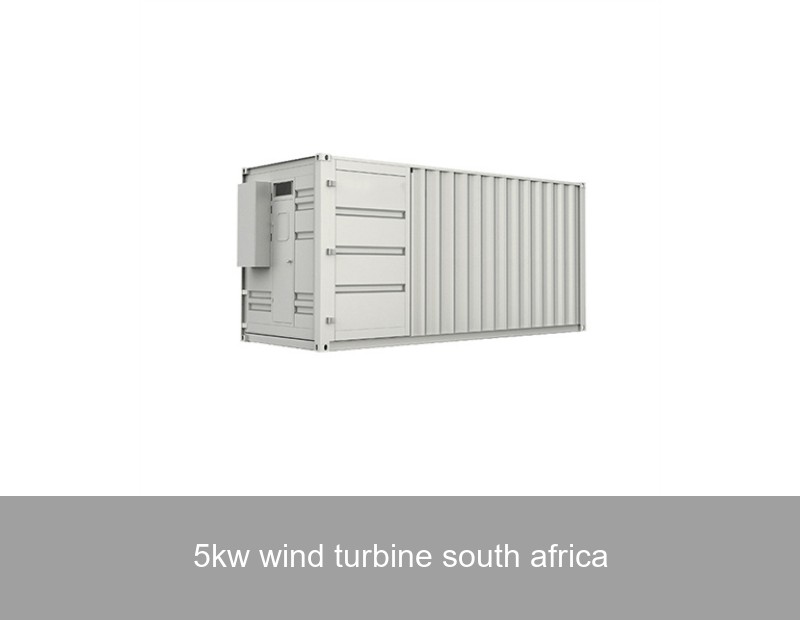
For the South African market, facing unique grid challenges, Highjoule systems offer a crucial feature: unparalleled reliability. Our battery cabinets are built with robust thermal management and safety systems, essential for varied climates. By pairing your wind and solar investment with a Highjoule BESS, you transform variable renewable generation into a firm, dispatchable power source for your home or business.
What Highjoule Brings to Your Hybrid Project:
| Component | Highjoule Solution | Benefit for Your 5kw Wind Turbine System |
|---|---|---|
| Battery Storage | H-Core (Residential) / H-Stack (C&I) Lithium-Ion Systems | Captures all excess wind generation for use anytime, increasing self-consumption. |
| System Intelligence | Adaptive Energy Management System (A-EMS) | Automatically optimizes power flow between wind, solar, battery, and loads. |
| Grid Services | Grid-Assist & Off-Grid Functionality | Provides backup power during load-shedding and can operate completely off-grid. |
| Monitoring & Control | Highjoule Connect Platform | Real-time tracking of wind generation, storage levels, and system health from your phone. |
Looking Ahead: Your Energy Independence
The journey towards energy independence in South Africa is increasingly a collaborative one between different technologies. A 5kw wind turbine is a powerful ally, especially when its output is harmonized with solar and, most importantly, stabilized by a sophisticated storage system like those from Highjoule. As battery technology advances and costs continue to fall, the economic and practical case for these integrated systems only grows stronger. It moves beyond just backup power to creating a truly resilient and cost-effective personal energy asset.
What's the first step you should take to assess if your location is suitable for a hybrid renewable system? A professional site assessment is crucial, evaluating not just solar potential but also annual wind speed averages, turbulence, and zoning regulations. Reputable installers will use tools and historical data, such as maps from the Global Wind Atlas, to provide realistic yield estimates. The question is no longer just "solar or wind?" but rather, "how can I best combine these forces with smart storage to achieve my specific energy goals?"
 Inquiry
 Online Chat