


Unlocking Grid Stability and Revenue: The Power of a 6 MW On-Grid Energy Storage Cabinet
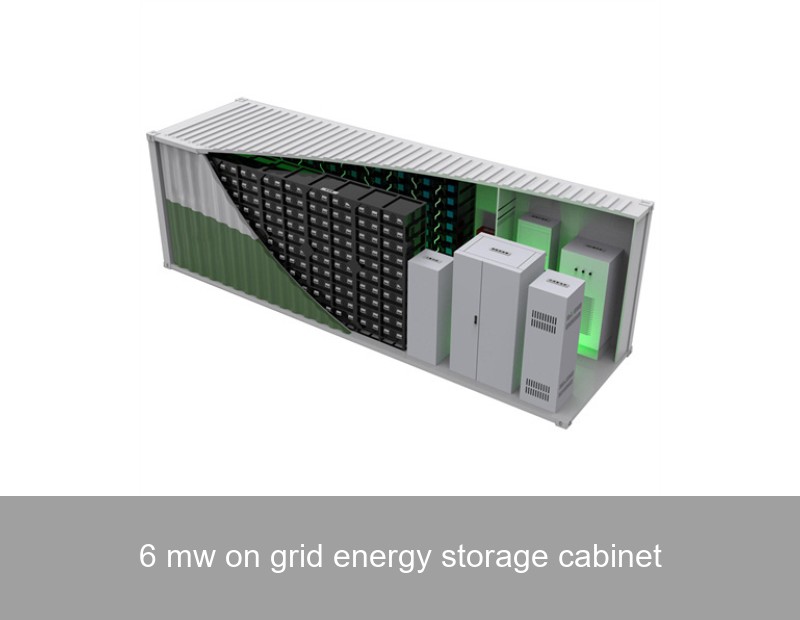
Table of Contents
- The Modern Grid Challenge: More Renewables, More Complexity
- What is a 6 MW On-Grid Energy Storage Cabinet?
- Core Benefits: Beyond Just Backup Power
- Real-World Impact: A Case Study from California
- The Highjoule Solution: Engineered for Performance and Simplicity
- The Future Outlook for C&I Energy Storage
If you're managing a large commercial facility, industrial plant, or a community microgrid, you've felt the pressure. Electricity prices are volatile, grid demands are shifting, and sustainability goals are becoming mandates. The question isn't just about using power anymore; it's about managing it intelligently. This is where a robust, grid-connected energy storage system, specifically a 6 MW on-grid energy storage cabinet, transitions from a novel idea to a critical business asset. Let's explore how this technology is reshaping energy economics for forward-thinking businesses.
The Modern Grid Challenge: More Renewables, More Complexity
Across Europe and the United States, the energy transition is in full swing. Wind and solar are breaking generation records, which is fantastic for decarbonization. However, this influx of variable renewable energy creates a double-edged sword for grid operators and large energy consumers. The sun doesn't always shine, and the wind doesn't always blow, leading to mismatches between supply and demand. This volatility manifests as:
- Frequency Instability: Rapid drops or surges in renewable output can affect the grid's fundamental frequency (60 Hz in the US, 50 Hz in Europe), risking equipment damage and outages.
- Peak Demand Charges: Utilities often charge commercial & industrial (C&I) customers exorbitant rates for their highest 15-30 minutes of power use each month, a major line item on electricity bills.
- Congestion and Curtailment: At times of low demand and high renewable production, grid congestion can force renewable assets to be shut down ("curtailed"), wasting clean energy and potential revenue.
A 2023 report from the National Renewable Energy Lab (NREL) highlights that energy storage is now seen as the "linchpin" for integrating high levels of renewables, providing essential services like frequency regulation and capacity firming.
What is a 6 MW On-Grid Energy Storage Cabinet?
Let's demystify the terminology. A 6 MW on-grid energy storage cabinet is a pre-engineered, containerized system designed for large-scale power applications.
- 6 MW (Megawatts): This is the power rating—it tells you how much electricity the system can instantaneously inject into or absorb from the grid. Think of it as the size of the "pipe." A 6 MW system can deliver a significant punch, enough to power thousands of homes or offset the peak demand of a large factory or shopping complex.
- On-Grid: The system is directly connected to the public electrical grid and operates in parallel with it. It's not designed for off-grid isolation but for continuous interaction—storing energy when it's cheap/abundant and discharging when it's expensive/scarce.
- Cabinet/Container: This refers to the physical form factor. All critical components—lithium-ion battery racks, battery management systems (BMS), power conversion systems (PCS), thermal management, and safety systems—are integrated into a single, modular, shipping-container-sized enclosure. This allows for rapid deployment, scalability, and simplified site planning.

Image: A containerized energy storage system at an industrial site. (Source: Unsplash, representative image)
Core Benefits: Beyond Just Backup Power
The value proposition of a 6 MW system is multi-faceted, creating a compelling return on investment (ROI) through several revenue streams and cost savings:
| Application | How It Works | Direct Benefit |
|---|---|---|
| Peak Shaving | The system discharges during your facility's short periods of highest grid demand. | Dramatically reduces peak demand charges, often saving 20-30% on monthly bills. |
| Energy Arbitrage | Charge the batteries when wholesale electricity prices are low (e.g., at night), discharge and sell or use when prices are high. | Locks in lower energy costs and creates a potential revenue stream in deregulated markets. |
| Frequency Regulation | The system responds in milliseconds to grid operator signals to inject or absorb power, stabilizing grid frequency. | Generates high-value performance payments from grid operators (e.g., PJM, National Grid). |
| Renewable Firming | Paired with a solar farm, it stores excess solar generation during the day for release in the evening, smoothing the "duck curve." | Maximizes renewable asset utilization, reduces curtailment, and delivers clean power when it's needed most. |
Real-World Impact: A Case Study from California
Theory is good, but real data convinces. Consider a manufacturing plant in California, participating in the state's Self-Generation Incentive Program (SGIP). Facing demand charges exceeding $50,000 monthly and frequent grid strain warnings, they deployed a 6 MW / 24 MWh on-grid energy storage system.
- Objective: Reduce demand charges, provide backup power for critical processes, and participate in utility demand response programs.
- Implementation: Two 3 MW containerized cabinets were installed on-site, integrated with the facility's energy management system.
- Results (First 12 Months):
- Demand Charge Savings: Reduced peak load by 5.8 MW, cutting monthly demand charges by an average of 68%.
- Program Revenue: Earned approximately $180,000 from utility demand response events during heat waves.
- Grid Support: Provided over 200 hours of local grid support, mitigating congestion events.
- Payback Period: The combined savings and revenue, coupled with SGIP incentives, projected a full payback in under 5 years.
This case exemplifies the tangible economic and operational resilience that a properly sized and managed 6 MW system can deliver. For more on grid services, the U.S. Department of Energy's Grid Modernization initiative provides extensive context.
The Highjoule Solution: Engineered for Performance and Simplicity
At Highjoule, with nearly two decades of experience since 2005, we've moved beyond simply supplying batteries. We deliver intelligent, turnkey power solutions. Our H-Cube 6000 Series is the embodiment of this philosophy, designed specifically as a high-performance 6 MW on-grid energy storage cabinet.
What sets the H-Cube 6000 apart in a crowded market?
- Ultra-Dense, Safe LFP Chemistry: We utilize Lithium Iron Phosphate (LFP) batteries, renowned for their long cycle life, thermal stability, and safety—a non-negotiable priority for C&I installations.
- All-in-One Intelligence: The cabinet integrates our proprietary NeuroGrid AI controller. This isn't just a BMS; it's a platform that continuously analyzes electricity prices, weather forecasts, load patterns, and grid signals to autonomously optimize the system's mode for maximum financial return.
- Plug-and-Play Scalability: Need to start at 4 MW and expand later? Our modular design allows for seamless capacity additions. Each 6 MW cabinet is a building block for larger microgrid or virtual power plant (VPP) applications.
- Global Support & Monitoring: Every H-Cube is connected to Highjoule's 24/7 Global Operations Center. We perform remote diagnostics, performance tuning, and proactive maintenance, giving you peace of mind and ensuring system uptime.

Image: Centralized monitoring and control of distributed energy assets. (Source: Unsplash, representative image)
For our clients, this means the H-Cube 6000 isn't just a capital expense; it's an automated revenue-generating asset that manages itself, allowing your team to focus on core operations.
The Future Outlook for C&I Energy Storage
The trajectory is clear. Policies like the EU's Green Deal and the U.S. Inflation Reduction Act are accelerating investment. Grid operators are increasingly formalizing markets for frequency response and capacity. The business case for a 6 MW on-grid system is strengthening not just from rising electricity costs, but from the expanding menu of grid service revenues it can tap into.
However, success hinges on choosing the right technology partner. It's about more than kilowatt-hours; it's about the software intelligence, the system's longevity, the safety protocols, and the partner's ability to navigate complex grid interconnection and market rules.
Is Your Organization Ready to Transform Its Energy Profile?
We've seen how a 6 MW on-grid energy storage cabinet can turn a cost center into a strategic asset. The data from California is just one example of the pattern repeating across industries. The question now is about timing and execution. What would a detailed analysis reveal about the potential peak shaving savings and ancillary service revenue for your specific facility's load profile? Perhaps it's time to find out.
 Inquiry
 Online Chat