


Why Alternative Energy Companies Are the Architects of Our Modern Grid
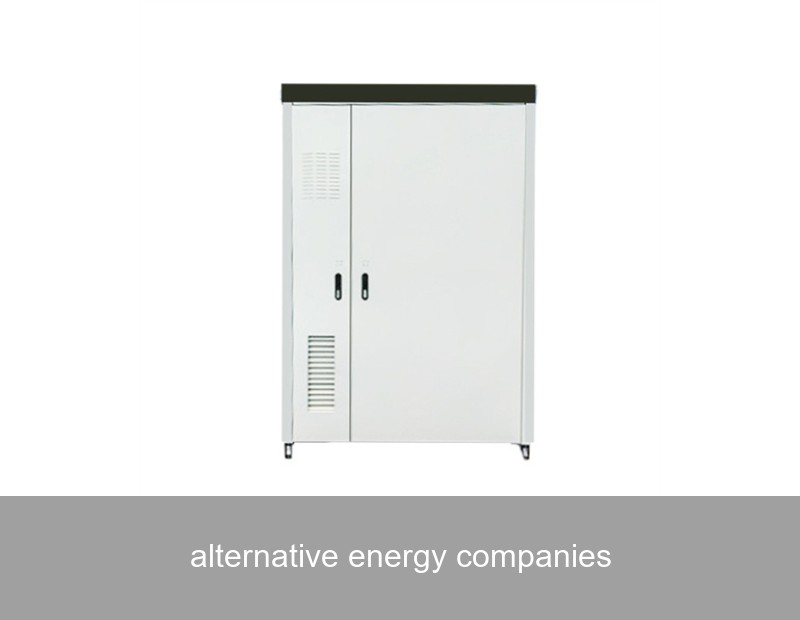
When you think of alternative energy companies, what comes to mind? Vast fields of solar panels or towering wind turbines spinning gracefully against the sky? While that imagery is correct, it only tells half the story. The true revolution led by these companies isn't just about generating clean power—it's about fundamentally re-architecting how we manage, store, and deliver electricity. The modern grid is evolving from a one-way street into a dynamic, intelligent network, and at the heart of this transformation are innovative firms providing the brains and the backbone: advanced energy storage solutions.
The Rise of Alternative Energy Companies
The past two decades have witnessed a seismic shift. Driven by climate goals, energy security concerns, and rapidly falling technology costs, alternative energy companies have moved from the fringe to the mainstream. According to the International Energy Agency (IEA), renewables are set to contribute 80% of new power capacity globally through 2030 under current policies. This isn't a niche trend; it's the new foundation of our power systems in Europe, the United States, and beyond.
But this incredible success has unveiled a new, more complex challenge. The sun doesn't always shine, and the wind doesn't always blow. This variability, if not managed, can lead to grid instability, curtailment (wasting perfectly good renewable energy), and missed opportunities for deeper decarbonization.

Image Source: Unsplash - A large-scale solar farm, representing the generation side of alternative energy.
The Grid Stability Challenge: More Than Just Generation
Here's the core issue traditional grids weren't designed for: supply and demand must be balanced in real-time. With coal or gas plants, output can be dialed up or down. Solar and wind, however, are "non-dispatchable" – their output depends on nature. This creates a mismatch, often visualized by the famous "Duck Curve," which shows a deep midday dip in net load (when solar floods the grid) followed by an extremely steep evening ramp (as the sun sets and demand peaks).
This curve isn't just a graph; it's an operational nightmare for grid operators, potentially causing:
- Frequency Fluctuations: Threatening the grid's delicate balance.
- Curtailment: In California alone, over 2.4 million MWh of solar and wind energy were curtailed in 2022—enough to power over 200,000 homes for a year.
- Reliance on Peaker Plants: Often fossil-fueled, expensive, and polluting, fired up quickly to meet the evening peak.
Case Study: California's Duck Curve and the Storage Solution
Let's look at a real-world example. California, a global leader in solar adoption, has faced the Duck Curve challenge head-on. The state's response? A massive, strategic build-out of energy storage. The California Public Utilities Commission set ambitious storage procurement targets, and the market responded.
One landmark project is the Moss Landing Energy Storage Facility (Phase III), which boasts a capacity of 350 MW / 1,400 MWh. On a typical day, this facility soaks up excess solar energy during the midday sun, stores it efficiently, and then dispatches it during the critical 4-9 PM window when demand soars and solar generation plummets. The result? Enhanced grid reliability, reduced carbon emissions by offsetting natural gas "peaker" plants, and a proven model for integrating massive amounts of renewables.
This case underscores a critical insight: the most forward-thinking alternative energy companies are no longer just panel or turbine manufacturers. They are integrated solution providers, with battery energy storage systems (BESS) as a core competency.
The Battery Energy Storage System (BESS): The Unsung Hero
Think of a BESS as the "shock absorber" and "time machine" for the electric grid. It doesn't generate power, but it empowers the entire system. Here’s what a modern, grid-scale BESS does:
| Function | Benefit | Impact |
|---|---|---|
| Energy Arbitrage | Store cheap renewable energy, discharge during expensive peak times. | Lowers costs, improves ROI for renewable assets. |
| Frequency Regulation | Respond in milliseconds to grid frequency dips or spikes. | Maintains grid stability, a critical service for operators. |
| Renewable Firming | Smooth out the intermittent output of solar and wind farms. | Makes renewables dispatchable and more valuable. |
| Peak Shaving | Reduce demand on the grid during periods of highest use. | Defers costly grid upgrades, lowers capacity charges for businesses. |
| Backup Power | Provide seamless, instantaneous power during outages. | Ensures resilience for critical facilities and microgrids. |

Image Source: Unsplash - A modern Battery Energy Storage System (BESS) installation.
Highjoule's Role: Intelligent Storage for a Sustainable Future
This is where a company like Highjoule, with nearly two decades of experience since 2005, steps into the narrative. We view ourselves as an essential partner to alternative energy companies and grid operators, providing the intelligent storage layer that unlocks the full potential of renewables. Our expertise isn't just in battery chemistry; it's in seamless system integration, advanced energy management software, and delivering turnkey solutions that are safe, efficient, and sustainable.
For a commercial or industrial facility looking to pair solar with storage, Highjoule's IntelliBESS Platform offers more than just batteries. It's an AI-driven brain that optimizes every kilowatt-hour:
- Predictive Analytics: Uses weather and load forecasts to optimize charging/discharging schedules.
- Multi-Market Revenue Stacking: Allows a single system to participate in energy arbitrage, frequency regulation, and demand response programs simultaneously, maximizing financial return.
- Seamless Integration: Our systems are designed to work harmoniously with existing solar PV inverters and building management systems.
For utility-scale projects and microgrids, Highjoule provides scalable, containerized Megapack Solutions. These are the workhorses capable of performing the Moss Landing-style grid services, enabling communities and islands to achieve greater energy independence and resilience. Our focus is on building systems that are not only high-performance but also have a long lifecycle and are designed with future recyclability in mind.
Beyond Lithium: A Glimpse at the Technology Horizon
While lithium-ion currently dominates, the innovation race is on. Alternative energy companies and research institutions are actively developing next-generation technologies like flow batteries (ideal for long-duration storage), solid-state batteries (promising higher safety and density), and advanced compressed air energy storage (CAES). Highjoule's R&D team actively monitors and evaluates these technologies, ensuring our future solutions leverage the best available tech for the specific application, be it 4-hour daily cycling or 100-hour seasonal storage.
The Future Outlook: Integration and Intelligence
The trajectory is clear. The grid of the future will be a decentralized, digital, and democratized ecosystem. Alternative energy companies will be the key players building this ecosystem, and storage will be its cornerstone. We're moving towards a world where millions of distributed assets—rooftop solar, home batteries, electric vehicles, and industrial storage systems—will be aggregated into "virtual power plants" (VPPs) to support the grid.
This requires an unprecedented level of intelligence and communication. The next frontier isn't just hardware; it's software and connectivity. How do we coordinate all these assets securely and efficiently? How do we create market signals that reward flexibility? These are the questions driving the industry forward.

Image Source: Unsplash - A modern grid control center, symbolizing the intelligent management of energy flows.
So, as you evaluate alternative energy companies for your project, community, or investment portfolio, look beyond the generation capacity. Ask the critical question: "What is your strategy for storage and integration?" The answer will separate those who simply generate clean power from those who are truly building the resilient, flexible, and sustainable grid of tomorrow.
Is your organization ready to explore how intelligent energy storage can transform your renewable energy assets from a variable resource into a reliable, revenue-generating powerhouse?
 Inquiry
 Online Chat