


7 kW Off-Grid Solar Battery Systems: Your Complete Guide to Energy Independence
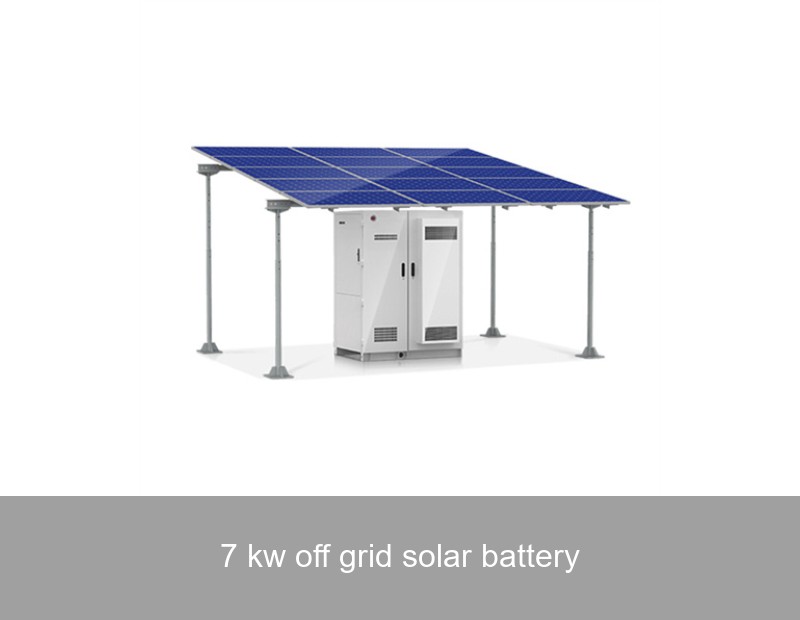
Have you ever dreamed of truly unplugging from the utility grid? For homeowners in remote locations, eco-conscious builders, or anyone seeking resilience against power outages, the dream of energy independence is becoming a tangible reality. At the heart of this shift is a specific and powerful solution: the 7 kW off-grid solar battery system. This isn't just about having solar panels; it's about having a reliable, self-sufficient power plant at your command, day and night. As a global leader in advanced energy storage, Highjoule has been engineering intelligent off-grid solutions since 2005, empowering homes and businesses worldwide to harness and control their own clean energy.
Table of Contents
- What is a 7 kW Off-Grid Solar Battery System?
- Why 7 kW? The Sweet Spot for Off-Grid Power
- Key Components of a Robust Off-Grid System
- The Highjoule Advantage: Intelligence Meets Durability
- Real-World Case Study: An Alpine Retreat in Colorado, USA
- Making the Leap to Off-Grid Living
What is a 7 kW Off-Grid Solar Battery System?
Let's break it down. A 7 kW off-grid solar battery system is a standalone power generation and storage setup designed to meet all of a property's electricity needs without any connection to the public utility grid. The "7 kW" refers to the system's inverter capacity—its ability to continuously deliver up to 7,000 watts of AC power at any given moment. This is paired with a substantial bank of solar panels (often 8-10 kW or more) and a large-capacity battery storage unit to ensure power is available even when the sun isn't shining.
Unlike grid-tied systems that send excess power back to the utility, an off-grid system stores every kilowatt-hour for your own use. This demands meticulous design, high-quality components, and intelligent energy management—precisely where Highjoule's expertise transforms complexity into simple, reliable operation.
Why 7 kW? The Sweet Spot for Off-Grid Power
You might wonder why 7 kW is such a commonly discussed benchmark. The answer lies in its practical capacity to handle the simultaneous electrical loads of a modern, efficient home.
- Typical Load Coverage: A 7 kW inverter can comfortably run a well pump (1,000-2,500W), a refrigerator (600W), lighting, electronics, and a washing machine simultaneously, with headroom to spare.
- Managing Surge Loads: Many appliances, like water pumps or power tools, require a high initial surge of power to start. Quality 7 kW inverters, like those in Highjoule systems, are built with high surge capacities (often 14 kW or more for 5-10 seconds) to handle these demands without blinking.
- Balancing Cost and Performance: It represents an optimal balance between providing ample power for comfort and managing the investment in solar panels and battery storage. Going significantly smaller can lead to frequent power shortages; going larger increases cost without necessarily adding daily value for many households.

Image: A well-designed off-grid home relies on precise system sizing. (Photo Source: Unsplash)
Key Components of a Robust Off-Grid System
Building a reliable off-grid system is like assembling a championship team. Each component has a critical role:
| Component | Role | Highjoule's Approach |
|---|---|---|
| Solar Panels | The primary fuel source, converting sunlight into DC electricity. | We partner with top-tier manufacturers and design arrays to meet your location's specific solar irradiance, even in low-light conditions common in parts of Europe and the Northern US. |
| Charge Controller | Regulates the voltage and current from the panels to safely charge the batteries. | Our systems feature Maximum Power Point Tracking (MPPT) controllers, which are up to 30% more efficient than older technologies, squeezing every possible watt from your panels. |
| Battery Bank | The heart of storage, holding energy for use at night or during cloudy periods. | Highjoule specializes in advanced Lithium Iron Phosphate (LiFePO4) battery systems. Compared to old lead-acid, they offer longer lifespan (10+ years), deeper safe discharge, higher efficiency, and require no maintenance. |
| Inverter | Converts the DC electricity from the batteries into clean AC power for your appliances. | Our 7 kW pure sine wave inverters deliver utility-grade power that is safe for sensitive electronics, with industry-leading efficiency ratings to minimize wasted energy. |
| Energy Management System (EMS) | The "brain" that optimizes charging, discharging, and load management. | This is where Highjoule truly shines. Our proprietary AI-driven EMS learns your energy habits, predicts weather patterns, and autonomously manages your system for maximum reliability and battery longevity. |
Critical Design and Sizing Considerations
Simply buying a "7 kW kit" isn't enough. Proper off-grid design is a science. The first step is a detailed load analysis. You must list every appliance, its wattage, and its daily usage hours. This tells you your total daily energy consumption in kilowatt-hours (kWh). For example, a home using 30 kWh per day will need a very different battery bank than one using 15 kWh.
Next comes autonomy—how many days do you need the system to run without sun? In sun-drenched Arizona, you might design for 1 day of autonomy. In the cloudier Pacific Northwest or Scottish Highlands, 3 days is a safer minimum. This autonomy number directly dictates your battery bank size (in kWh). Finally, you size your solar array large enough to both cover your daily loads and fully recharge the batteries within a short sunny window.
The Highjoule Advantage: Intelligence Meets Durability
At Highjoule, we believe an off-grid system should be worry-free. Our Sentinel Series of integrated off-grid solutions, which includes optimized 7 kW configurations, is built on this principle. We don't just sell components; we provide a seamlessly integrated, smart power ecosystem.
- All-in-One Design: Our systems often integrate the inverter, charge controller, and EMS into a single, sleek cabinet, simplifying installation and improving reliability.
- Remote Monitoring & Control: Via our intuitive Highjoule Horizon app, you can monitor your system's performance, energy flow, and battery state-of-charge from anywhere in the world, receiving proactive alerts.
- Scalability: Starting with a 7 kW foundation? Our modular battery design allows you to easily add more storage capacity as your needs grow, protecting your initial investment.
- Global Support: With a service network spanning Europe and North America, Highjoule provides expert support from design through installation and for the entire lifecycle of your system.
Real-World Case Study: An Alpine Retreat in Colorado, USA
Let's look at a concrete example. The Miller family built a year-round cabin at 9,500 feet in the Rocky Mountains. Connecting to the grid was cost-prohibitive (over $100,000 for utility line extension), and they needed a system robust enough for harsh winters.
Challenge: Power a 2,000 sq. ft. home with a full kitchen, well pump, heating circulator pumps, and office equipment. Critical need: reliable power during winter snowstorms that could obscure solar panels for days.
Highjoule Solution: We designed and installed a custom off-grid system featuring:
- A 7 kW Highjoule Sentinel inverter/charger.
- A 28 kWh Highjoule Lithium-Ion battery bank.
- A 12 kW ground-mounted solar array, angled for optimal winter sun capture.
- A backup propane generator integrated for automatic activation during extended low-battery events.
Results & Data: In its first full year of operation, the system achieved 99.98% uptime. The family's average daily consumption is 18 kWh. The system's design allows for 4 full days of autonomy without sun. The intelligent EMS prioritized loads and managed the generator, which only needed to run for 45 hours total over the entire winter season, primarily during a historic 5-day snow event. The Millers now have complete energy independence with a negligible carbon footprint. For more on off-grid performance metrics, see this NREL report on renewable system reliability.

Image: Off-grid systems must be engineered for extreme conditions, like heavy snow. (Photo Source: Unsplash)
Is a 7 kW Off-Grid System Right for You?
Ask yourself these questions: Is grid connection unavailable or extremely expensive? Is energy security during outages a top priority? Are you willing to be mindful of your energy use (e.g., running high-load appliances sequentially rather than all at once)? If you answered yes, then a 7 kW off-grid system is likely a perfect fit for a modern, energy-efficient home.
Making the Leap to Off-Grid Living
The journey to energy independence is exciting but requires a trusted partner. It's not just about the hardware; it's about the design expertise, software intelligence, and long-term support that ensures your system is a source of peace, not anxiety.
Highjoule's team of product and technical experts is ready to guide you. We start with a comprehensive consultation to understand your site, your goals, and your lifestyle. From there, we create a tailored design, supply the complete, integrated system, and can connect you with our network of certified installers in your region.
What's the first step you should take to understand your true potential for an off-grid lifestyle? We recommend beginning with a simple energy audit of your current or planned home—it’s the essential data that powers every great Highjoule design. What major appliance do you think would be the biggest challenge to power off-grid in your home?
 Inquiry
 Online Chat