


Solar Panels for Boat Docks: A Complete Guide to Clean, Independent Power
you're at your boat dock on a pristine lake or marina. The sun is shining, the water is calm, and you realize you need to charge your boat's batteries, run some dock lighting, or perhaps power a small fridge. Instead of relying on distant, expensive, and sometimes unreliable shore power, what if your dock could generate its own clean energy? This is the promise and growing reality of installing solar panels for boat docks. More than just a trendy upgrade, it's a practical solution for boaters seeking energy independence, cost savings, and a smaller environmental footprint. In this guide, we'll navigate the ins and outs of marine solar power, from the core benefits to real-world implementation, and show how companies like Highjoule are making it smarter and more accessible than ever.
Table of Contents
Why Consider Solar Power for Your Dock?
The primary appeal is simple: energy autonomy. Many docks, especially in remote or environmentally sensitive areas, lack easy access to the main electrical grid. Running new power lines can be prohibitively expensive and disruptive. Solar panels provide a decentralized source of power right where you need it.
But the benefits go deeper. Let's break them down:
- Slash Operating Costs: After the initial investment, sunlight is free. You can significantly reduce or even eliminate monthly electricity bills for your dock lighting, charging stations, and small appliances.
- Enhanced Reliability: No more worries about grid outages affecting your dock's security lights or bilge pump support. A properly sized system with battery backup ensures power is available day and night.
- Environmental Stewardship: Boaters are often deeply connected to their aquatic environments. Using clean, silent solar power reduces reliance on fossil-fuel-generated electricity and noisy, polluting generators, helping to keep the water and air clean.
- Increased Property Value: A modern, sustainable dock with its own power supply is an attractive feature that can increase the appeal and value of your waterfront property.
The Data Behind the Shift
The trend towards decentralized renewable energy is not just anecdotal. According to the U.S. Department of Energy, the cost of solar photovoltaic (PV) panels has dropped by over 70% in the last decade. This makes small-scale, custom applications like dock solar systems far more economically viable. Furthermore, advancements in battery technology, driven in part by the electric vehicle revolution, have led to more efficient, compact, and durable energy storage solutions—a perfect match for the demanding marine environment.
Key Components of a Dock Solar System
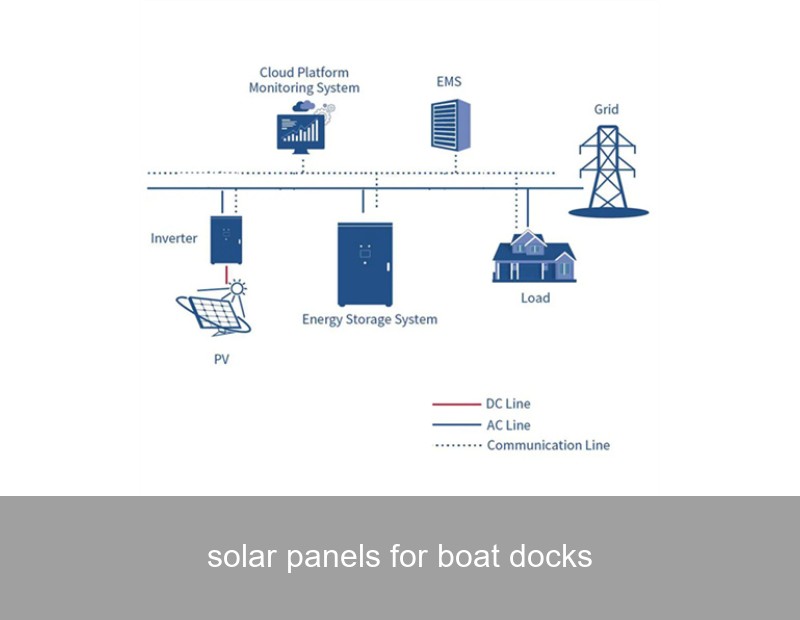
A functional system is more than just slapping a panel on a roof. It's an integrated ecosystem. Here’s what you need:
| Component | Purpose | Marine-Specific Considerations |
|---|---|---|
| Solar Panels | Convert sunlight into direct current (DC) electricity. | Must be corrosion-resistant, durable against hail/impact, and often framed for easy mounting on dock roofs or poles. |
| Charge Controller | Regulates voltage from panels to safely charge batteries. | MPPT (Maximum Power Point Tracking) types are most efficient. Must be housed in a weatherproof enclosure. |
| Energy Storage (Battery) | Stores energy for use when the sun isn't shining. | This is critical. Standard car batteries fail quickly. Deep-cycle AGM or, better yet, Lithium Iron Phosphate (LiFePO4) batteries are essential for longevity, depth of discharge, and safety. |
| Inverter | Converts stored DC battery power to AC power for standard appliances. | Needs to be sized for your total AC load (e.g., tools, fridge). Pure sine wave inverters are recommended for sensitive electronics. |
| Mounting & Wiring | Physically secures the system and connects components. | All hardware must be stainless steel or marine-grade aluminum. Wiring must be UV-resistant and properly secured against wind and wave motion. |

Image Source: Unsplash - Example of a solar panel array integrated onto a dock roof.
Installation & Environmental Challenges
The marine environment is one of the harshest for any electrical equipment. Saltwater spray, constant humidity, temperature swings, and potential flooding pose significant challenges. A system designed for a home rooftop will not survive long on a dock. Key considerations include:
- Corrosion: Every metal component must be corrosion-resistant.
- Water Ingress: All electrical connections and enclosures must have a high IP (Ingress Protection) rating.
- Physical Stability: The system must withstand wind, waves, and occasional impacts from boats or debris.
- Safety: Electrical systems near water require strict adherence to safety codes, including proper grounding and GFCI (Ground Fault Circuit Interrupter) protection.
A Real-World Case Study: Lake Geneva Marina, Wisconsin, USA
Let's look at a concrete example. A mid-sized marina on Lake Geneva faced rising electricity costs and wanted to offer "green" charging stations for its patrons' electric boats and personal devices. Their goals were to reduce grid dependence, market an eco-friendly amenity, and ensure power resilience.
- They installed a 8.4 kW solar canopy over a section of their main guest dock, using 24 high-efficiency, marine-tough panels.
- The system was paired with a 40 kWh integrated battery storage unit to store excess daytime energy for evening use and cloudy days.
- Results after 12 months:
- Covered 100% of the power needs for 20 dedicated EV (boat) charging points and all dock lighting for that section.
- Reduced the marina's grid energy draw for dock services by an estimated 65% annually.
- Became a marketing highlight, attracting owners of newer electric boats and environmentally conscious clients.
- The system's monitoring showed an annual production of over 9,500 kWh, enough to power an average U.S. home for nearly a year.
This case illustrates that with proper design, solar panels for boat docks can be both an operational and a commercial success.
Highjoule's Smart Solutions for Marine Energy
This is where expertise and purpose-built technology make all the difference. At Highjoule, with nearly two decades of experience in advanced energy storage, we've developed solutions that directly address the unique needs of marine and waterfront applications. Our systems are engineered not just to work, but to thrive in challenging environments.
For dock owners and marina operators, Highjoule offers:
- The Highjoule Marine Battery System: Built on safe, long-life LiFePO4 chemistry, these battery packs are housed in rugged, corrosion-resistant enclosures with integrated battery management systems (BMS) that protect against overcharge, deep discharge, and temperature extremes.
- Integrated Power Management: Our systems combine the inverter, charger, and MPPT controller into a single, compact, and sealed unit. This simplifies installation, reduces failure points, and provides a seamless user interface for monitoring power flow—from solar panels, to battery, to your dock's outlets.
- Remote Monitoring & Control: Via a user-friendly app, you can check your dock's solar production, battery level, and power consumption from anywhere in the world. This peace of mind is invaluable for seasonal or remote properties.
- Scalability: Whether you need to power a few LED lights or run multiple boat lifts and a small workshop, Highjoule's modular systems can be configured to match your exact energy requirements, with the option to expand later.

Image Source: Unsplash - Represents a modern, integrated energy storage and management system.
Why an Integrated System Beats a DIY Kit
While sourcing components separately is possible, a pre-engineered, integrated system like Highjoule's ensures compatibility, safety, and warranty coverage. Think of it as the difference between building a boat from scratch and buying a professionally crafted one—the latter is optimized for performance and reliability from the start, saving you time, hassle, and potential risk.
Getting Started with Your Project
Embarking on your dock solar journey requires careful planning. Start by auditing your energy needs: list all devices (lights, chargers, pumps) you want to power and estimate their daily watt-hour consumption. This will determine the size of your solar array and battery bank.
Next, consult with professionals who understand both solar power and the marine environment. They can assess your specific site for solar exposure, design a structurally sound mounting solution, and ensure the entire installation meets national and local electrical codes, such as the National Electrical Code (NFPA 70) in the U.S. and its marine-specific articles.
The Future is Bright and Powered by the Sun
As battery technology continues to improve and the drive for sustainability grows stronger, intelligent, self-powered docks will become the norm rather than the exception. They represent a harmonious blend of enjoying our natural waterways while actively protecting them.
Ready to Explore Your Options?
What's the first appliance or device on your dock that you would love to power with clean, free energy from the sun? Share your idea, and let's discuss how a tailored solar solution can make it a reality.
 Inquiry
 Online Chat