


Unlocking High-Power Potential: A Deep Dive into the 72V 150Ah Lithium Battery
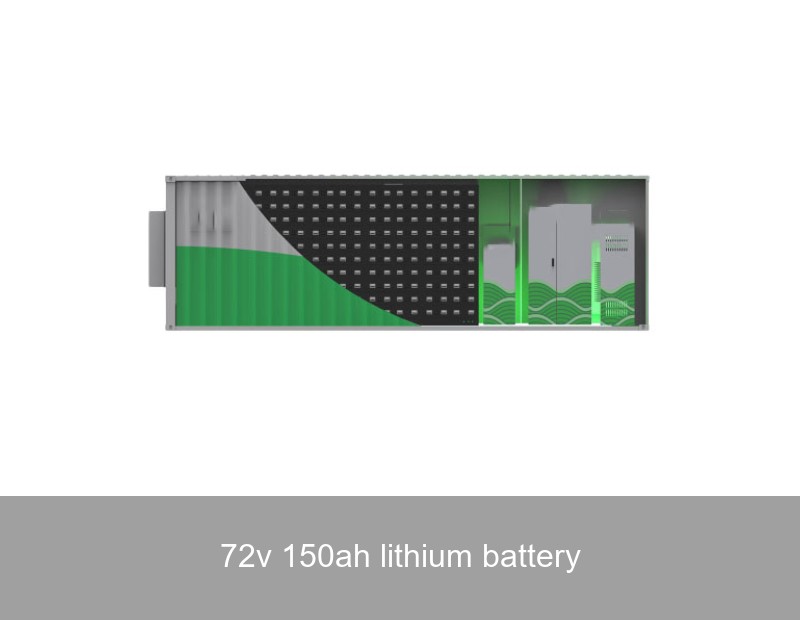
If you're managing a large off-grid property, powering industrial equipment, or designing a robust microgrid, you've likely encountered the term "72V 150Ah lithium battery." It sounds technical, but understanding this powerhouse is key to unlocking reliable, high-capacity energy storage. In essence, this specification represents a formidable energy unit: 72 volts of direct current (DC) combined with a storage capacity of 150 ampere-hours. To put that in perspective, this single battery pack stores a substantial 10.8 kilowatt-hours (kWh) of energy (72V x 150Ah = 10,800Wh). That's enough to run an average American home's essential loads for nearly a full day or support heavy-duty commercial tools for hours on end. But why is this specific configuration becoming a go-to for demanding applications, and what should you look for when investing in one? Let's explore.
Why Voltage & Capacity Matter: The Power Behind Your Projects
Think of your energy system like a water network. Voltage (V) is analogous to water pressure—it determines the "push" that drives electricity through the system. Ampere-hours (Ah) represent the size of the water tank—the total amount of energy stored. A 72V 150Ah lithium battery offers a perfect synergy of high pressure and a large tank.
Higher voltage systems, like 72V, offer significant advantages for larger-scale applications:
- Reduced Energy Loss: For the same power output, a higher voltage system draws lower current. Since heat loss is proportional to the square of the current (I²R), this dramatically increases efficiency, especially over long cable runs common in industrial settings or large properties.
- Power for Heavy Machinery: Many industrial motors, large inverters, and agricultural equipment are designed to run on higher DC voltages for better performance and efficiency. A 72V battery bank can directly and efficiently support these loads.
- Scalability: Building a large energy storage system (ESS) with higher voltage battery strings requires fewer parallel connections, simplifying system design, balancing, and monitoring.

Image: High-voltage battery systems are ideal for integrating with large-scale solar arrays. (Source: Unsplash, Photographer: American Public Power Association)
The Data Supporting the Shift to High-Voltage Lithium
The transition to lithium-ion technology, particularly in high-voltage configurations, is backed by compelling data. According to a U.S. Department of Energy report, the price of lithium-ion battery packs fell 89% between 2010 and 2021. This cost plunge has made robust systems like a 72V 150Ah lithium battery bank commercially viable. Furthermore, lithium batteries offer a depth of discharge (DoD) of 80-90%, compared to roughly 50% for lead-acid. This means you can actually use almost all of that 10.8 kWh without damaging the battery, effectively doubling the usable capacity compared to older technologies.
Real-World Case Study: Powering Sustainability at a California Vineyard
Let's move from theory to practice. Consider a mid-sized vineyard in Sonoma County, California. Their challenge was threefold: high energy costs for irrigation pumps and cooling facilities, unreliable grid power during fire-prevention shutoffs, and a corporate commitment to sustainability.
Phenomenon: Operational vulnerability due to grid instability and rising energy costs.
Data & Solution: The vineyard installed a 250 kW solar array coupled with a 500 kWh energy storage system. The core of this storage system was comprised of multiple 72V 150Ah lithium battery modules arranged in series and parallel to achieve the required voltage and capacity. This specific voltage was chosen to efficiently interface with their large, three-phase industrial inverters powering the 40 HP irrigation pumps.
Outcome: The system now provides:
| Metric | Result |
|---|---|
| Grid Independence During Outages | Up to 48 hours of full operational backup |
| Annual Energy Cost Savings | ~$45,000 |
| Peak Demand Charge Reduction | ~60% |
| Carbon Footprint Reduction | Estimated 120 tons of CO2 annually |
This case illustrates how the 72V 150Ah lithium battery unit serves as a fundamental, scalable building block for commercial and agricultural energy resilience.
Choosing the Right 72V 150Ah Battery: Key Factors Beyond the Spec Sheet
Not all 72V 150Ah batteries are created equal. Here’s what discerning buyers should scrutinize:
- Cell Chemistry: Is it Lithium Iron Phosphate (LFP) or NMC? LFP (like LiFePO4) is renowned for superior safety, longevity (3,000+ cycles), and stability, making it ideal for stationary storage. NMC may offer higher energy density but often at the cost of cycle life and thermal tolerance.
- Built-in Battery Management System (BMS): A high-quality BMS is the brain of the battery. It must provide cell balancing, overcharge/discharge protection, temperature monitoring, and communication (CAN, RS485) for system integration.
- Thermal Management: How does the battery handle heat? Passive cooling might suffice for low-rate applications, but active thermal management (cooling/heating) is crucial for high-power or extreme climate applications to ensure lifespan and safety.
- Certifications & Warranty: Look for international certifications like UL 1973, IEC 62619, or UN38.3. A transparent warranty (e.g., 10 years, 70% retained capacity) reflects the manufacturer's confidence.
The Highjoule Solution: Engineered for Demanding Applications
At Highjoule, we understand that a spec like 72V 150Ah lithium battery is just the starting point. Our engineering philosophy focuses on building intelligence, safety, and durability into every module. For applications requiring this high-voltage, high-capacity configuration, our H-Industrial Series is specifically designed.
Our H-Industrial modules leverage Lithium Iron Phosphate (LFP) chemistry, the safest and most durable option for stationary storage. Each module is not just a battery but an integrated power unit featuring:
- Advanced Adaptive BMS: Goes beyond protection to optimize performance based on usage patterns and environmental conditions, extending cycle life.
- Modular & Scalable Design: Easily stack and connect modules to build systems from 10 kWh to multi-megawatt-hour installations, perfect for evolving business needs.
- Robust Connectivity: Seamless integration with major inverter brands (SolarEdge, SMA, Schneider Electric, etc.) and microgrid controllers, providing real-time monitoring and control via our Highjoule Energy Platform.

Image: Modular lithium battery systems allow for clean, scalable energy storage solutions. (Source: Unsplash, Photographer: Michael Fousert)
For a commercial facility in Germany or a microgrid project in Texas, this means a future-proofed asset that reduces total cost of ownership, maximizes return on investment, and provides unwavering reliability.
The Future of High-Voltage Energy Storage
The trajectory is clear. As noted by research from the National Renewable Energy Laboratory (NREL), energy storage is pivotal for a decarbonized grid. We will see increasing integration of AI to predict energy usage and optimize battery cycling, and further advancements in solid-state and other next-generation chemistries that may offer even greater safety and energy density within the same 72V 150Ah form factor.
Your Next Step
The decision to implement a high-voltage lithium battery system is significant. It's not just about purchasing batteries; it's about investing in a cornerstone of your operational resilience and sustainability. How will your organization's energy needs evolve over the next decade, and what role should a robust, scalable storage solution play in that vision?
 Inquiry
 Online Chat