


Understanding the Lithium Battery 250Ah Price: A Smart Buyer's Guide for Energy Independence
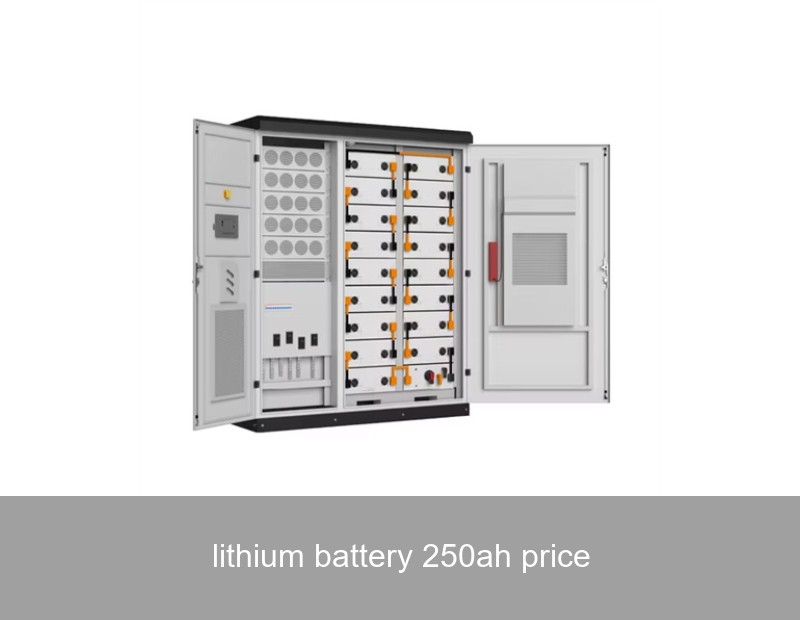
If you're researching energy storage for your home, business, or off-grid project, you've likely typed "lithium battery 250Ah price" into a search engine. The number that comes back can be startling—ranging from a few hundred to several thousand dollars or euros. But here's the crucial insight: focusing solely on that upfront cost is like buying a car based only on the sticker price, ignoring fuel efficiency, maintenance, and lifespan. The true value of a 250Ah lithium battery lies in its total cost of ownership and the energy independence it unlocks. Let's demystify what goes into that price and how to make an investment that pays off for decades.
The Real Price Tag: More Than Just a Number
A 250Ah (Amp-hour) battery describes its capacity. At a nominal 12 volts, it stores roughly 3 kilowatt-hours (kWh) of usable energy (250Ah * 12V = 3000Wh). But not all 3kWh batteries are created equal. The quoted "lithium battery 250Ah price" is a gateway to understanding a complex ecosystem of technology, safety, and long-term performance. We're moving beyond the era of cheap, disposable power. Today's advanced Lithium Iron Phosphate (LiFePO4) batteries, the dominant choice for stationary storage, offer over 6,000 cycles at 80% depth of discharge. That means they can deliver a full cycle daily for well over 16 years. Suddenly, the price per cycle becomes the most telling metric.

Modern LiFePO4 battery systems, like those from Highjoule, are designed for seamless integration and decades of reliable service.
Breaking Down the Lithium Battery 250Ah Price Components
Why does the price vary so much? Let's dissect the core elements that contribute to the final cost of a reliable 250Ah battery system.
1. Core Cell Technology & Chemistry
Not all lithium is the same. Many budget options use older Lithium Nickel Manganese Cobalt Oxide (NMC) cells, which may have a lower upfront cost but a shorter lifespan and higher thermal sensitivity. Premium systems, including Highjoule's ResiCore and IndustraCell series, utilize automotive-grade LiFePO4 (LFP) cells. LFP chemistry is renowned for its exceptional safety (thermal runaway stability), longevity, and environmental friendliness. You're paying for inherent safety and durability.
2. The Brain: The Battery Management System (BMS)
A battery without a sophisticated BMS is a hazard. The BMS is the guardian of your investment, performing critical tasks:
- Cell Balancing: Ensures all cells charge and discharge evenly, maximizing pack life.
- Thermal Management: Monitors temperature to prevent dangerous conditions.
- State of Charge (SOC) Calculation: Provides accurate, real-time "fuel gauge" readings.
- Communication: Integrates with inverters and energy management systems.
A high-quality BMS, like the proprietary SmartBMS OS in every Highjoule unit, adds cost but is non-negotiable for a safe, 20-year asset.
3. System Integration & Smart Capabilities
Is the battery a simple "dumb" box of cells, or an intelligent energy node? Modern systems like Highjoule's offer:
| Feature | Impact on Price & Value |
|---|---|
| Grid-Forming Inverter Compatibility | Allows off-grid operation and microgrid support, adding resilience. |
| AI-Driven Energy Management | Learns consumption patterns to optimize self-consumption and grid interaction, saving money. |
| Scalable Modular Design | Start with a 250Ah base and add modules as needed, protecting your initial investment. |
| Cybersecurity & Remote Updates | Ensures your system is secure and can improve over time via software. |
A Real-World Case: From Price to Performance in Bavaria
Let's move from theory to practice. Consider a mid-sized dairy farm in Bavaria, Germany, facing high energy costs and seeking energy security.
Phenomenon: Erratic energy prices and occasional grid instability threatened refrigeration and operational continuity.
Data & Solution: The farm installed a 30kWh storage system (equivalent to ten 250Ah 12V blocks) coupled with an existing 50kW solar array. The system was centered on Highjoule's AgroStorage solution, a ruggedized, modular battery system designed for agricultural environments.
- Self-Consumption of Solar: Increased from 35% to over 85%.
- Grid Energy Costs: Reduced by 68%.
- ROI Timeline: Calculated at 6.2 years, based on energy savings and peak-shaving benefits.
- Unplanned Value: The system provided backup power during two grid outages, preventing spoilage of thousands of liters of milk.
The initial "lithium battery price" was evaluated not as a cost, but as a capital expenditure with a clear, quantifiable return and risk mitigation benefits. As noted by the Fraunhofer Institute for Solar Energy Systems, the levelized cost of storage for lithium-ion systems in such applications has fallen by over 70% in the last decade, making the economic case compelling.

Agricultural businesses are increasingly turning to solar-plus-storage solutions to ensure operational resilience and cost predictability.
Key Factors Influencing Your 250Ah Battery Investment
When evaluating options, ask these questions:
- Certifications & Warranty: Does the battery carry UL 9540, IEC 62619, or UN38.3 certifications? Does the warranty guarantee a certain end-of-life capacity (e.g., 70% after 10 years) or just cover defects?
- Depth of Discharge (DoD): A quality LiFePO4 battery can regularly discharge to 90-100% DoD without significant degradation. A cheaper battery might only safely use 80% of its rated capacity, meaning you're paying for energy you can't use.
- Scalability: Can you easily add more 250Ah modules in the future? Highjoule's architecture allows for plug-and-play expansion, ensuring your system grows with your needs.
- Total System Cost: Remember to factor in installation, compatible inverters, and any necessary electrical upgrades. A reputable provider like Highjoule offers comprehensive project design and support to avoid hidden costs.
Highjoule's Approach: Delivering Value Beyond the Price Per kWh
At Highjoule, we engineer systems where the lithium battery 250Ah price reflects a promise of long-term performance and peace of mind. Our products are built on three pillars:
- Intelligence by Design: Our Energy Hub platform doesn't just store energy; it intelligently manages it. It can automatically decide when to charge from solar, when to discharge to avoid peak tariffs, and when to sell excess back to the grid, maximizing your financial return.
- Uncompromising Safety: From cell selection to enclosure design and our proprietary BMS, safety is embedded at every layer. Our systems are tested to the most stringent international standards.
- Adaptive Solutions: Whether it's our ResiCore for homes, IndustraCell for factories, or MicroGrid Core for community projects, we provide tailored solutions. We don't just sell a battery; we provide a pathway to energy resilience. For deeper technical insights, resources like those from the U.S. Department of Energy's Solar Energy Technologies Office underscore the importance of integrated system design.
The Future of Storage: Is a 250Ah Battery Right for Your Next Step?
The conversation is shifting from "how much does a battery cost" to "what can a battery do for me?" A 250Ah LiFePO4 battery is a powerful building block. For a large home, it could be the foundation. For a small business, it might be one module in a larger array. The key is to think systemically.
What specific energy challenge are you looking to solve? Is it reducing a soaring utility bill, achieving true backup power during storms, or meeting sustainability goals? The right storage solution, priced for value over its entire lifetime, is the key to unlocking that goal.
We invite you to move beyond the search query. What does your ideal energy-independent day look like, and how can the right storage technology make it a reality?
 Inquiry
 Online Chat