


The 72V 40Ah Lithium Battery: Powering the Next Generation of Energy Storage
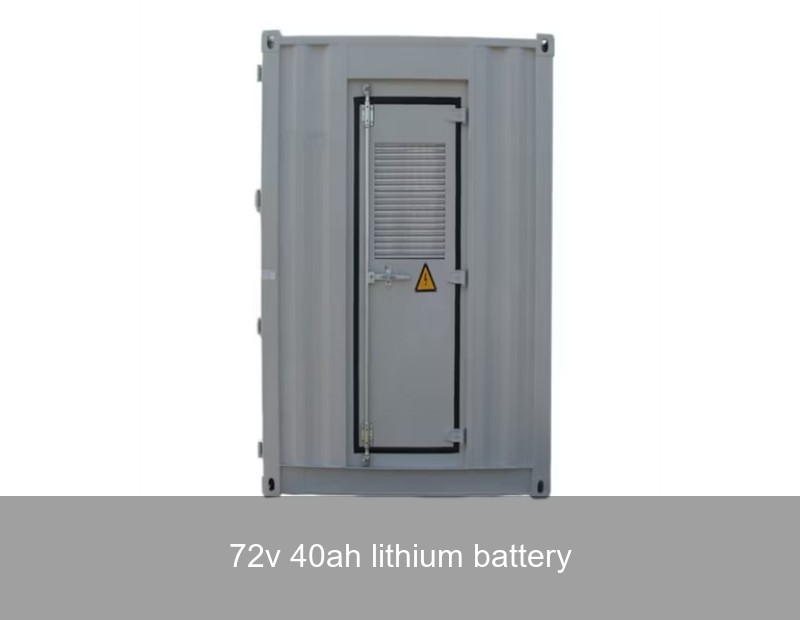
Have you ever wondered what's behind the quiet hum of a modern electric utility vehicle, the seamless backup power for a remote telecom tower, or the robust energy core of a compact off-grid system? More often than not, the answer lies in a specific, high-performance power pack: the 72V 40Ah lithium battery. This isn't just a random combination of volts and amp-hours; it represents a sweet spot in energy storage, balancing substantial power delivery with impressive capacity in a relatively compact form. For businesses and homeowners looking to upgrade from lead-acid or smaller lithium systems, understanding this battery specification is key to unlocking greater efficiency, reliability, and sustainability. In this article, we'll demystify the 72V 40Ah battery, explore its ideal applications, and show how advanced solutions from providers like Highjoule are setting new standards for intelligent power management.
Table of Contents
- What Does 72V 40Ah Actually Mean?
- Why Lithium? The Unmatched Advantages Over Lead-Acid
- Prime Applications: Where the 72V 40Ah Battery Shines
- A Real-World Case: Solar Microgrid Reliability in Southern Europe
- Beyond the Cell: The Critical Role of the Battery Management System (BMS)
- Choosing the Right System: What to Look For
- The Future is Modular and Smart

Image Source: Unsplash (Professional photography of energy storage components)
What Does 72V 40Ah Actually Mean?
Let's break it down simply. The 72V (volts) is the nominal voltage, a measure of the electrical pressure the battery provides. Higher voltage systems are more efficient for powering substantial motors or inverters, as they reduce current (amps) for the same power output, leading to less energy loss as heat in the wiring. The 40Ah (amp-hours) is the capacity, indicating how much charge the battery can store. Think of it as the fuel tank size. A 72V 40Ah battery has a total energy capacity of 2.88 kilowatt-hours (kWh) (72V x 40Ah = 2880Wh). This means it can theoretically deliver 1 kilowatt of power for nearly 3 hours, or 2 kilowatts for about 1.5 hours, before needing a recharge.
Why Lithium? The Unmatched Advantages Over Lead-Acid
The shift to lithium-ion (Li-ion) chemistry, particularly in configurations like a 72V 40Ah lithium battery, is a game-changer. Compared to traditional lead-acid batteries, the benefits are substantial:
- Higher Energy Density: Lithium batteries pack 3-4 times more energy into the same space, making the 72V 40Ah pack remarkably compact and lightweight.
- Longer Lifespan: While a quality lead-acid battery may last 500 cycles, a well-managed Li-ion battery can exceed 3000-6000 cycles, offering years of reliable service.
- Faster Charging: They can accept a much faster charge, often reaching 80% capacity in an hour or two, minimizing downtime.
- Higher Depth of Discharge (DoD): You can safely use 80-90% of a lithium battery's capacity without damaging it, whereas lead-acid is often limited to 50% DoD for longevity.
- Low Maintenance: No need for watering, equalizing charges, or worrying about acid spills.
This is where engineering excellence matters. At Highjoule, our Commercial & Industrial (C&I) Energy Storage Systems are built around high-quality, UL-certified lithium-ion cells configured into robust packs like the 72V 40Ah. We focus not just on the cells, but on integrating them into a complete, safe, and intelligent power solution.
Prime Applications: Where the 72V 40Ah Battery Shines
This specific battery configuration is a workhorse for medium-duty applications that require a balance of power and runtime. Key markets include:
| Application Sector | Use Case | Why 72V 40Ah is Ideal |
|---|---|---|
| Electric Mobility | Large electric forklifts, mid-size ground support equipment (GSE), utility vehicles (UTVs). | Provides the high torque (via voltage) and extended shift runtime (via capacity) needed for industrial operations. |
| Renewable Energy Storage | Off-grid solar systems for cabins, small businesses, or as a critical backup for essential loads. | Matches well with common 48V/72V solar inverter inputs and offers a substantial ~2.9kWh storage block for modular expansion. |
| Telecom & Microgrids | Backup power for remote cellular sites or as a building block in community microgrids. | Its durability, low maintenance, and ability to handle frequent cycles make it perfect for unattended, mission-critical sites. |
A Real-World Case: Solar Microgrid Reliability in Southern Europe
Let's look at a concrete example from a small agri-tourism business in the hills of Tuscany, Italy. The business relied on a diesel generator and an aging lead-acid battery bank for power, facing high fuel costs, noise, and unreliable power quality. Their peak load was around 5kW, with a daily energy need of approximately 12kWh.
The Solution: They installed a new 15kW solar array paired with a modular energy storage system centered on Highjoule's scalable battery cabinets. Each cabinet contains multiple, factory-integrated 72V 40Ah lithium battery modules, allowing for easy capacity expansion. The total storage was configured to 17.3kWh (using six parallel 72V 40Ah strings).
The Data-Driven Outcome (after 12 months):
- Diesel Fuel Savings: 4,200 liters eliminated annually.
- Energy Cost Reduction: 92% reduction in monthly energy expenses.
- Reliability: The system maintained 99.8% power availability, even during seasonal grid fluctuations.
- ROI: Projected payback period of 4.2 years, factoring in local green energy incentives.
The Highjoule system's intelligent BMS ensured each 72V 40Ah module was balanced and operated within its optimal temperature and voltage range, maximizing the lifespan of the investment. This case underscores how the right battery technology, configured correctly, directly impacts both sustainability and the bottom line. For more on microgrid benefits, see this report from the National Renewable Energy Laboratory (NREL).

Image Source: Unsplash (Solar panels on rural property)
Beyond the Cell: The Critical Role of the Battery Management System (BMS)
A 72V 40ah lithium battery is only as good as its brain: the Battery Management System. A premium BMS, like the one integrated into every Highjoule unit, performs vital functions:
- Cell Monitoring & Balancing: Tracks the voltage and temperature of each cell group, ensuring no single cell is over-stressed.
- Thermal Management: Works with cooling systems to maintain the ideal operating temperature, crucial for safety and longevity.
- State of Charge (SoC) Calculation: Provides accurate, real-time "fuel gauge" readings, so you know exactly how much energy is left.
- Safety Protections: Instantly disconnects the battery in case of over-voltage, under-voltage, short circuit, or over-temperature events.
Neglecting the BMS is like buying a high-performance engine without an ECU. It's a non-negotiable component of a safe, long-lasting energy storage system.
Choosing the Right System: What to Look For
When evaluating a 72V 40Ah lithium battery or a system built around it, consider these factors:
- Certification & Safety: Look for UL 1973, UL 9540A, or equivalent regional certifications (like IEC for Europe).
- Scalability: Can you easily add more 72V 40Ah modules in parallel later if your needs grow? Highjoule's architecture is designed for this.
- Warranty & Cycle Life: A strong warranty (e.g., 10 years) backed by a high cycle-life rating indicates confidence in the product's durability.
- Integration Capability: Does the system communicate seamlessly with major solar inverters and energy management platforms? Interoperability is key for a smart energy ecosystem.
The Future is Modular and Smart
The trend is moving towards modular, plug-and-play battery systems. Imagine a 72V 40Ah module as a standardized "energy brick." Businesses can start with what they need and stack more bricks as their operations expand. This is at the core of Highjoule's product philosophy. Our solutions for commercial, industrial, and microgrid applications are built with this flexibility in mind, coupled with cloud-based monitoring that gives you insights into your energy usage and battery health from anywhere in the world. This level of control and adaptability is what transforms a simple battery into a true strategic asset.
For a deeper dive into lithium-ion technology advancements, consider reading this overview from the U.S. Department of Energy.

Image Source: Unsplash (Engineer and modern energy storage system)
Ready to Evaluate Your Power Needs?
Whether you're designing a new electric vehicle platform, seeking independence from the grid, or simply ensuring your business has resilient backup power, the choice of your energy storage core is critical. Could a modular system based on reliable, high-performance units like the 72V 40Ah lithium battery be the key to your energy resilience and cost savings? What is the single biggest energy challenge your project is facing today?
 Inquiry
 Online Chat