


Unlocking Maximum Energy: Your Guide to the 730W Solar Panel for Sale
If you're exploring the solar market in the US or Europe, you've likely encountered a powerful new term: the 730w solar panel for sale. This isn't just an incremental upgrade; it represents a significant leap in photovoltaic technology, promising to transform how we think about energy yield per square foot. For homeowners and businesses alike, the arrival of these ultra-high-wattage panels raises compelling questions. Are they a game-changer for limited roof space? How do they perform in real-world conditions? And most importantly, how can you ensure you get the most out of such a powerful component? Let's demystify the 730W solar panel and explore what it truly means for your energy independence.
What is a 730W Solar Panel? The New Powerhouse
At its core, a 730-watt solar panel is a module designed to convert a substantial amount of sunlight into electricity—up to 730 watts under ideal laboratory conditions (Standard Test Conditions, or STC). This high output is primarily achieved through two advanced cell technologies:
- N-Type TOPCon Cells: These cells offer higher efficiency and better performance in high temperatures compared to traditional PERC cells, meaning less energy loss on hot summer days.
- Half-Cut Cell Design: By cutting standard cells in half, manufacturers reduce internal resistance and shading losses. This design also means if part of the panel is shaded, the other half can often keep operating efficiently.
Physically, these panels are larger than their predecessors. You might be looking at a panel that is approximately 2.4 meters by 1.3 meters (roughly 7.8 ft x 4.3 ft). While impressive, this size underscores a critical point: a 730w solar panel for sale is a premium component whose performance is maximized only when integrated into a correctly designed system. It's like putting a high-performance engine in a car; you need a matching transmission, suspension, and brakes to harness its full potential safely and effectively.

Image: High-wattage panels require professional design and robust mounting. (Source: Unsplash, Photographer: Andreas Gücklhorn)
Why the 730W Rating Matters: More Than Just a Number
The trend towards higher wattage panels, like the 730W class, is a direct response to a universal challenge: space constraints. The phenomenon is simple—whether it's a residential roof with multiple chimneys and dormers or a commercial facility with limited rooftop area, usable space is finite.
Let's look at the data. Replacing older 400W panels with new 730W models can increase the power capacity of the same physical area by over 80%. This means a business that could previously fit a 100 kW system might now achieve a 180 kW system on the same roof, dramatically increasing on-site generation and accelerating the return on investment. For utilities and large-scale solar farms, higher-wattage panels reduce the number of panels, racking components, and labor hours needed per megawatt, lowering the levelized cost of energy (LCOE)—a key metric tracked by authorities like the National Renewable Energy Lab.
Real-World Impact: A Case Study from Texas
Consider a manufacturing plant in Dallas, Texas, facing rising energy costs and ambitious sustainability goals. Their flat rooftop had space for a 500 kW system using standard 500W panels. By opting for a 730W panel design, they were able to install a 730 kW system within the same footprint.
| Metric | With 500W Panels | With 730W Panels | Improvement |
|---|---|---|---|
| System Size | 500 kW | 730 kW | +46% |
| Estimated Annual Production | 750,000 kWh | 1,095,000 kWh | +345,000 kWh |
| Land/Roof Use Efficiency | 100% (baseline) | 146% relative output | Significantly Better |
This increase in generation allows them to offset a larger portion of their daytime energy consumption, providing a stronger buffer against volatile energy prices—a concern for many businesses across Europe and North America. The key to this project's success was not just the panels themselves, but the system-level engineering that ensured the inverters, wiring, and structural support could handle the increased power density.
Choosing the Right System for Your 730W Panels
Purchasing a 730w solar panel for sale is just the first step. To truly benefit, you must consider the entire ecosystem. High-power panels produce higher current and voltage, which has cascading effects:
- Inverter Compatibility: You need an inverter that can handle the higher input power and voltage of these panels. String inverters must be carefully selected to avoid clipping (wasting energy), while microinverters or DC optimizers must be rated for the higher current.
- Balance of System (BOS): Racking, wiring, and connectors must all be rated for the increased electrical loads. Using undersized components is a safety risk and can lead to significant energy losses.
- Structural & Safety Compliance: The weight and wind load of larger panels require a verified structural assessment. Furthermore, in the event of a fire, firefighters need to know how to safely manage systems with such high DC voltages, a topic covered by guidelines from bodies like the National Fire Protection Association (NFPA).
The Highjoule Integrated Solution: Beyond the Panel Sale
This is where the expertise of a full-system provider becomes invaluable. At Highjoule, we view a 730w solar panel for sale not as a standalone product, but as a critical component within a synchronized energy system. Our approach ensures every element works in harmony.
For instance, our HPS Series Commercial Storage System is engineered to seamlessly integrate with high-density solar arrays. It features advanced string inverters with high input voltage ranges and maximum power point trackers (MPPTs) specifically designed to harvest the full potential of panels like the 730W class. Furthermore, our integrated battery storage allows you to capture the abundant energy these panels produce—even during peak sun hours—and use it when you need it most, be it at night or during a grid outage.
For residential clients looking at premium panels, our Home Energy Hub provides a similar, all-in-one solution. It manages the high DC input, converts it to usable AC power, and intelligently decides whether to send energy to the home, to our compact Residential Battery Unit, or back to the grid, maximizing self-consumption and financial returns. We handle the entire process: from site assessment and structural engineering to grid compliance and commissioning, ensuring your high-power investment is safe, compliant, and optimized from day one.

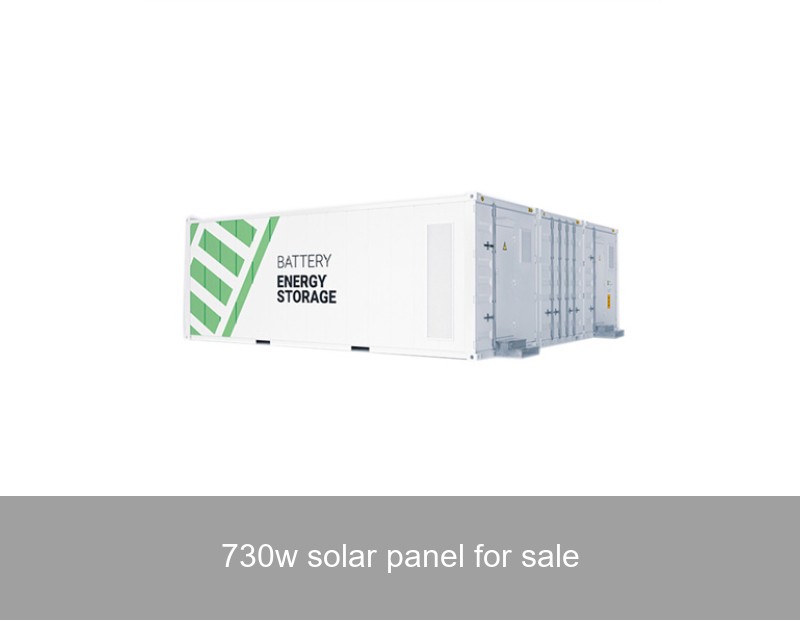
Image: An integrated battery storage system, like Highjoule's solutions, is key to leveraging high-output solar generation. (Source: Unsplash, Photographer: Kindel Media)
Is a 730W Solar Panel System Right for You?
The decision hinges on your specific goals and constraints. These panels are an excellent fit if you have limited space but high energy demands, or if you are focused on minimizing installation time and balance-of-system costs for a large project. However, for smaller roofs with complex shading, a system using slightly lower-wattage panels with more granular DC optimizers might yield a better overall harvest.
The solar landscape is evolving rapidly, with panel efficiencies and government incentives, such as those in the US Inflation Reduction Act or European Green Deal, creating unique opportunities. The International Energy Agency notes that solar PV is set to dominate global capacity additions, driven by both cost declines and policy support.
 Inquiry
 Online Chat