


Accumulare Energia Elettrica: The Smart Way to Power Your Future
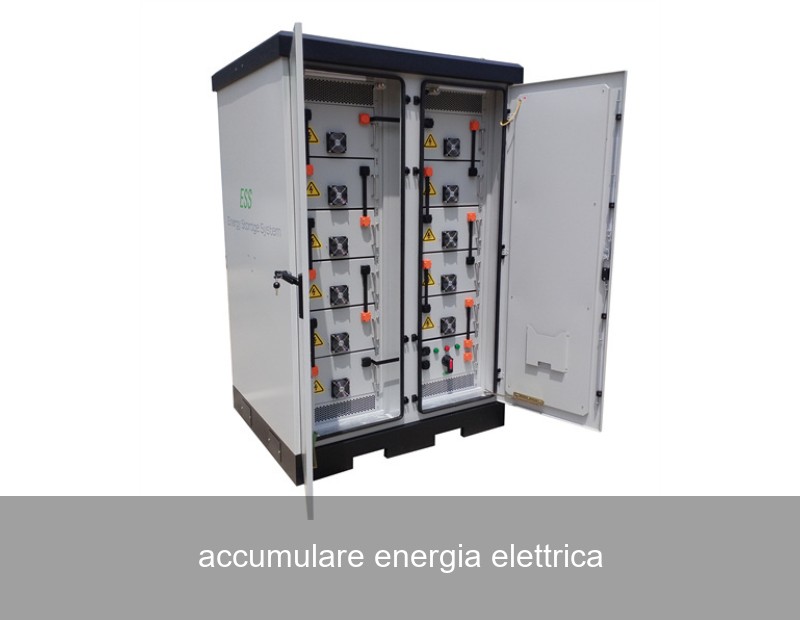
Have you ever watched your electricity meter spin and wondered where all that power—and money—is going? Or perhaps you've seen news of grid instability and thought about how to secure your own energy independence. The solution lies in a transformative technology: accumulare energia elettrica, or electrical energy storage. This isn't just about having a backup; it's about taking intelligent control of where your electricity comes from, when you use it, and how much you pay for it. For homeowners and businesses across Europe and the US, mastering this ability is becoming the cornerstone of a resilient, cost-effective, and sustainable energy strategy.
The Phenomenon: Why Storing Electricity is No Longer Optional
Our energy landscape is undergoing a seismic shift. Two powerful forces are converging: the rapid rise of intermittent renewable sources like solar PV, and increasing volatility in traditional energy markets. Solar panels produce abundantly when the sun shines—often midday when demand might be lower. Conversely, energy is most needed and expensive in the early evening when solar production falls. This creates a mismatch. Without a means to accumulare energia elettrica, this valuable, self-generated power is wasted, fed back to the grid for minimal compensation, while you later buy it back at a premium.
Furthermore, aging grid infrastructure in many regions is leading to more frequent outages. For a family, this is an inconvenience. For a business, it can mean significant financial loss. The ability to store electricity transforms this dynamic, turning a passive connection to the grid into an active, managed energy asset.
The Data: Quantifying the Savings and Stability
Let's talk numbers, because the financial and practical benefits of energy storage are concrete. A well-designed battery energy storage system (BESS) can achieve remarkable outcomes:
- Self-Consumption Boost: A typical home solar system without storage might use 30-40% of its own solar generation. Adding a battery can increase this self-consumption rate to 70% or more, drastically reducing electricity purchases from the grid.
- Peak Shaving: Commercial and industrial users often face "demand charges" based on their highest power draw (peak) during a billing period. Storage can "shave" these peaks, leading to demand charge reductions of 20-40%.
- ROI Timeline: Depending on local energy prices and incentives, a residential storage system in markets like Germany, Italy, or California can often see a payback period of 6-10 years on a system with a 15+ year lifespan.
| Benefit | Residential Impact | Commercial/Industrial Impact |
|---|---|---|
| Increased Self-Consumption | From ~35% to >70% | Maximizes on-site solar ROI |
| Bill Savings | 50-80% on energy costs | Reduces energy & demand charges |
| Backup Power | Essential circuits for hours/days | Critical process continuity |
These figures aren't theoretical. They are being realized daily by forward-thinking energy consumers. For deeper insights into grid dynamics and storage value, organizations like the International Renewable Energy Agency (IRENA) provide extensive research on the global integration of storage.
Case Study: A German Bakery's Recipe for Energy Independence
Let’s look at a real-world example from Bavaria, Germany. "Bäckerei Schmidt" (a pseudonym for privacy) is a medium-sized artisanal bakery with high energy demands for ovens, refrigeration, and lighting. They installed a 100 kWp solar rooftop system in 2020 but found they were exporting over 60% of their solar yield to the grid during the day, only to buy expensive electricity in the early morning baking hours.
In 2022, they decided to accumulare energia elettrica by integrating a 120 kWh battery storage system. The results after one year were compelling:
- Energy Self-Sufficiency: Increased from 32% to 81%.
- Peak Demand: Reduced grid power draw during morning peak by 92%, slashing demand charges.
- Financials: Achieved total annual electricity cost savings of €18,500. The system, leveraging a state incentive, is projected to pay for itself in under 7 years.
- Sustainability: Their carbon footprint from electricity use decreased by an estimated 28 tonnes of CO2 annually.

This bakery no longer sees itself as just a consumer. It's now a proactive manager of its energy ecosystem, buffered from price spikes and contributing to grid stability by reducing its peak load.
The Highjoule Solution: Intelligent Storage for Every Need
Understanding the need to accumulare energia elettrica is one thing. Implementing a reliable, efficient, and safe system is another. This is where Highjoule's nearly two decades of expertise come into play. Since 2005, we have been at the forefront of designing and deploying advanced battery energy storage systems (BESS) tailored for diverse applications.
Our philosophy is that storage should be intelligent, integrated, and future-proof. A battery is more than just a container for electrons; it's the brain of your modern energy system.
Highjoule's Core Product Lines
- Residential ESS (H-Joule HomePower): Our sleek, wall-mounted systems are designed for simplicity and power. With integrated energy management software, the HomePower series learns your consumption patterns, automatically optimizes for self-consumption or time-of-use savings, and provides seamless backup power during outages. It's the ultimate tool for homeowners to take charge.
- Commercial & Industrial BESS (H-Joule PowerStack): For businesses like Bäckerei Schmidt, our scalable PowerStack solutions are the answer. These modular systems can be configured from hundreds of kWh to multiple MWh, featuring advanced peak shaving algorithms, demand response readiness, and robust safety protocols like active thermal runaway prevention.
- Microgrid & Utility-Scale Solutions: Highjoule engineers complete systems that integrate solar, wind, storage, and generators for remote communities, campuses, or grid-support services. Our controllers ensure optimal balance between generation, storage, and load in real-time.

What truly differentiates Highjoule is our Neuron Energy Management Platform. This proprietary software is the intelligence behind the hardware. It doesn't just store and release energy; it makes predictive decisions based on weather forecasts, electricity tariff schedules, and your historical usage, ensuring every kilowatt-hour stored and discharged delivers maximum value. For more on the critical role of battery technology, you can explore resources from the U.S. Department of Energy's research initiatives.
Safety and Sustainability by Design
We never compromise on safety. Our systems utilize high-quality, UL/CE-certified LiFePO4 (lithium iron phosphate) battery chemistry, renowned for its thermal stability and long cycle life. Every unit is equipped with multi-layer protection—from cell-level fusing to system-level isolation. Our commitment extends to sustainability; we design for longevity and offer end-of-life recycling programs, ensuring our products are part of a circular economy.
The Future of Your Energy
The journey to accumulare energia elettrica is more than an upgrade to your property; it's a step into a new relationship with energy. It's about moving from being a ratepayer to a proactive "prosumer"—producing, managing, and consuming on your own terms. The technology is proven, the economics are increasingly favorable, and the need for resilience is clearer than ever.
So, the question we leave you with is this: As electricity prices continue their unpredictable dance and the push for decarbonization grows stronger, what will your first move be to secure your energy autonomy? Is it time to assess how much solar energy you're currently sending back to the grid, or to calculate the true cost of your next power outage?
 Inquiry
 Online Chat