


Optimizing Your Solar Harvest: A Deep Dive into DFRobot Solar Power Manager and Modern Energy Management
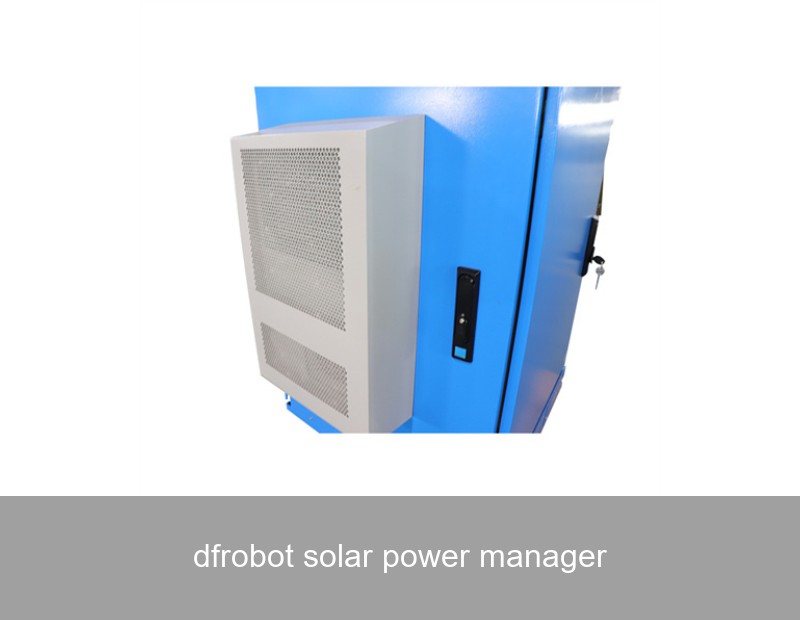
Have you ever looked at your solar panels on a cloudy day and wondered if you're truly getting the most out of every precious watt? You're not alone. For DIY enthusiasts, homeowners, and tech innovators, the challenge isn't just generating solar power—it's intelligently managing it. This is where solutions like the DFRobot Solar Power Manager enter the scene, offering a gateway to smarter, more efficient renewable energy systems. But as energy needs scale from a backyard project to powering an entire home or business, the principles of monitoring, control, and optimization become critical. Let's explore how advanced energy management is transforming solar investments from simple power sources into resilient, intelligent assets.
Table of Contents
The Core Challenge: Wasted Sunlight
The phenomenon is simple: standard solar setups often lack the granular intelligence to respond to real-time conditions. A panel's output fluctuates with irradiance and temperature, while your energy consumption spikes and falls independently. Without management, excess solar energy might be inefficiently diverted or, in grid-tied systems without batteries, simply sold back at a low rate. The data speaks volumes. According to the National Renewable Energy Laboratory (NREL), improper system sizing and passive management can lead to a 15-30% performance gap between expected and actual solar yield over a system's lifetime. That's a significant portion of your potential savings literally evaporating.
Beyond the Basics: What True Solar Management Entails
Devices like the DFRobot Solar Power Manager introduce essential concepts: Maximum Power Point Tracking (MPPT) for efficient panel charging, battery voltage protection, and load control. For a dedicated DIY project or a small off-grid application, this is a fantastic start. It embodies the fundamental principles of active energy stewardship:
- Precision Monitoring: Knowing your real-time input, storage, and output.
- Protective Control: Safeguarding battery health to prolong lifespan.
- Automated Decision-Making: Switching loads based on available power.
However, for a commercial operation or a family home seeking energy independence, the needs expand dramatically. You're not just managing a single circuit; you're orchestrating an entire energy ecosystem.
The Logical Progression of Energy Management Needs
| Scale | Primary Need | Typical Solution | Limitation at Scale |
|---|---|---|---|
| DIY/Hobby Project | Basic charge control & load switching | DFRobot-type manager, basic MPPT charger | Single point of control, limited scalability |
| Residential Home | Whole-home backup, bill savings, self-consumption | Residential inverter + battery system | May lack grid services or advanced tariff optimization |
| Commercial/Industrial | Demand charge reduction, UPS, revenue generation | Commercial Battery Energy Storage System (BESS) | Requires sophisticated software and grid integration |
Scaling Up: From DIY Modules to Whole-Property Solutions
This logical progression reveals a key insight: the core value shifts from component-level control to system-level intelligence. Imagine needing to manage a 250 kW solar array paired with a 500 kWh battery for a manufacturing facility. Here, you need more than a power manager; you need an integrated platform that performs real-time analytics, forecasts energy usage, and can even participate in grid stability programs. This is the domain of advanced energy storage providers.

Image: Scaling solar requires integrated storage and intelligence. (Source: Unsplash, Photographer: American Public Power Association)
A Real-World Case: The Berlin Bakery's Sweet Savings
Let's ground this in a concrete European example. Bäckerei Schmidt, a mid-sized artisan bakery in Berlin, faced soaring energy costs and stringent cooling requirements. Their 50 kW rooftop solar system often over-produced midday, sending power to the grid for modest feed-in tariffs, while their high-power ovens and chillers drove steep afternoon demand charges from the utility.
Their solution was to integrate a 150 kWh Highjoule HES-C Series Commercial Battery System with AI-driven energy management software. The results, measured over one year, were compelling:
- Demand Charge Reduction: By strategically discharging the battery during peak consumption periods, they shaved their peak grid draw by 40%, saving over €8,000 annually on demand charges alone.
- Self-Consumption Boost: Solar self-consumption rate increased from 35% to over 80%, maximizing their on-site clean energy use.
- ROI Timeline: The combined savings from lower energy bills and demand charges projected a full system payback in under 7 years.
This case, documented in a Fraunhofer ISE study on energy storage economics, illustrates the quantum leap from managing power flows to executing a financial and operational energy strategy.
The Highjoule Approach: Industrial-Grade Intelligence
At Highjoule, we build upon the foundational principles that make devices like solar power managers valuable—precision, control, and efficiency—and scale them for real-world impact. Since 2005, we've evolved from a component supplier to a global provider of integrated, smart storage solutions. Our systems are designed to be the central nervous system for your energy assets, whether for a robust home, a bustling business, or a community microgrid.
For residential clients in the US and Europe, our HES-H Series Home Energy Vault goes beyond simple backup. Its proprietary Adaptive Learning Algorithm studies household patterns, weather forecasts, and utility rate structures (like time-of-use tariffs in California or dynamic pricing in Germany) to autonomously schedule charging and discharging, ensuring comfort while minimizing costs.
For commercial and industrial partners, like Bäckerei Schmidt, our HES-C Series and Microgrid Controller Platform provide the heavy-duty hardware and the software intelligence needed for:
- Peak Shaving: Automatically curbing expensive demand spikes.
- Energy Arbitrage: Buying grid power when cheap, using stored power when expensive.
- Grid Services: In some markets, providing frequency regulation to generate revenue.

Image: Integrated home energy storage systems like Highjoule's HES-H Series manage entire household flows. (Source: Unsplash, Photographer: Kindel Media)
Future-Proofing Your Energy System
The energy landscape is shifting from a one-way grid to a decentralized, interactive network. The European Green Deal and the U.S. Inflation Reduction Act are accelerating this transition. The next step beyond intelligent management is participation. Will your system be ready to seamlessly integrate a new EV charger, absorb the addition of more solar panels, or form a virtual power plant with your neighbors?
This brings us to a crucial, forward-looking question: As you design your energy future today, are you choosing components for a circuit, or are you investing in an open, adaptable platform that can grow and monetize opportunities in the dynamic energy market of tomorrow?
 Inquiry
 Online Chat