


Accumulatori Energia Termica: The Unsung Hero of Renewable Heating and Energy Independence
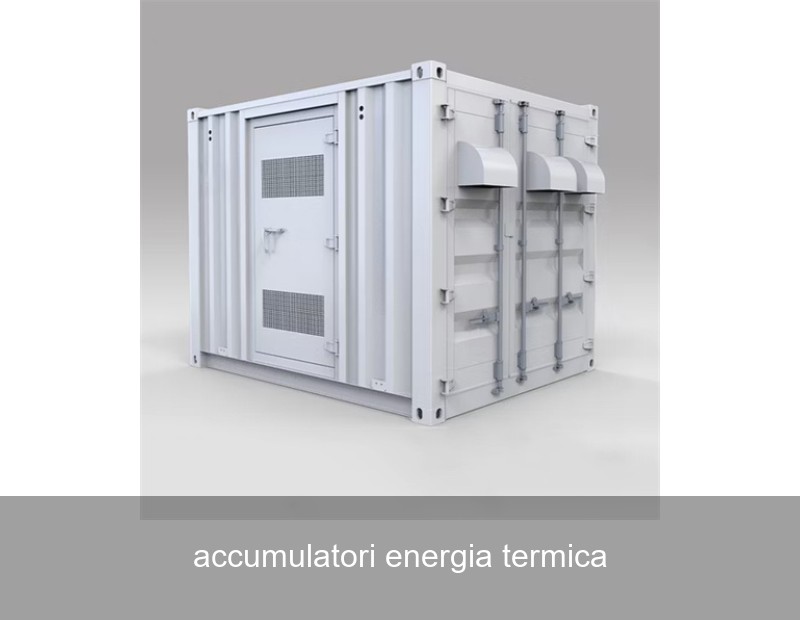
As energy prices remain volatile and the push for decarbonization intensifies, both homeowners and businesses are seeking smarter ways to manage their energy consumption. While much attention is given to battery storage for electricity, there's another powerful technology quietly revolutionizing efficiency: accumulatori energia termica, or thermal energy storage (TES). Think of it as a "thermal battery" for your heating system. It doesn't store electrons; it stores heat (or cold) for later use, enabling a dramatic shift in how we consume energy for comfort and industrial processes. This technology is key to maximizing the value of renewable sources like solar thermal, heat pumps, and even excess grid electricity, making it a cornerstone for sustainable energy management.
Table of Contents
- What is a Thermal Energy Accumulator?
- How Does Thermal Storage Work? The Core Principles
- Key Benefits: Why Thermal Storage is a Game-Changer
- Real-World Applications: From Homes to Industry
- Case Study: A German Dairy's Success Story
- The Future: Integration with Smart Energy Systems
- How Highjoule Enables Advanced Thermal Management
What is a Thermal Energy Accumulator?
At its core, a thermal energy accumulator is a vessel or system designed to store thermal energy for a period of time, ranging from hours to months. Its primary function is to decouple the time of energy production from the time of energy use. This is crucial because our demand for heat (for hot water, space heating, or industrial steam) often doesn't match when the sun is shining, the wind is blowing, or electricity tariffs are low.
Common types include:
- Sensible Heat Storage: The most common type, where energy is stored by changing the temperature of a material, typically water. A large, well-insulated hot water tank is a classic example.
- Latent Heat Storage: Uses phase-change materials (PCMs) that store energy when melting or solidifying (e.g., from solid to liquid). These can store much more energy in a smaller volume.
- Thermochemical Storage: Involves reversible chemical reactions to store and release heat, offering very high energy density and minimal losses over long periods.

Image Source: Unsplash - Representative image of industrial thermal storage.
How Does Thermal Storage Work? The Core Principles
The operation is elegantly simple yet profoundly effective. Imagine you have a solar thermal system on your roof. On a sunny afternoon, it might produce more hot water than your household can immediately use. Without storage, this excess energy is wasted. With a thermal accumulator, this surplus heat is diverted into a storage tank, raising the temperature of the water inside.
Later that evening, when the sun has set but your family needs hot water for showers and heating, the system draws from this stored reservoir instead of activating an expensive electric or gas boiler. The same logic applies on a larger scale: a factory can run its electric immersion heaters during cheap, off-peak night-time electricity (or when its own solar PV is overproducing), store the heat, and use it throughout the next day's operations. This "energy time-shifting" is the superpower of thermal storage.
Key Benefits: Why Thermal Storage is a Game-Changer
The advantages of integrating accumulatori energia termica are multi-faceted, impacting both economics and the environment.
- Increased Self-Consumption of Renewables: For homes with solar thermal or PV-driven heat pumps, TES can increase the share of self-used renewable energy from ~30% to over 70%, dramatically reducing grid dependence.
- Cost Savings: By shifting energy consumption to low-tariff periods or maximizing free solar energy, users can slash their energy bills. Industrial users can avoid peak-demand charges, which can constitute a significant portion of their electricity costs.
- Grid Stability and Decarbonization: Widespread TES adoption acts as a massive, distributed buffer for the electricity grid. It can absorb excess renewable generation (helping to prevent curtailment) and reduce demand during peak hours, supporting the transition to a cleaner grid. The International Energy Agency (IEA) highlights flexible demand from technologies like TES as critical for grid integration of renewables.
- System Efficiency & Longevity: By allowing boilers, heat pumps, and chillers to operate at their optimal capacity and for longer, continuous cycles, thermal storage reduces wear and tear and improves overall system efficiency.
Real-World Applications: From Homes to Industry
The versatility of thermal storage is remarkable. Let's explore a few key applications:
| Application | How Thermal Storage is Used | Primary Benefit |
|---|---|---|
| Residential Heating & DHW | Large water tanks storing heat from solar thermal collectors, heat pumps, or wood pellet boilers. | 24/7 hot water and heating from intermittent sources, lower bills. |
| Commercial Buildings (Offices, Hotels) | Ice storage or chilled water tanks for air conditioning, charged at night. | Major reduction in peak electricity demand and cooling costs. |
| Industrial Process Heat | High-temperature steam or hot oil storage for manufacturing, food processing, or chemical plants. | Enables use of waste heat and cheap off-peak power, improves process reliability. |
| District Heating & Cooling Networks | Gigantic seasonal or diurnal storage tanks that balance supply from waste-to-energy plants, geothermal, or large-scale solar fields. | Optimizes capital-intensive central plants, integrates renewables. |
Case Study: A German Dairy's Success Story
Let's look at a concrete example from Europe that showcases the power of accumulatori energia termica in an industrial setting. A medium-sized dairy in Bavaria, Germany, faced high energy costs for its constant need of hot water and steam for pasteurization and cleaning (CIP - Cleaning-in-Place).
The Challenge: Energy costs were high, and their existing gas boilers contributed significantly to their carbon footprint. They had installed a rooftop solar PV system, but a large portion of its daytime generation was being exported to the grid at a low feed-in tariff, while they simultaneously bought expensive grid power at other times.
The Solution: The dairy partnered with energy engineers to implement an integrated system featuring a large-scale high-temperature water-based thermal accumulator (200,000 liters) and electric immersion heaters. The system was intelligently controlled to:
- Use excess electricity from their own solar PV to directly heat the storage tank.
- Charge the tank during night-time when grid electricity prices were lowest.
- Discharge the stored heat on demand to meet the process heat requirements, drastically reducing the runtime of the gas boilers.
The Results (Real Data): Within the first year of operation:
- Gas consumption reduced by 68%.
- Solar PV self-consumption increased from 35% to over 90%.
- Overall energy costs decreased by approximately €85,000 annually.
- CO₂ emissions were cut by over 450 tons per year.
This case, documented in part by the U.S. Department of Energy's Industrial Decarbonization Office, exemplifies how thermal storage is not just a component but a strategic asset for industrial competitiveness and sustainability.

Image Source: Unsplash - Representative image of industrial energy infrastructure.
The Future: Integration with Smart Energy Systems
The true potential of thermal energy accumulators is unlocked when they become a dynamic part of a smart, connected energy ecosystem. Future systems will not just react to simple timers but will be forecast-driven. They will communicate with:
- Weather Forecasts: Anticipating solar thermal yield or heating demand.
- Electricity Grid Signals: Automatically charging when renewable generation is high or grid frequency needs support (a concept known as demand-side response).
- Building & Process Management Systems: Optimizing for comfort and production schedules simultaneously.
This intelligent orchestration turns thermal storage from a passive buffer into an active grid asset, creating value for the owner and the community. Research from institutions like Fraunhofer is continuously pushing the boundaries of storage materials and system control algorithms.
How Highjoule Enables Advanced Thermal Management
At Highjoule, we understand that achieving true energy independence requires a holistic approach where electrical and thermal storage work in concert. While we are globally recognized for our advanced battery energy storage systems (BESS), our expertise extends to designing integrated energy solutions where accumulatori energia termica play a vital role.
Our Highjoule Energy Management Platform (HEMP) is the brain behind such integrated systems. For a commercial or industrial client, HEMP can intelligently manage on-site generation (solar PV, wind), electrical storage (our H-Cube BESS), and thermal storage assets. The platform makes real-time decisions: Should this kilowatt-hour of solar power go into the lithium-ion battery, be used to charge the thermal store, or power the facility directly? The answer is always the one that maximizes sustainability, resilience, and cost savings.
For instance, for a large residential complex or a microgrid project, Highjoule can provide a complete design that pairs our battery storage with optimally sized thermal accumulators. This ensures that whether the energy need is for a light bulb, an electric vehicle charger, a heat pump, or a radiant heating system, the overall energy flow is optimized, resilient, and sustainable. Our nearly two decades of experience since 2005 in delivering reliable power solutions across continents give us the unique perspective to design these sophisticated, yet user-friendly, integrated systems.
Ready to Explore Your Thermal Storage Potential?
The journey towards energy efficiency and independence is unique for every home and business. The strategic integration of thermal storage can often yield faster returns and greater overall system efficiency than focusing on electricity alone. What is the primary driver for your energy strategy today—is it reducing peak demand charges, increasing your use of solar power, future-proofing against price volatility, or meeting stringent sustainability targets?
 Inquiry
 Online Chat