


Energy Storage Cabinet with Battery Setup: Your Guide to a Resilient and Efficient Power System
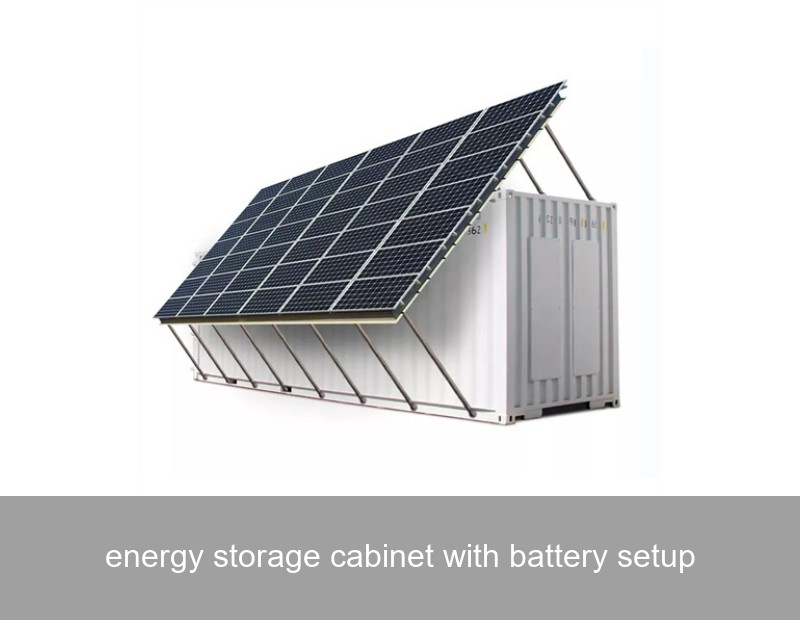
Have you ever considered what happens to the excess solar energy your panels produce on a bright, sunny afternoon? Or worried about the impact of an unexpected grid outage on your business operations or home comfort? This is where the modern energy storage cabinet with battery setup comes into play. Far more than just a box of batteries, these integrated systems are the intelligent heart of a new energy paradigm, enabling you to capture, store, and manage electricity on demand. For homeowners, businesses, and communities across Europe and the US, deploying a robust battery storage cabinet is a strategic move towards energy independence, cost savings, and sustainability. As a leader in this field since 2005, Highjoule designs and delivers advanced, smart energy storage solutions that turn these possibilities into everyday reality for commercial, industrial, residential, and microgrid applications.
Table of Contents
- What is an Energy Storage Cabinet with Battery Setup?
- Why the Surge in Demand? The Driving Forces
- Key Components of a High-Performance Storage Cabinet
- Real-World Impact: A Case Study from California
- Choosing the Right System: What to Look For
- The Highjoule Approach: Intelligence Meets Resilience
- The Future Horizon for Energy Storage
What is an Energy Storage Cabinet with Battery Setup?
Think of an energy storage cabinet with battery setup as a sophisticated power bank for your entire property. It's a fully integrated, all-in-one system that typically houses lithium-ion battery modules, a battery management system (BMS), thermal controls, and power conversion systems (inverters/converters) within a secure, standardized enclosure. Unlike a loose assembly of components, a cabinet-style setup is engineered for safety, scalability, and seamless integration with renewable sources like solar PV. Its primary job is to store electrical energy when it's abundant or cheap—for instance, from your solar panels during the day or from the grid during off-peak hours—and release it when you need it most, such as during peak tariff periods, at night, or when the main grid fails.

Image Source: Unsplash - A modern, sleek energy storage cabinet installed in a residential setting.
Why the Surge in Demand? The Driving Forces
The global shift towards battery storage cabinets isn't accidental. It's a direct response to several converging trends:
- Volatile Energy Prices: In Europe and parts of the US, electricity prices have seen significant fluctuations. A storage system allows users to avoid buying power at expensive peak rates.
- Renewable Integration: Solar and wind are intermittent. Storage is the key to making them reliable, smoothing out production, and maximizing self-consumption.
- Grid Resilience: Extreme weather events, from winter storms in Texas to heatwaves in California, have highlighted grid vulnerability. On-site storage provides critical backup power.
- Policy and Incentives: Government programs like the U.S. Investment Tax Credit (ITC) for solar-plus-storage and various EU Green Deal initiatives are making investments more attractive.
- Technological Advancements: Lithium-ion battery costs have fallen dramatically over the past decade, while energy density and lifecycle have improved, making systems more efficient and affordable.
Key Components of a High-Performance Storage Cabinet
Not all cabinets are created equal. A top-tier system is defined by the synergy of its internal components:
| Component | Function | Why It Matters |
|---|---|---|
| Battery Modules | The core energy storage medium, typically Lithium Iron Phosphate (LFP). | LFP chemistry offers superior safety, longevity (often 6000+ cycles), and stable performance, which is a cornerstone of Highjoule's product philosophy. |
| Battery Management System (BMS) | The "brain" that monitors voltage, temperature, and state of charge for each cell. | Ensures safety, prevents overcharge/discharge, and maximizes battery life and performance. |
| Power Conversion System (PCS) | Includes inverters and converters that manage AC/DC electricity flow. | Determines system efficiency and how intelligently it can interact with the grid and your loads. |
| Thermal Management | Cooling and heating systems to maintain optimal battery temperature. | Critical for safety, efficiency, and lifespan, especially in extreme climates. |
| Energy Management Software | The user interface and control logic for system operation. | Allows for smart scheduling, real-time monitoring, and integration with energy markets or microgrids. |
Real-World Impact: A Case Study from California
Let's move from theory to practice. A compelling example comes from a medium-sized winery in Sonoma County, California. The region faces frequent Public Safety Power Shutoffs (PSPS) to prevent wildfires, which can halt critical refrigeration and production processes for days.
The Challenge: The winery needed reliable backup power to protect millions of dollars worth of inventory during grid outages and wanted to reduce its high electricity costs driven by cooling loads.
The Solution: They installed a modular energy storage cabinet with battery setup, integrated with their existing solar array. The system comprised two 120 kWh cabinet units, providing a total of 240 kWh of storage and 150 kW of power output.
The Data-Driven Results (First Year of Operation):
- Resilience: Provided seamless backup power through 8 grid outages, totaling over 50 hours, with zero spoilage of product.
- Cost Savings: By shifting energy use away from peak grid times (4-9 PM), they reduced their demand charges and increased solar self-consumption by 68%, leading to an annual electricity bill reduction of approximately $18,000.
- Sustainability: Increased their renewable energy usage on-site to over 90% of annual consumption.
This case, documented in part by the California Solar & Storage Association, illustrates the multi-faceted value proposition of a well-designed storage system.
Choosing the Right System: What to Look For
Selecting an energy storage cabinet with battery setup is a significant decision. Here’s a quick guide to focus your evaluation:
- Safety First: Prioritize systems with UL 9540 certification (in the US) or equivalent EU standards. LFP battery chemistry is widely regarded as the safest for stationary storage.
- Scalability: Can you start with a smaller capacity and easily add more cabinet units later? Modular design is key for future-proofing your investment.
- Software Intelligence: The hardware stores energy, but the software creates value. Look for systems with smart, programmable modes for backup, cost-saving, and grid services.
- Warranty & Lifespan: A strong warranty (e.g., 10 years, 70% retained capacity) reflects manufacturer confidence. Consider the total cycle life and degradation rate.
- Integration Capability: Ensure the system can communicate seamlessly with your existing or planned solar inverters, generators, and building management systems.
The Highjoule Approach: Intelligence Meets Resilience
At Highjoule, we've spent nearly two decades refining the art and science of energy storage. Our Nexus Series energy storage cabinets embody our commitment to intelligent, efficient, and sustainable power. What sets our systems apart?
Our cabinets are built around a proprietary Adaptive Core BMS that doesn't just monitor cells but actively learns your energy usage patterns. Coupled with our GridSync Inverter Technology, the system can transition from grid-tied to off-grid mode in less than 20 milliseconds—so fast that sensitive equipment doesn't even flicker. For commercial and industrial clients, our Highjoule Horizon OS platform enables participation in demand response programs, turning your storage asset into a potential revenue stream while supporting grid stability.

Image Source: Unsplash - Representative image of industrial-scale battery energy storage.
Whether it's a residential Nexus Home unit ensuring a family's comfort during a storm, a series of Nexus Commercial cabinets powering a factory's shift work, or a containerized Nexus Grid solution stabilizing a community microgrid, our focus is on delivering tailored resilience. We provide end-to-end services from initial consultancy and system design to installation, commissioning, and remote performance monitoring.
The Future Horizon for Energy Storage
The evolution of the energy storage cabinet with battery setup is far from over. We are moving towards systems with even higher energy densities, incorporating AI for predictive energy management, and exploring second-life battery applications for circular economy models. The role of storage is expanding from a behind-the-meter asset to a crucial grid-forming resource that can help balance larger shares of renewables on the network, a topic actively researched by institutions like the National Renewable Energy Laboratory (NREL).
As you contemplate your own energy resilience and efficiency goals, what specific challenge—be it unpredictable bills, unreliable grid power, or a commitment to a greener footprint—could a smart, integrated energy storage system solve for you?
 Inquiry
 Online Chat