


How Much Do Alsym Batteries Cost? A Deep Dive into Value Beyond the Price Tag
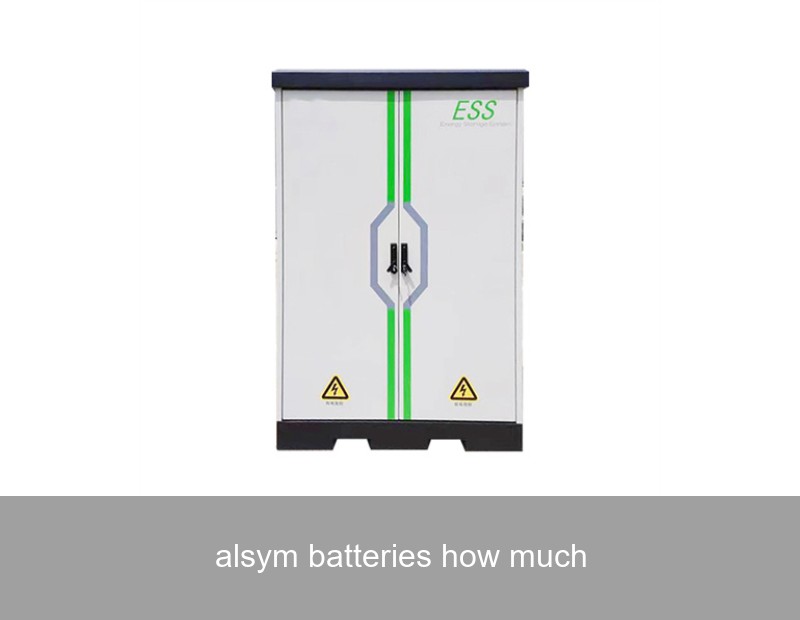
If you're researching energy storage for your home, business, or community project, you've likely come across a promising new technology: Alsym batteries. And the immediate question that follows is almost always, "Alsym batteries, how much do they actually cost?" It's a logical starting point. However, in the rapidly evolving world of renewable energy storage, focusing solely on the upfront price per kilowatt-hour (kWh) can be misleading. The true cost of a battery system encompasses installation, longevity, safety, performance, and its overall impact on your energy independence. As a leader in deploying advanced storage solutions, Highjoule believes in transparent, value-driven conversations. Let's unpack the factors that influence the cost of emerging battery technologies like Alsym and explore what "value" really means for your energy future.
Table of Contents
Understanding Alsym's Technology Proposition
Alsym Energy is gaining attention for developing a non-flammable, lithium-ion alternative battery chemistry. Their core promise revolves around using manganese and other readily available materials, avoiding lithium, cobalt, and nickel. The potential benefits are significant:
- Safety: A non-flammable electrolyte dramatically reduces fire risk, which can lower insurance premiums and open up more installation locations.
- Supply Chain & Cost Stability: By avoiding scarce and geopolitically sensitive materials like cobalt, they aim for more stable long-term pricing.
- Sustainability: The materials are easier to source and recycle, appealing to environmentally conscious consumers and businesses.
However, it's crucial to note that as of late 2024, Alsym batteries are primarily in the pilot and pre-commercialization phase. While the technology is promising, widespread commercial availability and a proven decade-long track record in the field are still developing. This lifecycle stage inherently affects cost transparency. When evaluating any new technology, from Alsym or others, we must look at the total system cost and proven reliability over time.
The Real Cost Components of a Battery System
Asking "how much is the battery?" is like asking "how much is a car?" without specifying the model, features, or intended use. The final price you pay for an energy storage system is a sum of several parts:
| Cost Component | Description | Why It Matters |
|---|---|---|
| Core Battery Cells | The raw chemical energy storage units (e.g., lithium-iron-phosphate, NMC, or new chemistries like Alsym's). | This is the "engine." Chemistry dictates energy density, cycle life, and safety profile. |
| Battery Management System (BMS) | The intelligent "brain" that manages charging, discharging, health, and safety. | A superior BMS is critical for longevity and safety, preventing premature failure. |
| Power Conversion System (PCS / Inverter) | Converts DC battery power to AC power for your home or business, and vice-versa. | Efficiency here (e.g., 97% vs. 94%) directly impacts how much stored energy you can actually use. |
| Thermal Management | Cooling and heating systems to keep batteries at optimal temperature. | Essential for performance in extreme climates and for maximizing battery lifespan. |
| Integration, Installation & Software | Physical installation, grid interconnection, and smart energy management software. | Professional integration ensures safety, compliance, and unlocks smart features like peak shaving. |
This is where experience matters. At Highjoule, with nearly two decades in the industry, we've seen that the lowest cell cost can be negated by a weak BMS or inefficient installation. Our Highjoule Nexus series for commercial and industrial applications, for example, is engineered as an integrated system. We pair high-performance, UL-certified LFP battery racks with our proprietary, AI-driven energy management platform. This ensures every component works in harmony, delivering a predictable levelized cost of storage over the system's 15+ year lifespan.

Image: Professional installation and integration are key cost and performance factors. (Source: Unsplash, representative image)
A Case Study: Commercial Load-Shaving in Germany
Let's move from theory to practice with a real-world example from one of our European projects. A mid-sized manufacturing plant in Bavaria, Germany, faced steep demand charges from their utility and wanted to increase the self-consumption of their rooftop solar PV. Their primary question was about cost and payback period.
The Challenge: Peak grid demand spikes were costing them over €25,000 annually in demand charges alone. Their solar panels often produced excess energy in the middle of the day that was sold to the grid at a low feed-in tariff, while they bought expensive power in the early evening.
The Highjoule Solution: We deployed a 500 kWh / 250 kW Highjoule Nexus C&I system. The system was configured for automated peak shaving: it stored cheap solar energy and grid power during off-peak hours, then discharged during the plant's operational peaks, effectively "shaving" the demand spike.
- Demand Charge Reduction: 40% reduction in peak demand, saving approximately €11,000 per year.
- Increased Solar Self-Consumption: Rose from 35% to over 70%, capturing more value from their existing asset.
- Payback Period: The total system cost was justified with a calculated payback of under 7 years, factoring in German subsidy programs (like KfW loans). The system's design life extends well beyond that, providing over a decade of additional savings.
This case illustrates that the right question isn't just "battery cost," but "total system value." The Highjoule solution provided a faster financial return and enhanced energy resilience, a critical factor for German industry. For deeper insights on demand charge management, the U.S. Department of Energy offers useful resources.
Highjoule's Approach: Integrating Innovation with Proven Performance
At Highjoule, founded in 2005, we actively monitor and evaluate emerging technologies like Alsym's. Our commitment is to provide customers with the most reliable, safe, and economically viable solutions available. While we are excited by the potential of new chemistries, our current product lines—such as the Nexus for C&I and the Highjoule Home Hub—are built on Lithium Iron Phosphate (LFP) chemistry. LFP offers an excellent balance of safety (thermal stability), long cycle life (6000+ cycles), and cost-effectiveness that is proven at scale.
We integrate these proven battery racks with our own advanced software stack. The Highjoule Energy OS allows users to seamlessly optimize for self-consumption, time-of-use arbitrage, or backup power, all from an intuitive app. This intelligent layer maximizes the financial return on the hardware investment, whether you're a homeowner in California or a factory manager in Poland.

Image: Integrated home energy systems, like the Highjoule Home Hub, combine solar, storage, and smart management. (Source: Unsplash, representative image)
So, What About the Price of Alsym Batteries?
Given their pre-mass-production stage, definitive, publicly available pricing for fully integrated Alsym battery systems is scarce. Early indications suggest they aim to be cost-competitive with incumbent LFP batteries. The true value proposition, if realized, will come from their combination of potential lower material costs, enhanced safety, and performance. Independent testing and long-term field data, like that published by research institutions such as the National Renewable Energy Laboratory (NREL), will be crucial for the market to validate these claims.
The Future of Storage: Questions to Guide Your Investment
The energy storage landscape is dynamic. Whether you're considering a system today or planning for a future project, shift the conversation from mere cost to comprehensive value. Here are the questions we encourage every customer to ask:
- What is the total installed cost, including all hardware, software, and installation?
- What is the guaranteed cycle life and degradation profile (e.g., 80% capacity after 10 years)?
- How does the system's safety certification (UL, IEC) impact my insurance and peace of mind?
- Does the energy management software have the intelligence to adapt to my usage and changing utility rates?
- Does the provider have a proven track record of reliable installations in my region?
Highjoule stands ready to answer these questions with data, case studies, and transparent proposals. We blend the stability of proven technology with a forward-looking approach to integration and smart software.
As you navigate your path to energy independence, what specific energy challenge—unpredictable bills, grid reliability concerns, or sustainability goals—is driving you to consider storage today?
 Inquiry
 Online Chat