


Demystifying the VFD Solar Energy Storage Cabinet Price: A Smart Investor's Guide
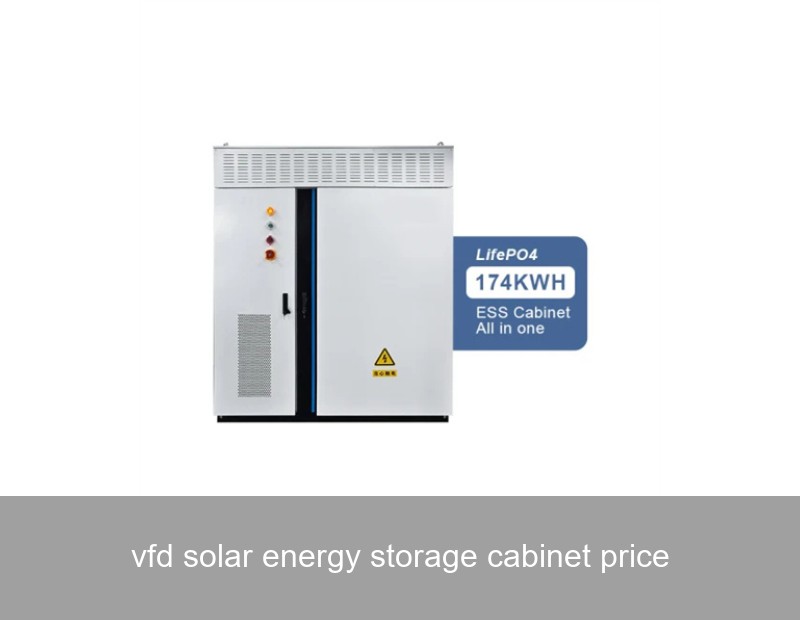
If you're exploring solar energy for your business or large property, you've likely encountered a crucial piece of technology: the VFD solar energy storage cabinet. And one of the first questions that comes to mind is, understandably, "What's the price?" But here's the insight we share with all our clients at Highjoule: focusing solely on the upfront VFD solar energy storage cabinet price is like buying a car based only on the sticker price, ignoring fuel efficiency, maintenance costs, and resale value. The true cost is defined by the long-term value it delivers. In this guide, we'll break down the components, factors, and hidden value behind the price tag, empowering you to make an investment that pays dividends for decades.
Understanding the VFD Solar Energy Storage Cabinet Price Structure
Let's clarify the terminology first. "VFD" stands for Variable Frequency Drive, a key component often integrated into sophisticated energy storage systems for motor control in industrial applications. A VFD solar energy storage cabinet is essentially an intelligent, all-in-one unit that combines battery storage, advanced power conversion, and management systems. It stores excess solar energy and dispatches it precisely when needed, often integrating with heavy machinery via VFDs for optimal efficiency.
The price isn't a single number but a spectrum, typically ranging from $20,000 to over $100,000+ for commercial and industrial-scale systems. Why such a wide range? Let's unpack the core components your investment covers:
- Battery Cells & Module: The heart of the system. Chemistry (Lithium Iron Phosphate/LFP is dominant for safety and lifespan), capacity (kWh), and brand quality dictate a significant portion of the cost.
- Power Conversion System (PCS): This includes the bi-directional inverter and often the integrated VFDs. It converts DC from batteries/solar to AC for your building and vice-versa. Higher efficiency and robustness cost more.
- Thermal Management & Cabinet: A premium cabinet with advanced liquid or air cooling isn't just a box; it's critical for safety, battery longevity, and performance in varying climates.
- Energy Management System (EMS): The "brain." This software intelligently controls energy flow based on tariffs, consumption patterns, and weather forecasts. Its sophistication is a major value driver.
- Integration, Engineering & Software: Costs for system design, grid interconnection studies, commissioning, and proprietary control platforms.

A modern energy storage cabinet requires precision engineering. The quality of components like thermal management directly impacts long-term performance and the total cost of ownership.
Key Factors Influencing Your VFD Solar Energy Storage Cabinet Price
When you request a quote, providers like Highjoule evaluate these critical variables to determine a solution and its price tailored to your needs.
| Factor | Impact on Price | Why It Matters |
|---|---|---|
| System Capacity & Power | High Direct Impact | More kWh (energy) and kW (power) require more batteries, larger inverters, and heavier-duty components. |
| Voltage & Grid Requirements | Medium to High Impact | Industrial 480V or medium-voltage systems need more complex and certified components than standard low-voltage setups. |
| Integration Complexity | Medium Impact | Does the system need to interface with existing solar PV, multiple VFD-driven motors, or a complex microgrid? More integration means more engineering. |
| Lifespan & Warranty | Medium Impact | A system engineered for 6,000 cycles at 80% depth-of-discharge (like Highjoule's H-Stack C&I series) uses higher-grade cells than one rated for 3,000 cycles, affecting upfront cost but drastically lowering lifetime cost. |
| Local Regulations & Incentives | Can Reduce Net Price | In the U.S., the Investment Tax Credit (ITC) can cover 30-70% of project costs. In Europe, programs like Horizon Europe offer grants. These change the net investment picture dramatically. |
A Real-World Case Study: ROI in Action
Let's move beyond theory. A concrete example from our work at Highjoule illustrates how the initial price translates to value. We partnered with a mid-sized dairy processing plant in Bavaria, Germany. The facility had high, consistent energy demand for refrigeration and conveyor motors (controlled by VFDs), alongside a sizable rooftop solar array.
The Challenge: High grid demand charges, and solar curtailment during peak production hours due to low self-consumption.
The Highjoule Solution: A 245 kWh / 150 kW VFD-integrated solar energy storage cabinet, part of our H-Stack Industrial Series, featuring our proprietary Adaptive EMS.
The Data-Driven Outcome (First 12 Months):
- Self-Consumption of Solar: Increased from 35% to 82%.
- Peak Demand Reduction: Achieved a 40% cut in grid power peaks, slashing demand charges.
- Energy Cost Savings: €68,000 saved in energy costs and avoided grid fees.
- Payback Period: The calculated simple payback period for the system was under 5 years, well within the 10+ year warranty period of the core components.
This case shows that the VFD solar energy storage cabinet price was not an expense but a capital investment with a clear and attractive financial return, enhancing both sustainability and operational resilience.
The Highjoule Advantage: Smart Value Beyond the Sticker Price
At Highjoule, founded in 2005, we believe your storage system should be an asset, not a liability. Our approach to the VFD solar energy storage cabinet price is built on delivering Total Cost of Ownership (TCO) superiority. Our H-Stack series for Commercial & Industrial applications is engineered for this precise purpose.
What does this mean for your investment?
- Ultra-Safe LFP Chemistry & Longevity: We use top-tier LiFePO4 cells with a design life exceeding 15 years. A longer lifespan means a lower annualized cost.
- Intelligent, Adaptive EMS: Our system doesn't just store and release; it learns and optimizes. It can predict solar generation, schedule machinery runs via VFD control during low-cost periods, and participate in grid-balancing programs where available, creating additional revenue streams.
- Seamless, Pre-Engineered Integration: We offer plug-and-play compatibility with major solar inverter brands and VFD manufacturers, reducing soft costs and installation time.
- Global Support & Digital Twins: Every system is backed by our 24/7 monitoring platform and a digital twin model for proactive maintenance, preventing downtime and protecting your revenue.

Advanced Energy Management Software, like that in Highjoule systems, turns raw storage into an intelligent financial asset, maximizing the return on your investment.
Making the Right Investment Decision
So, how should you proceed when evaluating proposals and their associated VFD solar energy storage cabinet prices? Shift the conversation from "What does it cost?" to "What is it worth?"
Ask potential providers:
- Can you provide a detailed TCO analysis and projected ROI model for my specific load profile and location?
- What is the expected cycle life and degradation profile of the batteries under my typical use?
- How does the EMS specifically optimize for demand charge reduction and VFD load management?
- What is included in the warranty, and what is the support structure for the full system lifespan?
Ready to See Your Custom Value Proposition?
At Highjoule, we're committed to transparency. We don't just give you a price; we build a comprehensive value assessment tailored to your facility's energy data, local utility rates, and sustainability goals. We'll show you the map from initial investment to long-term savings and resilience.
What specific energy challenge—be it soaring demand charges, grid instability, or untapped solar potential—is most critical for your operation to solve in the next 18 months?
 Inquiry
 Online Chat