


Alternative Energy Innovations: Powering a Sustainable Future
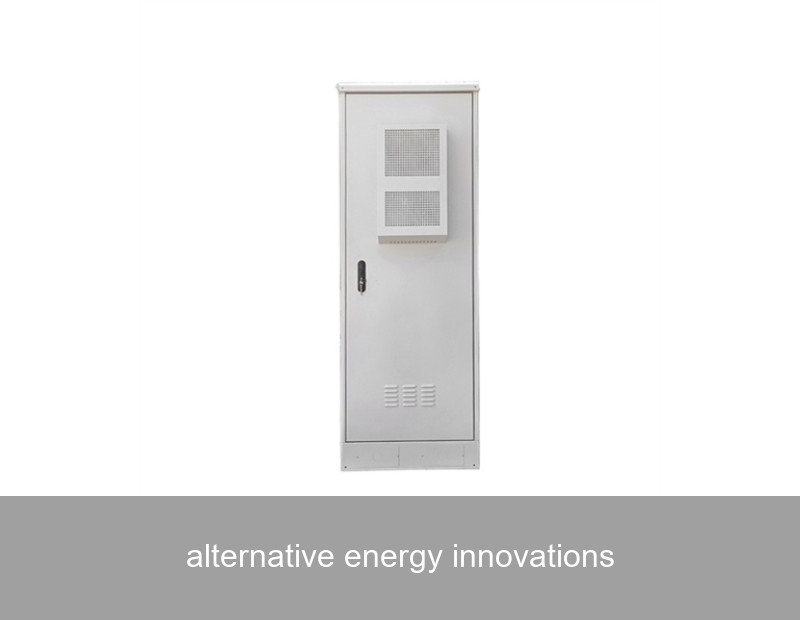
As the world grapples with climate change and energy security, the quest for reliable, clean power has moved from niche interest to global imperative. This is where alternative energy innovations come into play, transforming how we generate, store, and consume electricity. For businesses and homeowners in Europe and the US, these aren't just futuristic concepts; they are practical, economical solutions being deployed today. The real game-changer lies not only in creating renewable energy but in intelligently managing it. That’s the core mission at Highjoule, where our advanced energy storage systems turn the potential of renewables into 24/7 dependable power.
Table of Contents
- The Intermittency Challenge: A Modern Energy Phenomenon
- The Data Reality: Why Storage is the Missing Link
- Case Study: A German Manufacturing Plant's Journey to Resilience
- Key Innovation Breakthroughs in Energy Storage
- Highjoule's Role in Deploying Practical Innovations
- The Future Horizon: What's Next for Energy Autonomy?
The Intermittency Challenge: A Modern Energy Phenomenon
a sunny afternoon in California or a windy night in the North Sea. Solar panels and wind turbines are producing abundant, clean electricity. But what happens when the sun sets or the wind stops? This intermittency is the fundamental hurdle for renewables. It creates a mismatch between supply and demand, leading to grid instability, wasted energy, and reliance on fossil-fuel "peaker" plants during gaps. This phenomenon is felt acutely by factories with continuous operations, hospitals requiring unwavering power, and even homeowners wanting to use solar energy after dark. The question is no longer just how to generate green energy, but how to capture and time-shift it effectively.
The Data Reality: Why Storage is the Missing Link
The numbers paint a clear picture. According to the International Energy Agency (IEA), the world needs to add nearly 600 GW of energy storage capacity by 2030 to meet climate goals—a tenfold increase from 2021 levels. In the US, solar and wind curtailment (where excess energy is wasted) is a growing issue, with studies indicating that cost-effective storage can reduce this waste dramatically. In Europe, soaring electricity prices and geopolitical pressures have made energy independence a top economic priority. This data underscores a critical insight: alternative energy innovations in storage are not a luxury; they are the essential enabler for a decarbonized grid.

Image Source: Unsplash - Visual representation of grid-scale battery storage.
Case Study: A German Manufacturing Plant's Journey to Resilience
Let's look at a concrete example. A mid-sized automotive parts manufacturer near Stuttgart, Germany, was facing dual pressures: volatile energy costs and ambitious corporate sustainability targets. Their rooftop solar array covered 40% of their daytime load, but the rest was sourced from the grid at peak rates, and night shifts relied entirely on fossil-based grid power.
Their solution involved integrating a Highjoule HI-Stack Commercial Battery System with their existing solar infrastructure. Here’s the outcome:
| Metric | Before Highjoule System | After Highjoule System (12 Months) |
|---|---|---|
| Grid Energy Dependency | 60% | 25% |
| Solar Self-Consumption | 35% | Over 90% |
| Energy Cost Savings | Baseline | €68,000 annually |
| CO2 Emissions Reduction | Baseline | Equivalent to 50 passenger vehicles/year |
The Highjoule system's intelligent energy management software (EMS) automatically stores excess solar generation and dispatches it during high-price evening peaks and night operations. This not only cut costs but also provided backup power during two brief grid outages, preventing production line stoppages. This case exemplifies how alternative energy innovations, when applied through tailored, smart technology, deliver direct economic and operational resilience.
Key Innovation Breakthroughs in Energy Storage
The success stories are powered by tangible technological advances. Here are the key pillars driving modern alternative energy innovations in storage:
- Lithium-Ion Battery Evolution: Beyond just capacity, innovations focus on longer lifespan (cycle life), enhanced safety with advanced thermal management, and lower degradation rates. New cathode and anode materials are pushing energy density higher.
- Intelligent Software & AI: The true "brain" of a modern system. Software like Highjoule's OptiCharge AI platform analyzes weather forecasts, energy tariffs, and consumption patterns to optimize charge/discharge cycles for maximum savings and grid support.
- Modular & Scalable Architecture: Systems are now built like building blocks. Starting with a smaller unit, commercial or residential users can easily expand capacity as needs grow, protecting initial investment.
- Safety & Grid Integration: Innovations include cell-level fusing, robust battery management systems (BMS), and grid-forming inverters that can stabilize microgrids independently—a crucial feature for facilities requiring "island" capability.

Image Source: Unsplash - Technician interacting with smart energy management software.
Highjoule's Role in Deploying Practical Innovations
Founded in 2005, Highjoule has evolved alongside these alternative energy innovations. Our philosophy is to translate cutting-edge research into robust, user-centric solutions. We don't just sell hardware; we provide end-to-end intelligent power ecosystems.
For our residential clients in the US and Europe, the Highjoule HomePower series offers seamless integration with major solar inverter brands. Its compact design, coupled with a user-friendly app, gives homeowners control over their energy destiny, maximizing self-consumption and providing peace-of-mind backup.
For commercial and industrial (C&I) applications, our HI-Stack and containerized MegaStack solutions are workhorses. They feature:
- UL 9540A and IEC 62619 certified safety standards.
- Scalability from 100 kWh to multi-MWh installations.
- Advanced grid-service functionality for revenue streams like frequency regulation.
Perhaps most critically, our microgrid controllers allow campuses, remote communities, and industrial sites to orchestrate solar, storage, and backup generators into a resilient, independent energy network. This is where alternative energy innovations achieve their highest purpose: creating true energy security and sustainability.
The Future Horizon: What's Next for Energy Autonomy?
The innovation pipeline is bursting. We're closely monitoring solid-state batteries, which promise even greater safety and density, and flow batteries for ultra-long-duration storage. Beyond chemistry, the integration of electric vehicle (EV) fleets as bidirectional grid assets (V2G) is on the horizon. These advancements will further blur the line between energy consumers and producers, creating a truly decentralized and interactive grid.
The journey towards a sustainable energy future is ongoing. It requires not just technology, but partners who understand the unique challenges of your facility, your region's energy market, and your sustainability goals. At Highjoule, we bridge that gap between innovation and implementation.
So, as you look at your next energy bill or consider your organization's carbon footprint, what specific challenge—be it cost volatility, reliability concerns, or a net-zero target—could be addressed by making stored renewable energy the cornerstone of your strategy?
 Inquiry
 Online Chat