


How Much Energy Can You Export? Turning Your Solar Investment into a Revenue Stream
Imagine your rooftop solar panels or your business's wind turbine not just slashing your energy bills, but actively earning money. This isn't a future fantasy; it's the reality for millions of "prosumers" across Europe and the U.S. who are exporting surplus clean energy back to the grid. The central question for any savvy energy investor today is: how much energy can I export, and how can I maximize its value? The answer goes far beyond the size of your solar array—it hinges on intelligent storage, smart management, and understanding the evolving energy marketplace.
The Energy Export Phenomenon: From Consumer to Prosumer
Gone are the days when electricity flowed one way: from the utility to your home or business. The renewable revolution, driven by plummeting costs of solar PV and supportive policies like net metering and feed-in tariffs, has turned the grid into a two-way street. You are no longer just a consumer; you are a potential producer. Exporting energy is the logical next step for anyone with a renewable installation. But here's the catch: solar generation peaks during midday, often when you're not home to use it. Without a way to capture that surplus, you're missing out on significant financial and environmental benefits. This is where the true calculus of "how much energy you can export" begins—not with what you generate, but with what you can intelligently store and dispatch.
How Much Energy Can You *Really* Export? The Data Behind the Meter
Let's break down the factors that determine your export potential:
- Generation Capacity: The size (in kW) of your solar or renewable system sets the upper limit.
- Local Consumption Patterns: A factory running 24/7 will consume more of its own solar energy than a household empty during the day, leaving less to export.
- Grid and Regulatory Limits: Your local utility or Distribution System Operator (DSO) may impose caps on how much power you can feed back into the grid at any given time, often for grid stability reasons.
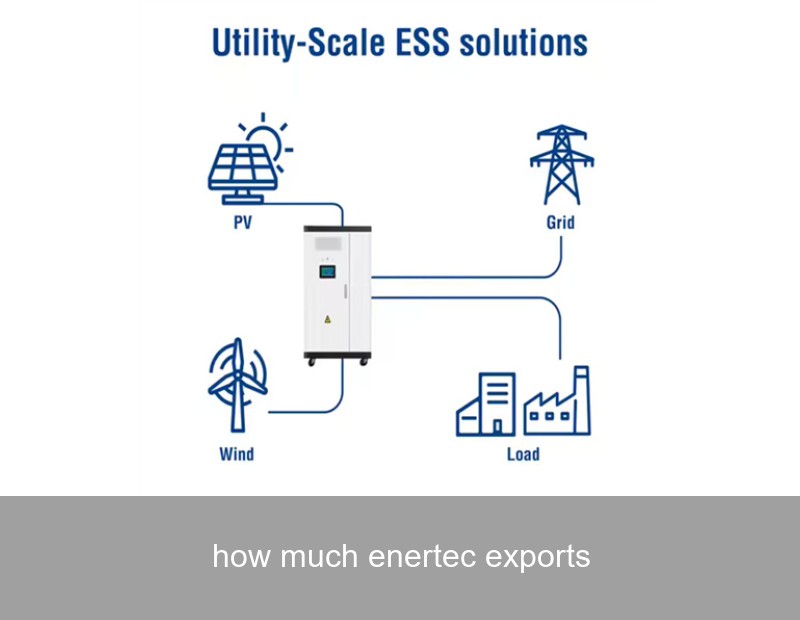
- The Critical X-Factor: Battery Storage. This is the game-changer. A battery storage system decouples generation from consumption. You can store your midday solar surplus and export it during the evening peak demand period when electricity prices are typically higher.
According to the International Energy Agency (IEA), global renewable capacity is set to grow by 2,400 GW between 2023-2028. This surge in decentralized generation makes smart storage and export management not just profitable for individuals, but essential for grid health.

Image Source: Unsplash. A modern prosumer home equipped for energy generation, storage, and export.
Case Study: A Bavarian Bakery's Recipe for Energy Independence
Consider the real-world example of "Brot & Mehr," a mid-sized bakery in southern Germany. They installed a 100 kW rooftop solar system but faced a classic problem: their ovens fired up before dawn, while their solar yield peaked in the afternoon. They were using only 35% of their self-generated power and exporting the rest at a low, fixed feed-in tariff.
By integrating a Highjoule HI-Stack Commercial Battery System with 250 kWh of storage and our AI-driven Energy Management Platform (EMP), they transformed their operations. The system now:
- Stores cheap, midday solar energy to power the early morning baking cycle.
- Dynamically decides in real-time whether to use, store, or sell energy based on live market prices from the European Power Exchange (EPEX SPOT).
- Provides grid services by offering frequency regulation, creating an additional revenue stream.
The result? Their self-consumption rate jumped to over 80%, and their **annual energy export revenue increased by 300%** by strategically selling power during high-price periods. They are now a resilient, grid-supportive energy hub. This case perfectly illustrates that "how much energy you export" is less about raw kilowatt-hours and more about when and how smartly you export them.
| Metric | Before (Solar Only) | After (Solar + Highjoule BESS) |
|---|---|---|
| Self-Consumption Rate | 35% | 82% |
| Grid Export Revenue (Annual) | €4,200 | €12,700 |
| Energy Cost Savings (Annual) | €8,500 | €18,000 |
Maximizing Your Export Potential: Technology is Key
To truly optimize your energy exports, you need a system that thinks. Highjoule's solutions are designed specifically for this purpose. Our HI-Stack battery systems, built with durable LFP chemistry, provide the reliable storage backbone. The intelligence comes from our EMP, which acts as the brain of your energy asset.
For residential users in the U.S. and Europe, our Home Energy Ecosystem seamlessly integrates solar, storage, EV charging, and home loads. It can be programmed to prioritize backup power, maximize self-consumption, or, crucially, maximize export revenue by learning utility rate schedules (like time-of-use rates) and selling accordingly.

Image Source: Unsplash. An industrial-scale Battery Energy Storage System (BESS) like Highjoule's HI-Stack series.
Beyond the Meter: Services for Large-Scale Exporters
For commercial, industrial, and microgrid clients, the export game reaches another level. Highjoule's systems can participate in demand response programs and ancillary service markets, where the value of a quickly dispatched megawatt can far exceed standard energy prices. By aggregating distributed assets, we help clients become meaningful players in grid stability, as outlined in reports by the U.S. Department of Energy's Grid Modernization Initiative.
The Future of Energy Trade: Your Role in a Smarter Grid
The landscape is moving towards dynamic, peer-to-peer (P2P) energy trading platforms and virtual power plants (VPPs). In this future, your home or business battery, aggregated with thousands of others, will autonomously trade energy with neighbors or the grid at large. The question will evolve from "how much energy can I export?" to "how strategically can my energy asset operate in a digital energy marketplace?"
Highjoule is at the forefront of this transition. Our technology is not just about hardware; it's about providing the intelligence and connectivity that turns a static storage unit into an active, revenue-generating grid citizen.
So, we leave you with this: Is your current energy setup merely offsetting costs, or is it actively seeking the best market opportunities to maximize the return on your sustainable investment?
 Inquiry
 Online Chat