


Aluminium Storage Cabinets: The Unsung Heroes of Modern Energy Systems
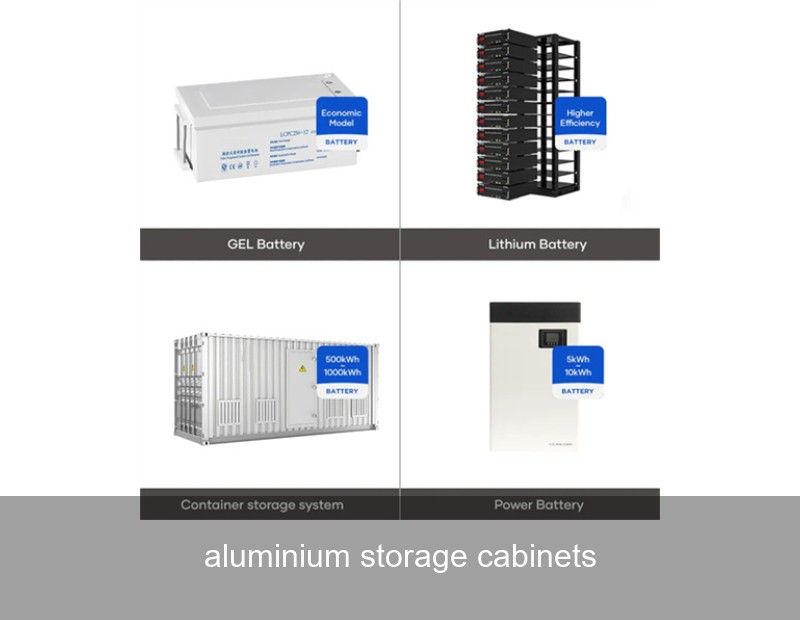
When you think about a solar array or a battery storage system, your mind likely goes to the gleaming panels or the sophisticated battery cells. But what about the robust enclosure that holds and protects the vital components? Enter the aluminium storage cabinet – a critical piece of infrastructure that is far more than just a metal box. As the demand for reliable, safe, and efficient energy storage skyrockets across Europe and North America, the choice of enclosure material and design has become a pivotal engineering decision. This article delves into why aluminium has emerged as the material of choice for premium battery storage cabinets and how this choice directly impacts the safety, longevity, and performance of your entire energy investment.
Table of Contents
The Phenomenon: Why Enclosures Matter More Than Ever
Imagine installing a state-of-the-art battery energy storage system (BESS) worth tens of thousands of euros or dollars, only to have its performance compromised by a rusty, poorly ventilated, or insecure cabinet. It sounds like a nightmare, doesn't it? Yet, this is a risk when enclosures are treated as an afterthought. The shift towards higher-density lithium-ion batteries and the push for outdoor, decentralized installations in commercial and industrial settings have thrust storage cabinets into the spotlight. They are the first line of defense against environmental hazards like rain, dust, extreme temperatures, and even physical tampering. A subpar cabinet can lead to thermal runaway risks, accelerated component degradation, and significant safety liabilities. This isn't just about housing equipment; it's about ensuring system integrity for the 15-20 year lifespan of a typical storage asset.

Credit: Unsplash / ThisisEngineering. Modern industrial enclosures require precision engineering for safety and reliability.
The Data: Aluminium vs. The Alternatives
So, why aluminium? Let's break down the material science and practical data that make it the superior choice for demanding energy storage applications.
| Property | Aluminium Cabinet | Standard Steel Cabinet | Impact on Storage System |
|---|---|---|---|
| Weight | ~60% lighter | Heavier | Easier, cheaper installation and structural flexibility. |
| Corrosion Resistance | Excellent (forms protective oxide layer) | Prone to rust without coatings | Superior longevity in coastal or humid climates (e.g., Northern Europe, Florida). |
| Thermal Conductivity | High | Low | Assists in passive heat dissipation from batteries and inverters. |
| Environmental Impact | Highly recyclable (nearly 100%) | Recyclable, but process is more energy-intensive | Aligns with sustainability goals of renewable energy projects. |
| Strength-to-Weight Ratio | High | Lower | Provides robust protection without excessive bulk. |
Furthermore, aluminium does not spark, a critical safety feature when housing electrical equipment that could potentially arc. According to a National Fire Protection Association (NFPA) report on energy storage safety, proper enclosure design is listed as a key factor in mitigating fire risk. Aluminium's natural properties contribute positively to this safety matrix.
A Real-World Case: The Munich Logistics Hub
Let's move from theory to practice. A major logistics company operating a 50,000 sqm distribution hub near Munich, Germany, faced rising grid demand charges and sought to increase its on-site solar consumption. Their challenge: installing a 500 kWh/250 kW battery storage system in a limited outdoor space subject to seasonal temperature swings and high humidity.
The initial proposal used standard coated steel cabinets. However, the project's engineering partner, working with Highjoule, recommended a switch to Highjoule's proprietary aluminium alloy storage cabinets. Here’s what changed:
- Installation Time: The lighter cabinets reduced crane time and on-site labor by an estimated 30%.
- Thermal Performance: Integrated with Highjoule's active cooling system, the aluminium structure helped maintain an optimal operating temperature range (15-25°C) even during a peak August heatwave, with internal temperatures measured 5-8°C cooler than modeled for steel in the same conditions.
- Long-Term Integrity: After two full years of operation, a maintenance inspection showed zero signs of corrosion or material fatigue, a common concern in the region's damp winters.
The result? The system consistently achieves a 98% round-trip efficiency and has reduced the facility's peak grid draw by over 40%, delivering a faster-than-expected return on investment. The cabinet was not a cost center but a value driver.

Credit: Unsplash / American Public Power Association. Scalable, robust enclosures are vital for commercial energy storage success.
The Highjoule Approach: Intelligent Enclosures for Intelligent Storage
At Highjoule, we view the aluminium storage cabinet as the foundational component of our integrated storage solutions. Our philosophy is that safety and performance are engineered in from the outside in.
Our H-Series Commercial Storage Systems feature cabinets built from marine-grade aluminium alloys. But we go beyond the material:
- Modular, Scalable Design: Cabinets are designed to stack and connect seamlessly, allowing a business to start at 100 kWh and expand to multi-megawatt-hour systems without redesigning the infrastructure.
- Integrated Thermal Management: The cabinet architecture is co-engineered with our hybrid cooling system. The aluminium body acts as a heat sink, while smart vents and fan placements create optimal airflow paths, reducing the energy needed for cooling by up to 20% compared to isolated designs.
- Built-in Safety Architecture: Our cabinets include passive fire-retardant barriers, dedicated conduits for sensor cabling (monitoring for gas, heat, and smoke), and are designed to meet rigorous international standards like UL 9540 and IEC 62933.
- Grid-Interactive Ready: Conduit entries, communication ports, and mounting points for secondary equipment are pre-planned, making interconnection with solar inverters or grid management systems straightforward.
For residential and smaller commercial applications, our Highjoule HomePower line utilizes the same aluminium principles in a compact, aesthetically designed package that homeowners can install in a garage or outdoors with confidence.
Beyond the Cabinet: Highjoule's Full-Service Expertise
Our service doesn't stop at providing the hardware. From initial site assessment and financial modeling to grid compliance support and long-term performance monitoring via our Highjoule Nexus™ platform, we ensure the entire system—with its high-performance aluminium cabinets at the core—delivers on its promise of resilience and savings.
Future-Proofing with Aluminium: Key Considerations
As you plan your energy storage project, asking the right questions about the enclosure will safeguard your investment. Here is a logical ladder to climb in your discussions with providers:
- Phenomenon: "Our location has harsh weather/space constraints/specific safety codes."
- Data: "Can you show me comparative data on corrosion resistance, thermal performance, and weight for your cabinet material?"
- Case Evidence: "Do you have a case study from a similar climate or application where the enclosure performance was measured?"
- Insight/Integration: "How is the cabinet design specifically integrated with the battery management and thermal systems to optimize overall lifecycle and safety?"
This line of inquiry shifts the conversation from commodity to critical engineering. For deeper insights into system-level safety standards, the U.S. Department of Energy's Solar Energy Technologies Office publishes valuable research on BESS safety and reliability.
The Sustainability Loop
Finally, consider the end-to-end sustainability story. Aluminium is infinitely recyclable. At the end of its long service life, a Highjoule aluminium cabinet can be recycled into new products with only 5% of the energy required for primary production. This creates a circular economy loop that perfectly complements the renewable energy your system stores and uses.
So, as you evaluate your next energy storage project, we leave you with this question: Is your storage solution protected by an enclosure that is as smart, resilient, and sustainable as the energy it's meant to hold?
 Inquiry
 Online Chat