


Inspired by Energy: How Much Can a Modern Battery Storage System Save You?
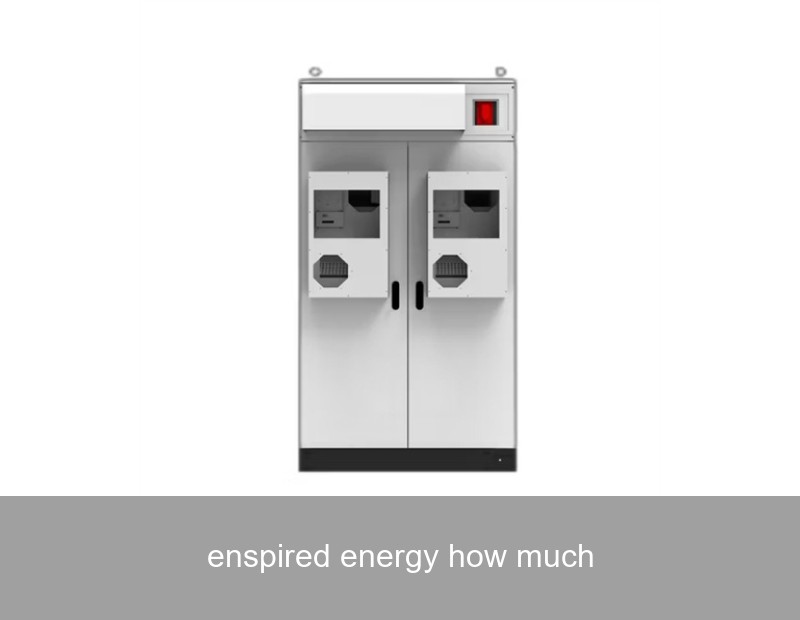
You've likely heard the buzzwords: energy independence, grid resilience, lower bills. But when you see a sleek battery storage unit and feel truly inspired by energy, the immediate, practical question that follows is: "How much?" How much can I save? How much can I store? How much impact can I really have? For businesses, communities, and homeowners across Europe and the US, this isn't just curiosity—it's a crucial financial and operational calculation. Let's move beyond inspiration and into the tangible data and real-world performance that defines the value of modern energy storage.
Table of Contents
- The Phenomenon: From Price Volatility to Power Potential
- The Data: Decoding the "How Much" Equation
- The Case Study: A German Manufacturing Plant's Story
- The Solution: Intelligent Storage That Maximizes Your "How Much"
- The Future: What More Can Your Energy System Do?
The Phenomenon: From Price Volatility to Power Potential
Across grids in Germany, California, and beyond, a dual phenomenon is reshaping energy economics. First, renewable penetration is soaring, creating abundant but intermittent clean power. Second, energy prices are experiencing unprecedented volatility, with peak-hour rates often doubling or tripling off-peak costs. This creates a powerful opportunity: what if you could capture low-cost or self-generated energy and use it when it's most valuable? The gap between the low and high price—sometimes exceeding €200/MWh—directly answers part of the "how much" question regarding potential savings.

Image Source: Unsplash (Representative image of data analytics)
The Data: Decoding the "How Much" Equation
The financial return of a battery energy storage system (BESS) is not a single number. It's a composite of several value streams. Let's break down the key components:
- Energy Arbitrage: Buying/store energy when cheap, using/selling when expensive. Savings can range from 20-40% on your energy consumption costs, depending on local tariff structures.
- Peak Shaving: Avoiding demand charges (a fee based on your highest power draw). For commercial users, this alone can cut 10-30% off the total bill.
- Backup Power: Value of avoided downtime. For a data center or hospital, this is immense. For a homeowner, it's peace of mind.
- Incentives: Investment Tax Credits (ITC) in the US, or various EU member state grants, can reduce upfront cost by 20-50%.
To illustrate, consider this simplified table for a typical mid-sized commercial operation:
| Value Stream | Annual Estimated Savings/Revenue | Key Driver |
|---|---|---|
| Energy Cost Reduction (Arbitrage & Peak Shaving) | €25,000 - €45,000 | Local electricity tariff volatility |
| Demand Charge Reduction | €8,000 - €15,000 | Contracted power capacity (kVA) |
| Grid Services (Frequency Response)* | €5,000 - €20,000 | Market participation programs |
*Requires specific market access and aggregation. Source: Adapted from U.S. Department of Energy and European Commission reports.
A Concrete Case: Boosting Resilience and ROI for a Bavarian Manufacturer
Let's move from theory to a real-world example. A medium-sized automotive parts supplier in Bavaria, Germany, was facing annual electricity costs exceeding €500,000, with significant demand charges and exposure to volatile day-ahead prices. Their existing 500 kW rooftop PV system was often curtailed during sunny weekends when the factory was closed.
They partnered with Highjoule to install a 750 kWh / 500 kW Highjoule C&I PowerStack system. The integrated system's intelligent energy management software (EMS) was configured for three primary goals: 1) Store excess solar generation, 2) Shave peak loads by discharging during production spikes, and 3) Participate in the German primary control reserve market via an aggregator.
The results after one full year:
- Solar Self-Consumption Rate increased from 65% to over 92%.
- Overall Electricity Bill Reduction of 31% annually.
- Additional Revenue from grid services totaled approximately €18,000.
- The system provided a full backup for critical assembly lines during two grid outages, preventing an estimated €80,000 in production losses.
This project demonstrates that the answer to "how much" is multifaceted: substantial cost savings, new revenue, and operational resilience. The Highjoule PowerStack, with its modular design and UL/IEC-certified safe LFP chemistry, provided the reliable, high-cycle-life foundation, while the AI-driven EMS optimized the financial returns every single day.

Image Source: Unsplash (Representative image of industrial energy management)
The Solution: Intelligent Storage That Maximizes Your "How Much"
As the case shows, hardware is only half the story. The true determinant of value is the intelligence that controls it. This is where a provider's expertise becomes critical. Since 2005, Highjoule has focused on delivering not just batteries, but integrated smart, efficient, and sustainable power solutions.
For our residential clients, the Highjoule HomeVault system seamlessly integrates with solar inverters, learning household patterns to maximize self-consumption and provide quiet, emissions-free backup power. For commercial and industrial (C&I) clients, our C&I PowerStack and MicroGrid Controller are the cornerstones of energy strategy. They enable:
- Multi-Mode Optimization: Automatically switch between savings, revenue, and backup modes based on real-time market data and on-site load.
- Future-Proof Scalability: Start with what you need and add capacity as your business grows.
- Unmatched Safety & Longevity: Built with Lithium Iron Phosphate (LFP) cells and multi-layer protection systems, ensuring a long operational life that underpins the investment ROI.
The system's software is continuously updated, allowing it to adapt to new grid service markets and tariff structures—ensuring your asset's value grows over time. You can learn more about the importance of system integration from independent research bodies like the National Renewable Energy Laboratory (NREL).
The Future: What More Can Your Energy System Do?
The journey from being inspired by energy to quantifying "how much" reveals a clear truth: modern battery storage is a dynamic financial asset and a resilience tool. The technology has matured beyond pilot projects into a cornerstone of prudent energy management for factories, farms, office parks, and homes.
So, the next question isn't just about savings today. It's about potential tomorrow. What new opportunities could open up if your facility could act as a virtual power plant, supporting the broader grid's stability? How much more could you achieve with a platform designed to evolve with the energy landscape?
We invite you to move from inspiration to calculation. What does your unique energy profile look like, and what is the "how much" potential waiting to be unlocked on your site?
 Inquiry
 Online Chat