


American Made Solar Inverters: Powering Energy Independence and Reliability
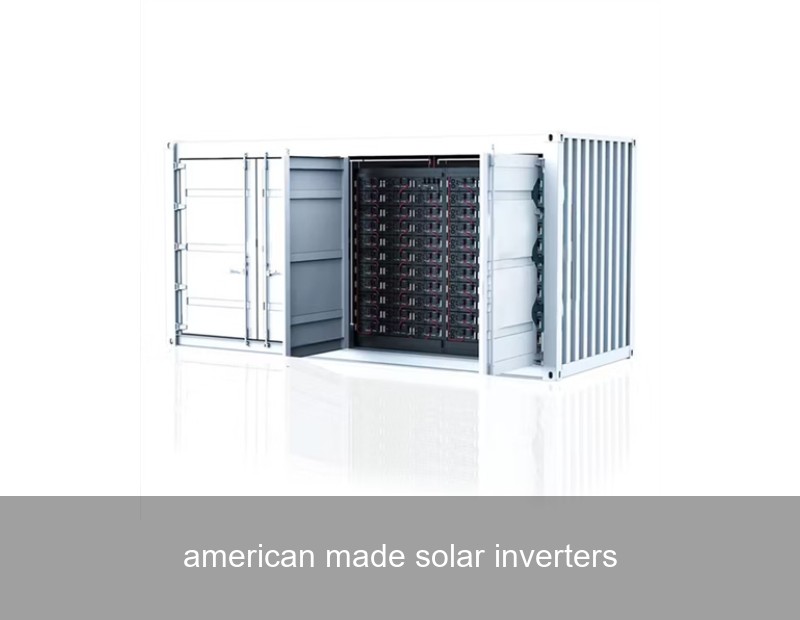
Imagine your solar panels, basking in the sun, generating clean power. But what if the critical device that makes that power usable in your home fails? The heart of any solar energy system isn't just the panel; it's the solar inverter. And increasingly, homeowners and businesses across the U.S. are asking a pivotal question: does where it's made matter? The demand for American made solar inverters is rising, driven by a desire for supply chain security, stringent quality standards, and bolstering the local economy. This isn't just about patriotism; it's about performance, reliability, and building a resilient energy future from the ground up.
Table of Contents
- The Quiet Revolution: Why "Made in USA" is Resonating in Solar
- Beyond the Label: Tangible Benefits of Domestic Inverter Manufacturing
- A Case Study in Resilience: The Texas Microgrid Project
- The Highjoule Advantage: Intelligent Storage Meets American Craftsmanship
- Your Energy, Your Choice: Questions to Guide Your Decision
The Quiet Revolution: Why "Made in USA" is Resonating in Solar
For years, the global solar inverter market has been dominated by international manufacturers. However, recent global events have exposed vulnerabilities in long, complex supply chains. Project delays, logistical hurdles, and concerns over quality control have prompted a significant shift in thinking. According to the Solar Energy Industries Association (SEIA), there's a growing emphasis on domestic manufacturing to de-risk the clean energy transition. Choosing American made solar inverters is a direct response to this. It's a choice for shorter, more transparent supply chains, which often translate to faster installation times and more straightforward access to technical support. When your inverter has a "Made in USA" label, you're not just buying a product; you're investing in a ecosystem of local engineering, manufacturing jobs, and a more secure energy infrastructure.
Beyond the Label: Tangible Benefits of Domestic Inverter Manufacturing
So, what do you actually gain by specifying a U.S.-manufactured inverter? The advantages are both practical and strategic.
- Rapid Support & Compliance: Inverters must meet strict grid codes set by utilities and organizations like UL. American manufacturers design products specifically for the U.S. grid from day one, ensuring seamless compliance. More importantly, if you need support, service engineers are often in the same or adjacent time zones, leading to faster response times.
- Enhanced Quality Control: Domestic production facilities are subject to rigorous U.S. labor and environmental standards. The manufacturing process is typically more automated and precise, resulting in consistent, high-quality products built to last in diverse American climates, from the Arizona desert to the Minnesota winter.
- Economic & Security Multiplier: Every dollar spent on domestically produced clean energy technology circulates within the national economy, creating jobs and fostering innovation. It also reduces dependence on foreign sources for critical energy infrastructure, a key point in national energy security discussions.
| Consideration | American Made Solar Inverters | Overseas Sourced Inverters |
|---|---|---|
| Supply Chain Lead Time | Typically shorter, more predictable | Often longer, subject to port/global delays |
| Technical & Warranty Support | Direct, local engineering support | May involve international call centers or distributors |
| Grid Code Compliance | Designed specifically for UL1741-SB, IEEE 1547 | May require firmware updates or special certification |
| Carbon Footprint of Logistics | Lower transportation emissions | Higher due to long-distance shipping |
A Case Study in Resilience: The Texas Microgrid Project
Let's look at a real-world example. Following the grid instability events in Texas, a mid-sized dairy farm in Central Texas sought to achieve complete energy independence. Their goal was to ensure uninterrupted power for milk cooling, feeding systems, and essential operations, regardless of grid outages. The project integrator made a conscious decision to use American made solar inverters paired with a robust battery storage system.

The results were compelling:
- System Uptime: 99.9% over 18 months, including through severe seasonal storms.
- Support Response: A firmware update request was handled by a domestic engineer within 4 hours, with no system downtime.
- Economic Benefit: The farm reduced its energy costs by 60% and completely avoided losses from spoilage during grid outages, which were estimated at over $15,000 per day.
This case underscores that the choice of inverter origin is not academic; it directly impacts operational resilience and the bottom line.
The Highjoule Advantage: Intelligent Storage Meets American Craftsmanship
At Highjoule, we understand that the inverter is the brain of the solar system, but its true potential is unlocked when seamlessly integrated with advanced storage. While we are a global leader in smart battery energy storage systems (BESS), we deeply value and partner with the renaissance of American manufacturing. Our philosophy is to provide the most intelligent, efficient, and sustainable power solution tailored to the specific needs of the market.
For our commercial, industrial, and microgrid clients in the U.S., this often means designing systems that incorporate top-tier American made solar inverters. Our Highjoule Hive Energy Management Platform acts as the central nervous system, orchestrating between these robust inverters, our high-density battery units, and the grid. This ensures not just energy independence, but optimal economic performance—automatically deciding when to store, when to consume, and when to sell back to the grid based on real-time data.

Our storage solutions, like the Highjoule Titan Series for commercial applications, are engineered for compatibility and performance with domestic electrical standards and inverter technologies. This synergy creates a truly resilient, American-assembled and integrated power ecosystem that supports local jobs at every stage—from installation and commissioning to ongoing maintenance and optimization.
Your Energy, Your Choice: Questions to Guide Your Decision
The journey to energy independence is personal and strategic. As you evaluate your solar and storage options, the inverter's origin is a key factor. Here are some questions to ask your installer or system designer:
- Can you provide details on the manufacturing location and final assembly of the inverters you propose?
- What is the typical response time for technical support and warranty claims for this specific inverter model?
- How is the inverter certified for local grid interconnection, and how will it integrate with a battery storage system, like those from Highjoule, for future expansion?
Choosing American made solar inverters is more than a specification; it's a statement about the kind of energy future you want to build. It's a choice for reliability, community, and long-term value. As you contemplate this decision, we leave you with this: In a world where energy security is becoming paramount, what role will your home or business play in creating a more resilient and self-sufficient grid?
 Inquiry
 Online Chat