


How Solar Companies in Taiwan Are Powering a Resilient Future with Advanced Energy Storage
If you've followed the energy landscape in Asia, you've likely noticed Taiwan making significant strides. The island is on a determined path to boost its renewable energy capacity, with solar power leading the charge. For solar companies in Taiwan, this isn't just about installing more panels on rooftops and unused land. The real story, and the key to unlocking Taiwan's green energy potential, lies in solving a fundamental puzzle: what happens when the sun doesn't shine? This is where the conversation shifts from solar generation to intelligent energy management, a global challenge where companies like Highjoule are providing crucial solutions.
Introduction: Taiwan's Solar Ambition and the Global Energy Shift
Taiwan's government has set ambitious targets, aiming for 20GW of solar PV capacity by 2025. This push is driven by energy security needs, industrial decarbonization demands from its world-leading tech sector, and global climate commitments. However, Taiwan's journey mirrors a challenge faced by grids worldwide—from California to Germany. High penetration of variable renewables like solar can strain grid stability, leading to curtailment (wasting clean energy) or reliance on fossil-fuel peaker plants. The most forward-thinking solar companies in Taiwan now recognize that their value proposition is evolving. They are no longer just equipment installers; they are becoming providers of 24/7 reliable, clean power. This requires a sophisticated partner in energy storage.
The Core Challenge for Solar Companies in Taiwan: Intermittency
Imagine a bright, sunny day in Changhua County, where a vast solar farm is operating at peak output. It's feeding significant power into the local grid. Now, imagine a sudden, thick cloud cover or the inevitable approach of dusk. The power generation plummets rapidly. This intermittency creates two major headaches:
- Grid Instability: The grid operator needs to balance supply and demand in real-time. A sudden drop in solar generation can cause frequency dips, potentially leading to localized outages if not managed instantly.
- Economic Loss: Solar energy produced during midday peaks might exceed local demand, especially on weekends. Without a way to store it, this excess, cheap, clean energy is literally wasted.
For a commercial factory relying on a solar PPA (Power Purchase Agreement), this variability is a business risk. They need consistent power for manufacturing processes. This is the universal phenomenon that connects solar companies in Taiwan with their counterparts in Europe and the U.S.

Image Source: Unsplash (Photographer: American Public Power Association) - Illustrating solar intermittency.
The Data: Why Storage is No Longer Optional
Let's look at the numbers. According to the International Renewable Energy Agency (IRENA), the global weighted average levelized cost of electricity (LCOE) for solar PV fell by 89% between 2010 and 2022. Meanwhile, battery storage costs have plummeted similarly. The synergy is undeniable. A 2023 report by BloombergNEF highlighted that pairing solar with four hours of storage is now economically competitive with new coal and gas plants in many markets. For Taiwan, with its high-tech industrial base and critical need for uninterrupted power, the calculus is clear. Storage transforms solar from a variable source into a dispatchable one, smoothing output and providing critical grid services like frequency regulation.
| Metric | Solar-Only System | Solar + Storage System |
|---|---|---|
| Energy Self-Consumption | ~30-40% (typical for commercial) | 70-90%+ |
| Grid Dependency During Peak | High | Low to Zero |
| Ability to Provide Grid Services | Limited | High (Frequency, Voltage Support) |
| Business Model | Simple FIT or PPA | Multi-revenue Stream (PPA, Grid Services, Backup) |
Case Study: A Taiwanese Industrial Park's Journey to Resilience
Let's examine a real-world example from Southern Taiwan Science Park. A consortium of solar companies in Taiwan developed a 5MW rooftop solar project for a cluster of semiconductor component suppliers. The goal was to reduce electricity costs and carbon footprint. Initially, the solar system met about 15% of the park's daytime load. However, the facility managers faced two issues: first, the most energy-intensive processes ran into the evening when solar output was zero; second, they were vulnerable to brief grid disturbances that could cost millions in production losses.
The solution was integrating a 2.5MW / 5MWh battery energy storage system (BESS). Here’s what happened post-integration:
- Load Shifting: Excess solar energy from midday is stored and discharged during the evening peak (4 PM - 8 PM), doubling the effective utilization of solar generation.
- Backup Power: The BESS provides up to 30 minutes of critical backup, allowing graceful shutdown of sensitive equipment during outages, preventing spoilage.
- Financial Outcome: By arbitraging electricity prices (charging from solar, discharging during high-tariff hours) and participating in Taiwan's nascent ancillary services market, the project's payback period was reduced by an estimated 25%. The Taiwan Power Company (Taipower) also benefits from a more stabilized local grid.
This case is a microcosm of Taiwan's energy future—distributed, intelligent, and resilient.
The Intelligent Solution: Beyond Basic Battery Boxes
It's crucial to understand that not all storage is created equal. A truly effective system isn't just a battery in a container; it's an integrated energy management platform. This is where expertise from global providers becomes invaluable. The core of a modern BESS is its software and system integration—the "brain" that decides when to charge, when to discharge, and how to prioritize between economic optimization and backup readiness.
For solar companies in Taiwan seeking a competitive edge, partnering with a technology leader that offers this intelligence is key. It allows them to deliver a superior product: a future-proofed energy asset for their clients.
Highjoule's Role: Partnering for a Sustainable Taiwan
Since 2005, Highjoule has been at the forefront of this intelligent storage revolution. We understand that the needs of a Taiwanese semiconductor fab are distinct from a German residential community, but the core technology principles of safety, efficiency, and intelligence are universal. Our product suite is designed to empower solar companies in Taiwan and worldwide:
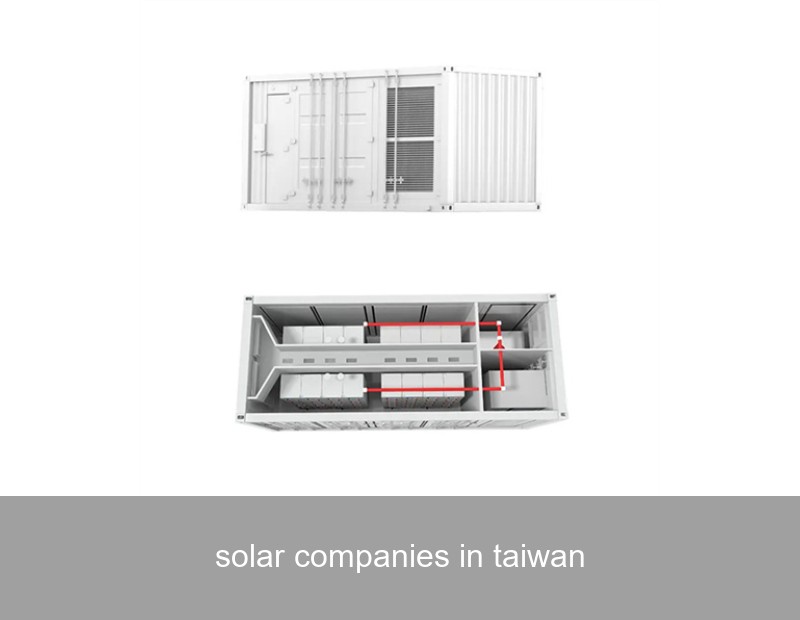
- H-Joule Cube (Commercial & Industrial): A modular, containerized BESS with industry-leading energy density and built-in safety features like active thermal runaway prevention. Its integrated AI-driven energy management system (EMS) automatically optimizes for the highest financial return, whether through peak shaving, energy arbitrage, or providing grid stability services.
- H-Joule Home: A sleek, user-friendly residential storage solution that seamlessly integrates with new or existing solar installations. It gives homeowners independence from tariff fluctuations and reliable backup power—a growing concern in regions prone to extreme weather.
- Microgrid Controller: For larger projects like industrial parks or island communities, our advanced controller can orchestrate multiple energy sources—solar, storage, diesel gensets—into a stable, independent microgrid.
For our partners in Taiwan, we provide more than hardware. We offer localized engineering support, grid compliance expertise, and sophisticated financial modeling tools to help design projects that are not just technically sound, but also bankable and profitable.
Image Source: Unsplash (Photographer: American Public Power Association) - Depicting modern BESS control.
The Future Grid: A Call for Integrated Vision
The trajectory is set. The next phase for solar companies in Taiwan is not just about GW of panels installed, but about GWh of intelligent storage deployed. The combination creates virtual power plants, enhances national energy security, and empowers businesses with predictable energy costs. The question for project developers, policymakers, and large energy consumers is no longer *if* storage is needed, but *how* to implement it most effectively.
What specific regulatory or market barriers do you believe need to be addressed next to accelerate the deployment of solar-plus-storage projects in Taiwan's unique energy ecosystem?
 Inquiry
 Online Chat