


Appliances That Can Work Using Solar Energy: Powering Your Home with Sunshine
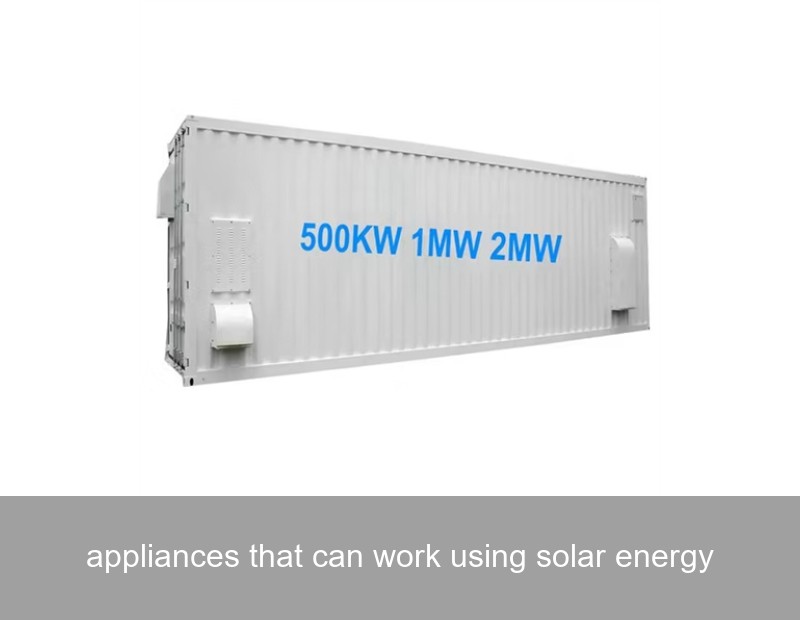
Imagine a sunny afternoon. While you're at work, the sun is hard at work on your rooftop, silently powering your home. Your refrigerator hums along, keeping groceries fresh. The air conditioner maintains a perfect temperature. Even your electric vehicle is charging in the driveway. This isn't a distant future—it's the present reality for millions who have embraced solar energy. The question is no longer if you can run appliances using solar energy, but how efficiently and reliably you can do it. The key lies not just in the solar panels, but in the intelligent energy storage system that brings 24/7 solar power to life. This is where advanced home energy management transforms sunlight into true independence.
Table of Contents
The Phenomenon: From Daylight to Night-Light
Solar panels are brilliant at capturing energy, but the sun, as we know, doesn't shine all the time. This creates a fundamental challenge: your energy production peaks during the day, while your consumption often spikes in the early morning and evening. Without a way to store that precious solar energy, you're forced to draw power from the grid when you need it most, often at higher rates. The true potential of appliances that can work using solar energy is unlocked only when you have a consistent, clean power supply—day and night, rain or shine.
Image Source: Unsplash - A modern solar-powered home at dusk.
The Data: How Much Power Do Your Appliances Really Need?
Let's get practical. To understand what a solar and storage system must deliver, we need to look at the energy appetite of common household appliances. Here’s a breakdown of typical wattage and daily energy use for key devices.
| Appliance | Average Running Watts | Estimated Daily Use (kWh) | Primary Solar Feasibility |
|---|---|---|---|
| Refrigerator (Energy Star) | 150-400 | 1.0 - 2.0 | Excellent (24/7 operation) |
| Central Air Conditioner (3-ton) | 3000-3500 | 10.0 - 15.0 (seasonal) | High (needs robust storage) |
| Heat Pump | 1500-3000 | 7.0 - 12.0 (seasonal) | High (ideal for solar) |
| Electric Vehicle Charger (Level 2) | 7200 | 9.0 (for 30 miles) | Excellent (scheduled charging) |
| Washing Machine | 500-1000 | 0.3 - 0.5 | Excellent (flexible timing) |
| LED Lighting (Whole Home) | 100-400 | 1.0 - 3.0 | Excellent |
Data adapted from the U.S. Department of Energy. The critical insight? High-power, short-duration appliances (like a microwave) are easy for solar. The real test for an off-grid or backup system are the "energy gluttons": air conditioners, heat pumps, and EV chargers. Powering these appliances using solar energy reliably requires an energy storage system (ESS) with high power output (kW) and substantial capacity (kWh).
The Solar-Powered Home Ecosystem: More Than Just Panels
So, how does it all come together? A modern solar-powered home is an intelligent ecosystem with three core components:
- Solar Panels (The Generators): Convert sunlight into DC electricity.
- Inverter (The Translator): Converts DC electricity from panels and batteries into usable AC power for your home.
- Battery Storage System (The Heart of Independence): This is the game-changer. It stores excess solar energy for use when the sun isn't shining.
This last component is where companies like Highjoule excel. Founded in 2005, Highjoule has pioneered intelligent, efficient battery energy storage systems (BESS) that make true energy independence possible. Our Highjoule HES Series for residential applications isn't just a battery box; it's an integrated energy manager. It features advanced lithium-iron-phosphate (LiFePO4) chemistry for safety and longevity, scalable capacity from 10kWh to 30kWh+, and an inverter built for high power demands. This means it can simultaneously start your air conditioner's compressor (a high-surge load) and charge your EV, all from stored sunshine.
Our systems are designed with the user in mind, featuring an intuitive app that lets you monitor production, consumption, and storage in real-time. You can set preferences to ensure backup power for essential circuits during an outage or to maximize self-consumption of your solar energy, reducing your reliance on the grid. By seamlessly integrating with your solar array, a Highjoule system ensures that every possible watt of solar power is harnessed and utilized efficiently, making all your major appliances that can work using solar energy a practical, everyday reality.
Beyond Backup: The Smart Energy Hub
The modern home battery is evolving into a smart energy hub. With features like time-based control, your Highjoule system can be programmed to store energy when rates are low (or solar is abundant) and discharge when grid rates are high. This "arbitrage" maximizes your financial return. Furthermore, in regions with supportive policies, Virtual Power Plant (VPP) participation allows your system to contribute to grid stability, creating potential revenue streams.
Case Study: The Johnson Family's Year-Round Solar Journey
Let's look at a real-world example from Austin, Texas, USA. The Johnson family installed a 12kW solar array in 2022. While their daytime energy bills plummeted, they were still drawing significant power from the grid at night for AC and charging their two plug-in hybrids. Their goal was true net-zero living and resilience against the region's increasingly common grid outages.
In early 2023, they integrated a Highjoule HES-20 system (20kWh capacity) with their existing solar. The results after one full year were compelling:
- Self-Consumption Rate: Increased from 35% to 92%. They now use almost all the solar energy they produce.
- Grid Independence During Outages: During a summer storm that caused a 9-hour blackout, the system automatically switched to backup mode. It powered their refrigerator, essential lighting, internet, and a dedicated bedroom mini-split AC unit continuously, with over 40% capacity remaining.
- EV Charging: They scheduled EV charging for midday, directly from solar surplus. An estimated 80% of their annual 8,000 miles of driving is now powered directly by their rooftop.
- Financial Impact: Combined with solar, their annual electricity cost dropped from ~$2,800 to a net credit of $150, thanks to VPP participation and smart export management.
"The peace of mind is priceless," says Sarah Johnson. "Knowing our home is powered by our own clean energy, and that we have backup for essentials, has fundamentally changed how we think about power. The system just manages itself."

Image Source: Unsplash - A modern, wall-mounted home battery system.
The Future of Solar Appliances and Smart Energy
The synergy between appliances and solar-plus-storage is growing smarter. The next wave involves smart, connected appliances that can communicate directly with your energy management system. Imagine your heat pump automatically adjusting its setpoint by a degree or two when clouds pass over, or your dishwasher initiating its cycle only when your batteries are fully charged from a sunny day. This demand-side management will further optimize energy use, making the solar-powered home even more efficient.
For commercial and industrial applications, Highjoule's larger-scale C&I and microgrid solutions apply the same principles but at a transformative level. We enable businesses to manage demand charges, ensure operational continuity, and meet sustainability goals by powering heavy machinery, data centers, and entire facilities with renewable energy.
Making the Solar-Powered Home Yours
The journey to running your appliances using solar energy around the clock begins with an assessment. It's not about one-size-fits-all, but about designing a system that matches your specific energy profile, appliance mix, and goals—whether that's maximum savings, full backup, or environmental impact.
What's the first step? Look at your past year's electricity bills. Identify your base load and your peak loads. Then, ask yourself: which appliances are essential for my comfort and safety during a power outage? How can I shift my flexible loads (like laundry or EV charging) to align with solar production? The answers to these questions form the blueprint for your personalized energy independence.
What appliance in your home would you most want to know is always powered, cleanly and reliably, no matter what?
 Inquiry
 Online Chat