


Centralized BMS: How Much Does It Cost and Is It Worth It?
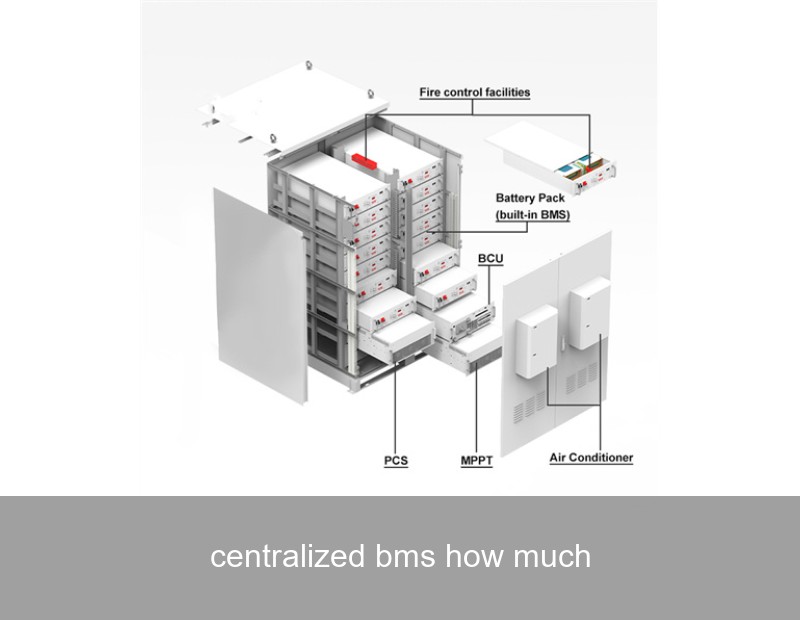
If you're managing a commercial, industrial, or utility-scale battery energy storage system (BESS), you've likely encountered a critical question: centralized BMS how much should we budget for? The Battery Management System (BMS) is the brain of your storage asset, and choosing its architecture—centralized or distributed—has significant cost and performance implications. It's not just about the initial price tag; it's about total cost of ownership, system reliability, and long-term return on investment. In this article, we'll demystify the costs, explore the value, and see how leading providers like Highjoule implement these systems for optimal performance.
Table of Contents
- What is a Centralized BMS Architecture?
- Centralized BMS Cost Breakdown: Hardware, Software, and Integration
- Centralized vs. Distributed BMS: A Cost-Benefit Analysis
- Real-World Case Study: A 20 MWh Utility Project in Germany
- The Highjoule Approach: Smart BMS Integration for Superior ROI
- Making the Decision: Key Questions to Ask Your Provider
What is a Centralized BMS Architecture?
Let's start with the basics. A Centralized BMS is a single, master control unit that connects directly to every cell or module in a battery pack via a complex wiring harness. It centralizes all monitoring, balancing, and protection functions in one physical hardware device. Think of it as a command center with direct phone lines to every single soldier. This contrasts with a distributed or modular BMS, which uses multiple lower-level slave boards (often called Cell Monitoring Units or CMUs) located at the battery modules, communicating with a master controller via a digital bus.
For large-scale storage, the centralized BMS how much question is pivotal because the architecture influences installation complexity, scalability, and maintenance workflows. It's often praised for its simplicity in design and potentially lower unit hardware cost for smaller to medium-sized systems.
The Core Components Driving Cost
Understanding what you're paying for is key. A centralized BMS solution isn't a single item; it's a package:
- The Central Master Unit: The high-performance computer with advanced processors capable of handling thousands of data points.
- Complex Wiring Harness: Arguably the most defining and costly physical component. This extensive network of cables and connectors must be meticulously designed for safety and signal integrity.
- Integration Software & Algorithms: The proprietary software that performs state-of-charge (SOC) estimation, state-of-health (SOH) calculation, cell balancing, and safety protocols.
- Communication Gateways: Hardware to interface with broader energy management systems (EMS), SCADA, or cloud platforms.
Centralized BMS Cost Breakdown: Hardware, Software, and Integration
So, let's tackle the main event: centralized BMS how much does it actually cost? It's crucial to note that prices are rarely listed publicly for large-scale BMS; they are project-specific. However, we can outline a framework. Costs typically range from $15,000 to $50,000+ for the BMS core hardware and software for a medium to large commercial/industrial system. But this is just the beginning.
The real financial picture emerges when you consider total integration cost:
| Cost Category | Description | Impact for Centralized BMS |
|---|---|---|
| Unit Hardware Cost | Cost of the BMS master unit and its direct components. | Potentially lower than a distributed system for a single, compact rack. |
| Wiring & Harnessing | Cables, connectors, conduit, and labor for installation. | Very High. Complexity increases with system size, leading to higher labor costs and material use. |
| System Integration | Engineering hours to design, configure, and program the BMS for the specific battery pack and application. | Moderate to High. Requires careful design to avoid signal noise in long wire runs. |
| Maintenance & Service | Long-term costs for troubleshooting, component replacement, and upgrades. | Can be Higher. A failure in the central unit can disable the entire system. Diagnosing a single cell fault may require extensive testing of the harness. |
As you can see, the upfront centralized BMS how much calculation can be deceptive. The lower hardware cost can be offset by higher installation and long-term service costs. This is where the expertise of a seasoned provider becomes invaluable.

Credit: Unsplash - Photon. The wiring harness in a centralized BMS is a critical and costly component, requiring precision installation.
Centralized vs. Distributed BMS: A Cost-Benefit Analysis
You might be wondering, "Why would anyone choose a centralized system then?" Great question. The choice isn't purely financial; it's technical and application-driven.
- Simplicity in Design: One controller to manage. This can simplify software development and validation processes.
- Potentially Lower Unit Cost (for smaller systems): For a single, contained battery cabinet, a single robust BMS can be more economical than multiple PCBs.
- Direct Measurement: Some argue centralized systems have less communication latency for critical safety functions, though modern distributed systems are extremely fast.
However, the distributed BMS architecture shines in scalability and serviceability. Adding another battery rack? Simply add another set of modular slave units. Need to replace a cell module? Its dedicated monitoring unit is right there. The installation is cleaner with far less wiring, reducing points of failure and labor hours. For growing or large-scale installations, the distributed approach often wins on total lifecycle cost.
Real-World Case Study: A 20 MWh Utility Project in Germany
Let's ground this discussion with real data. A 2022 grid-stabilization project in Bavaria involved a 20 MWh lithium-ion battery storage facility. The initial engineering proposal included a traditional centralized BMS design.
The Challenge: The sheer scale meant the wiring harness for a centralized system was estimated to involve over 25 kilometers of cable. This presented not only a material cost burden but also a significant installation time risk and potential future maintenance headache.
The Solution & Outcome: The project engineers, in consultation with their technology partner, opted for a distributed, modular BMS architecture. While the per-unit hardware cost was slightly higher, the results were telling:
- Installation Time Reduced by 35%: The plug-and-play nature of modular units slashed on-site labor.
- Wiring Costs Cut by 60%: The dramatic reduction in complex cabling saved tens of thousands of euros.
- Enhanced Serviceability: The system achieved a higher predicted availability (99.3%) due to easier module isolation and replacement.
This case, referenced in a U.S. Department of Energy report on storage system costs, illustrates why the initial "centralized BMS how much" question must evolve into "what is the smartest BMS strategy for my project's lifetime?"
The Highjoule Approach: Smart BMS Integration for Superior ROI
At Highjoule, with nearly two decades of experience, we understand that the BMS is not a commodity but the core intelligence of a storage asset. Our philosophy is application-optimized design. We don't force a one-size-fits-all answer to the "centralized BMS how much" dilemma.
For our HJ Sentinel series for commercial and industrial applications, we often employ a hybrid, master-slave architecture that captures the benefits of both worlds. We use robust, localized monitoring units at the module or rack level to minimize wiring and maximize data accuracy, paired with a powerful central controller running Highjoule's proprietary AegisAI software platform.
What does this mean for you?
- Accurate Cost Forecasting: We provide transparent, all-inclusive project quotes that factor in integration labor, avoiding the hidden costs of a pure centralized approach.
- Future-Proof Scalability: Whether you're starting with a 500 kWh system or planning a 10 MWh campus microgrid, our architecture grows with you without costly BMS overhauls.
- Predictive Health Analytics: Our AegisAI platform goes beyond basic monitoring, using cell-level data to predict degradation and schedule maintenance, protecting your investment's long-term value.
We provide the complete, intelligent solution—not just hardware. Our services include feasibility studies, system design, grid integration support, and long-term performance monitoring, ensuring your storage project delivers on its financial and operational promises.

Credit: Unsplash - Luke Chesser. Advanced BMS software, like Highjoule's AegisAI, turns data into actionable insights for optimal asset management.
Making the Decision: Key Questions to Ask Your Provider
When evaluating a BMS solution, move beyond "centralized BMS how much." Instead, engage your potential provider with these targeted questions:
- "Can you provide a detailed breakdown of total integration cost, including wiring, labor, and commissioning for my specific site layout?"
- "How does your BMS architecture scale if we need to expand capacity by 50% in two years?"
- "What is your strategy for cell-level diagnostics and module isolation in the event of a fault? How does this impact system downtime?"
- "Can you share case study data or third-party validation (like from the Sandia National Laboratories Energy Storage Program) on the long-term reliability and performance of your BMS approach?"
The right partner will welcome these questions and have clear, data-backed answers that align with your project's financial and technical goals.
Ready to Optimize Your Storage Project's Brain?
The journey to a successful energy storage deployment is complex, but the right intelligence at its core makes all the difference. What specific challenge in your current or planned project—whether it's managing peak demand, integrating renewables, or ensuring backup power—is most critical for your BMS to solve? Share your priority, and let's discuss how a smart, integrated approach can deliver not just a system, but a strategic asset.
 Inquiry
 Online Chat