


Industrial Electrical Cabinets: The Unsung Heroes of the Energy Transition
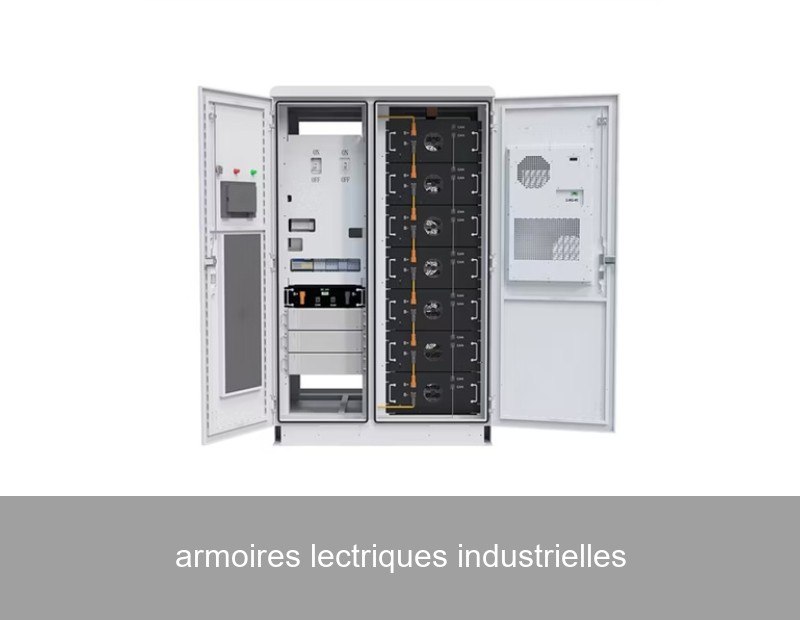
When we think about modernizing our industrial power infrastructure, solar panels and battery storage often steal the spotlight. But what about the critical component that houses, protects, and manages all that power? Industrial electrical cabinets (armoires électriques industrielles) are the silent, robust backbone of any reliable energy system. As industries across Europe and the U.S. aggressively pursue decarbonization and energy independence, these cabinets are evolving from simple metal enclosures into intelligent nodes of power management. The increasing integration of volatile renewable sources and complex battery storage demands a new generation of industrial electrical cabinets—ones designed for safety, intelligence, and seamless system integration.
Table of Contents
The Modern Power Challenge: More Than Just a Box
Gone are the days when an industrial electrical cabinet was just a passive, protective shell. The shift to on-site generation—like solar PV—and the addition of Battery Energy Storage Systems (BESS) create new complexities. Power flow is no longer one-way from the grid. It's bi-directional, fluctuating, and packed with data. This exposes traditional cabinets to unprecedented thermal stress from power electronics, heightened electrical fault risks, and the need for constant communication between inverters, batteries, and building management systems. A standard off-the-shelf enclosure simply isn't engineered for this dynamic environment.

Modern cabinets must integrate monitoring and communication capabilities. (Image credit: Unsplash)
The Data Reality: Heat, Faults, and Downtime Costs
Let's talk numbers. According to a NFPA research report, electrical failures are a leading cause of industrial fires. Overheating components inside poorly managed cabinets are a prime culprit. Furthermore, the U.S. Department of Energy highlights that power quality issues and unplanned downtime cost U.S. manufacturers billions annually. Every minute a production line is down due to an electrical fault in a cabinet, revenue evaporates. The integration of DC power from solar and batteries adds another layer, as DC arcing faults are particularly persistent and dangerous, requiring specialized detection and mitigation built into the cabinet's design.
Key Pain Points for Traditional Cabinets:
- Thermal Management: Inadequate cooling for heat-sensitive inverters and controllers.
- System Integration: Inability to "talk" to BESS, PV inverters, or energy management software.
- Safety Gaps: Lack of integrated protection for both AC and DC side faults in hybrid systems.
- Scalability: Fixed designs that can't adapt to adding more battery racks or generation capacity.
Case Study: A German Automotive Plant's Solution
Consider a real-world example from Bavaria, Germany. A major automotive component manufacturer aimed to achieve 80% renewable energy for its assembly line. They installed a 2.5 MW rooftop solar array and a 1.5 MWh battery storage system. Initially, they used conventional industrial electrical cabinets to house the critical switchgear, inverters, and control systems.
The Problem: Within months, they experienced intermittent shutdowns. The culprit? Heat buildup in the cabinets containing the power conversion systems, triggering overtemperature alarms. Furthermore, the facility manager had no visibility into the real-time performance or health of these cabinets, making troubleshooting slow and reactive.
The Solution: The plant partnered with Highjoule to replace the key cabinets with our Intelligent Power Node (IPN) Enclosures. These are not mere boxes; they are pre-fabricated, system-ready solutions. Highjoule's IPN cabinets feature:
- Advanced forced-air cooling with climate-responsive controls.
- Integrated Highjoule HMI touchscreens for local monitoring of voltage, current, temperature, and device status.
- Built-in communication gateways that seamlessly fed data into the plant's existing Highjoule Energy Management System (EMS) platform.
- Pre-wired compartments for streamlined maintenance.
The Result: Post-installation data over 12 months showed a complete elimination of heat-related shutdowns. The plant's energy team could now predict maintenance needs, and system uptime for the renewable installation reached 99.8%. The intelligent cabinets became a manageable, data-rich part of their energy ecosystem, not a black box.
The Highjoule Approach: Intelligent Enclosures for Smart Energy
At Highjoule, we view the industrial electrical cabinet as the central nervous system of a modern power installation. Our products are designed from the ground up to support the energy transition. For commercial and industrial clients in Europe and North America, this means providing solutions that are safe, efficient, and future-proof.
Our range of integrated cabinet solutions includes:
| Product Line | Primary Application | Key Features |
|---|---|---|
| Power Conversion Enclosures | Housing for inverters, transformers, and switchgear | Enhanced thermal management, EMI shielding, vibration damping |
| BESS Integration Cabinets | Connecting battery racks to main AC distribution | Integrated DC fuse/breaker protection, arc-flash detection readiness, BMS communication ports |
| Microgrid Control Cabinets | Brain of a microgrid (grid-forming/feathering controls) | Pre-installed Highjoule controllers, UPS backup, cyber-secure data ports |
Beyond hardware, our service model is crucial. We offer site-specific engineering to ensure compliance with local standards (like IEC in Europe and UL in the U.S.), remote monitoring via our Highjoule Horizon EMS, and predictive maintenance alerts. This turns a capital expenditure into a long-term reliability partnership.

Remote monitoring transforms cabinet maintenance. (Image credit: Unsplash)
The Future-Proof Industrial Electrical Cabinet
So, what should you look for when specifying industrial electrical cabinets for a renewable or storage project? Think in terms of intelligence and adaptability. The cabinet must be a data source, a thermal manager, and a safety sentinel. Ask your provider: Can it communicate using open protocols like Modbus TCP or DNP3? Does its cooling capacity account for future power density increases? Is the safety design certified for the specific mix of AC and DC voltages present?
As grid demands evolve with vehicle-to-grid (V2G) and demand response programs, the cabinets managing your power assets will need to execute commands from grid operators or energy markets autonomously. This isn't science fiction; it's the next phase of grid integration, and your physical infrastructure must be ready.
Is your current electrical infrastructure silently becoming the weakest link in your energy resilience strategy, or is it an intelligent asset ready to scale with your ambitions?
 Inquiry
 Online Chat