


Unlocking Southeast Asia's Potential: A Look Ahead at the ASEAN Solar PV & Energy Storage Expo
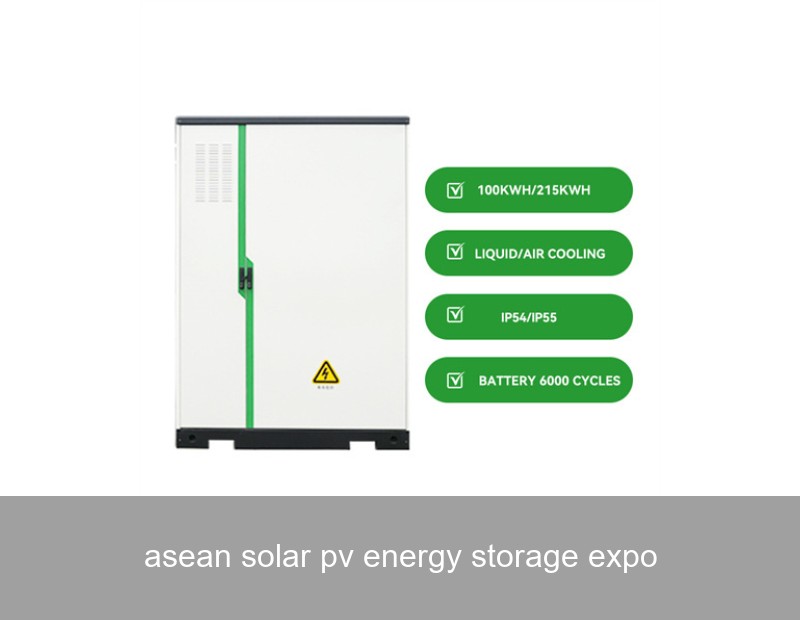
The sun-drenched nations of Southeast Asia are at an energy crossroads. With booming economies and growing populations, the demand for power is surging. Yet, this growth often clashes with goals for energy security and sustainability. The answer? A powerful combination of solar photovoltaic (PV) technology and advanced energy storage systems. This synergy is precisely what makes events like the upcoming ASEAN Solar PV & Energy Storage Expo so critical. It's more than a trade show; it's a hub for the innovation and collaboration needed to power the region's future. For global leaders like Highjoule, with nearly two decades of experience in smart energy storage, this expo represents a vital platform to engage with a market poised for transformative change.
Table of Contents
- The ASEAN Energy Landscape: Sun, Growth, and Grid Challenges
- The Storage Imperative: From Intermittent to Intelligent Solar Power
- Case Study: Thailand's Solar-Plus-Storage Success
- Highjoule's Tailored Solutions for the ASEAN Market
- What to Expect at the ASEAN Solar PV & Energy Storage Expo
- Shaping the Future Energy Mix: Your Role

Credit: Photo by American Public Power Association on Unsplash. Solar installations are rapidly expanding across ASEAN's commercial and industrial sectors.
The ASEAN Energy Landscape: Sun, Growth, and Grid Challenges
Let's set the stage. ASEAN is blessed with phenomenal solar resources, with many regions enjoying an average of 5-6 kilowatt-hours per square meter per day. It's no surprise that solar PV capacity has been expanding rapidly. However, integrating this variable power source into national grids isn't without its headaches. You've likely heard the common concern: "What happens when the sun doesn't shine?" This isn't just a theoretical question. Without a solution, grid operators face instability, and the full value of solar investments remains untapped.
The data paints a clear picture of both opportunity and urgency. According to the International Renewable Energy Agency (IRENA), ASEAN needs to triple its renewable energy capacity by 2025 to meet collective targets. Meanwhile, peak electricity demand often occurs in the early evening—hours after solar generation has peaked. This creates a frustrating "duck curve" phenomenon, where the need for quick-ramping (and often fossil-fuel-based) power plants spikes as solar output fades. The gap between solar generation and consumption patterns is the fundamental challenge that the ASEAN Solar PV & Energy Storage Expo aims to address.
The Storage Imperative: From Intermittent to Intelligent Solar Power
This is where energy storage systems (ESS) become the game-changer. Think of storage not just as a battery, but as the brain and buffer for a solar-powered grid. It does three critical things:
- Smooths Output: It absorbs excess solar energy during midday peaks and releases it when needed, turning lumpy solar generation into a firm, dispatchable resource.
- Strengthens Grids: It provides essential grid services like frequency regulation, helping to maintain stability as more renewables come online.
- Empowers Consumers: For businesses and communities, it enables energy independence, reduces demand charges, and provides backup power during outages.
The technology conversation at the expo will undoubtedly center on lithium-ion batteries, given their declining costs and improving performance. However, the real expertise lies in the system integration and intelligence. A high-performance battery is only one component; the power conversion system (PCS), energy management software (EMS), and thermal management are what determine safety, longevity, and return on investment.
Case Study: Thailand's Solar-Plus-Storage Success
Let's look at a concrete example. In 2022, a major industrial food processing plant in Chonburi, Thailand, faced steep electricity costs and unreliable grid power affecting its cold storage operations. Their solution was a 2.5 MW solar carport installation paired with a 4 MWh battery energy storage system.
The results, monitored over one year, were compelling:
| Metric | Result |
|---|---|
| Solar Self-Consumption | Increased from 35% to over 85% |
| Peak Grid Demand | Reduced by 40% |
| Annual Energy Cost Savings | Approximately $280,000 USD |
| Backup Power Coverage | Critical loads secured for up to 4 hours |
This project, featured in a Energy-Storage.news report, highlights the tangible commercial and operational benefits. The storage system wasn't just storing energy; it was actively managing energy flow to maximize solar use and minimize costs—a principle at the core of intelligent system design.
Highjoule's Tailored Solutions for the ASEAN Market
At Highjoule, we understand that the ASEAN market isn't monolithic. A solution for a Singaporean high-rise differs from one for a Philippine island microgrid. Since 2005, we've built our expertise on this very principle: customization through deep understanding. Our presence at the ASEAN Solar PV & Energy Storage Expo allows us to demonstrate solutions engineered for regional specifics.
Our HPS Series for Commercial & Industrial (C&I) applications is designed to tackle high energy costs and demand charges head-on. Its modular design allows for scalable installations from 100 kWh to multi-megawatt hours, perfect for factories, shopping malls, or office complexes looking to pair with rooftop solar. For more remote or critical operations, our GridShield Microgrid Solutions integrate solar, storage, and advanced control systems to create resilient, self-sufficient power islands. These systems are built to withstand the region's high temperatures and humidity, featuring robust thermal management for optimal battery life and safety—a non-negotiable for us.
What truly differentiates a Highjoule system is our Neuron Energy Management Platform. This AI-driven software doesn't just monitor; it predicts. By analyzing weather patterns, consumption habits, and tariff structures, it autonomously optimizes charge/discharge cycles to deliver the highest possible financial return and grid support. It turns a capital asset into an intelligent, profit-generating partner.
Credit: Photo by ThisisEngineering RAEng on Unsplash. Intelligent energy management is key to unlocking the full value of storage.
What to Expect at the ASEAN Solar PV & Energy Storage Expo
For industry professionals, the expo is the annual must-attend event. You'll find the latest in bifacial solar modules, floating PV technology, and, of course, cutting-edge storage innovations. But beyond the hardware, the real value lies in the conversations. Technical seminars will delve into topics like grid code compliance, financing models for solar-plus-storage, and lifecycle management of battery systems. It's a chance to learn from regional pioneers, like those behind Thailand's case study, and to connect with policy makers shaping the regulatory future.
For us at Highjoule, it's an opportunity to move beyond specifications. We'll be there to discuss not just what our systems do, but how they can solve specific local challenges—whether it's reducing diesel dependency for a resort island or helping a manufacturing plant meet its corporate sustainability targets while improving its bottom line.
Shaping the Future Energy Mix: Your Role
The transition to a resilient, low-carbon grid in Southeast Asia is no longer a question of "if" but "how quickly." The technologies showcased at the ASEAN Solar PV & Energy Storage Expo are proven and ready. The business case, as seen in Thailand and beyond, is solid. The question now is about vision and implementation.
What specific energy challenge is your business or community facing that a smarter integration of solar and storage could solve? Are you prepared to not just generate clean energy, but to control and optimize it for maximum impact?
 Inquiry
 Online Chat