


BESS in Germany for Sale: Your Guide to Advanced Battery Energy Storage
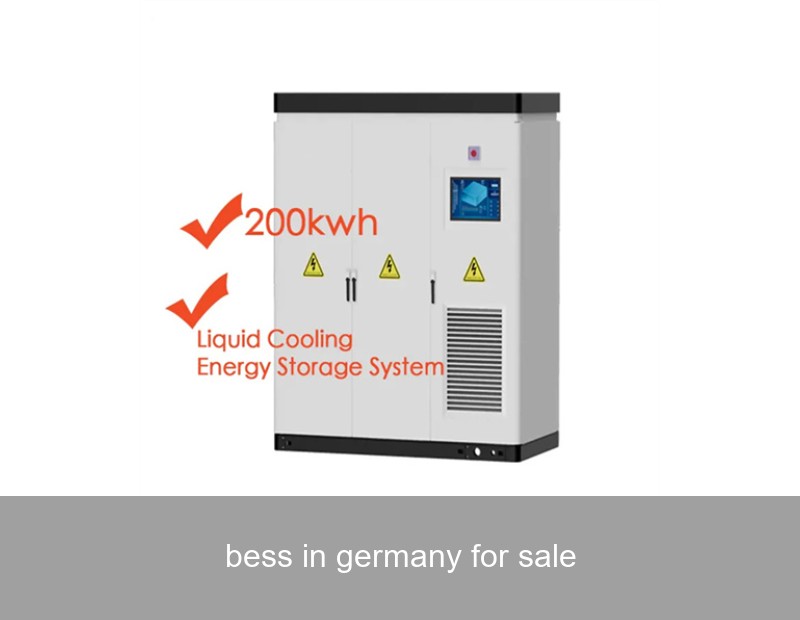
As Germany accelerates its Energiewende (energy transition), a critical question emerges for businesses, industrial players, and forward-thinking homeowners: how can we maximize the value of our renewable energy investments? The answer increasingly lies in a sophisticated technology: the Battery Energy Storage System (BESS). If you're exploring BESS in Germany for sale, you're not just buying a battery; you're investing in the key to energy independence, grid stability, and significant cost savings. This article will guide you through the German market, the technology's benefits, and what to look for when making this pivotal decision for a more resilient and sustainable energy future.
Table of Contents
- The German Energy Shift: Why BESS is No Longer Optional
- Beyond Backup: The Multifaceted Benefits of a Modern BESS
- Choosing the Right System: Key Considerations for the German Market
- Highjoule's Intelligent Solutions for the German Energiewende
- A Real-World Case: BESS in Action at a German Mittelstand Factory
The German Energy Shift: Why BESS is No Longer Optional
Germany's ambitious goal to generate 80% of its electricity from renewables by 2030, and achieve climate neutrality by 2045, is reshaping the entire energy landscape. While the growth in wind and solar is impressive, it introduces a fundamental challenge: variability. The sun doesn't always shine, and the wind doesn't always blow when energy demand is highest. This creates a dual problem—grid congestion during peak renewable production and potential shortfalls at other times.
This is where Battery Energy Storage Systems become the linchpin. A BESS acts as a buffer, storing excess renewable energy for later use. Think of it as a sophisticated energy savings account. You "deposit" cheap, green energy when it's abundant and "withdraw" it when prices are high or the sun has set. For the German grid operator, widely distributed BESS units help balance frequency and relieve grid stress, a service that is becoming increasingly valuable. The German government supports this through various mechanisms, including the elimination of the so-called "double charge" (Doppelbelastung) for storage systems on certain taxes and supportive KfW loan programs, making the investment more attractive than ever.
Beyond Backup: The Multifaceted Benefits of a Modern BESS
When considering a BESS in Germany for sale, it's crucial to look beyond simple backup power. Today's intelligent systems deliver a compelling return on investment through multiple revenue streams and savings:
- Energy Cost Optimization (Arbitrage): Automatically charge your batteries when electricity prices are low (often during midday solar peaks) and discharge during expensive peak evening hours.
- Maximizing Self-Consumption: For sites with solar PV, a BESS can increase the share of self-consumed solar power from typically 30-40% to over 70%, dramatically reducing reliance on the grid.
- Grid Services & Revenue: Advanced systems can participate in primary control reserve (PCR) markets or other grid-balancing schemes, generating direct income by providing stability to the national grid.
- Enhanced Power Quality: Protect sensitive industrial equipment from voltage sags, swells, and brief outages.
- Emergency Backup Power: Provide seamless, uninterrupted power for critical loads during grid outages.

Image Source: Unsplash - A modern BESS installation.
Choosing the Right System: Key Considerations for the German Market
Not all storage solutions are created equal. The German market demands high safety, reliability, and intelligence. Here are the critical factors to evaluate:
| Feature | Why It Matters in Germany | What to Look For |
|---|---|---|
| Battery Chemistry | Safety, lifespan, performance in local climate. | Lithium Iron Phosphate (LFP) is now the preferred standard for stationary storage due to its superior safety, long cycle life (>6000 cycles), and stability. |
| System Intelligence & Software | Maximizing financial return requires smart, adaptive control. | An Energy Management System (EMS) that can optimize for self-consumption, arbitrage, and even participate in grid markets automatically based on weather forecasts and price signals. |
| Scalability & Modularity | Your energy needs will evolve. | A modular design that allows you to easily expand storage capacity or power output as your business grows or your energy strategy changes. |
| Certifications & Grid Compliance | Mandatory for safe and legal grid connection. | VDE-AR-N 4105, VDE-AR-N 4110, and CE markings are essential. The system should be certified by a recognized German body. |
| Local Service & Warranty | Peace of mind for a 15-20 year investment. | A provider with a strong local presence in Germany for installation, maintenance, and honoring a comprehensive, long-term performance warranty. |
Highjoule's Intelligent Solutions for the German Energiewende
At Highjoule, with nearly two decades of experience as a global leader in advanced energy storage, we've designed our solutions specifically to meet the rigorous demands of markets like Germany. Our HPS Series commercial and industrial BESS is engineered from the ground up for intelligence, safety, and longevity.
What sets a Highjoule system apart is its brain: the Adaptive Grid AI™ EMS. This proprietary software doesn't just react; it predicts. By integrating real-time data on electricity prices (from sources like SMARD), local weather forecasts, and your consumption patterns, it autonomously chooses the most profitable operating mode every second of the day. Whether it's maximizing your solar self-consumption, trading on the intraday market, or providing grid stability services, the system ensures your asset works hardest for you. Built with UL-certified LFP battery modules, featuring active liquid cooling for optimal performance in all conditions, and boasting full VDE compliance, the HPS Series is a future-proof investment for the German energy landscape.

Image Source: Unsplash - Intelligent energy management dashboard.
A Real-World Case: BESS in Action at a German Mittelstand Factory
Let's move from theory to practice. Consider the case of a mid-sized automotive parts manufacturer in Baden-Württemberg. Facing rising grid fees and volatile energy prices, they installed a 500 kW / 1 MWh Highjoule HPS system alongside an existing 800 kWp rooftop solar array.
The Challenge: High peak demand charges, inability to use most of their solar output after hours, and concerns about production halts during grid instability.
The Highjoule Solution: The system was configured for multi-mode optimization. During the day, it stores excess solar energy. As the evening peak approaches (4-9 PM), it discharges to cover a significant portion of the factory's load, avoiding expensive grid power. It also trims the site's peak demand by providing instantaneous power, reducing grid capacity fees.
The Results (12-month period):
- Energy Cost Savings: 34% reduction in electricity bills through arbitrage and peak shaving.
- Self-Consumption Rate: Increased from 38% to 81%.
- ROI Timeline: Projected payback period of under 7 years, factoring in savings and revenue from preliminary grid services tests.
- Resilience: The system provided seamless backup during two brief grid disturbances, preventing an estimated €45,000 in production line downtime.
This case exemplifies the tangible, multi-layered value a sophisticated BESS delivers. For deeper insights into Germany's storage potential, studies by Fraunhofer ISE provide excellent technical analysis.
The Future Energy Landscape with BESS
The trajectory is clear. As Germany phases out conventional power and electric vehicle penetration grows, the grid will rely more on decentralized, flexible assets. Your BESS will evolve from a cost-saving tool to an essential, revenue-generating grid citizen. The question is no longer if you need a storage system, but how soon you can integrate one to start building your competitive advantage and energy sovereignty.
Is your business ready to conduct a detailed analysis of how a tailored Battery Energy Storage System could transform your energy costs and operational resilience? What would a 30% reduction in your annual electricity spend mean for your bottom line?
 Inquiry
 Online Chat