


Asymmetric Solar Battery: The Key to Unlocking True Energy Independence
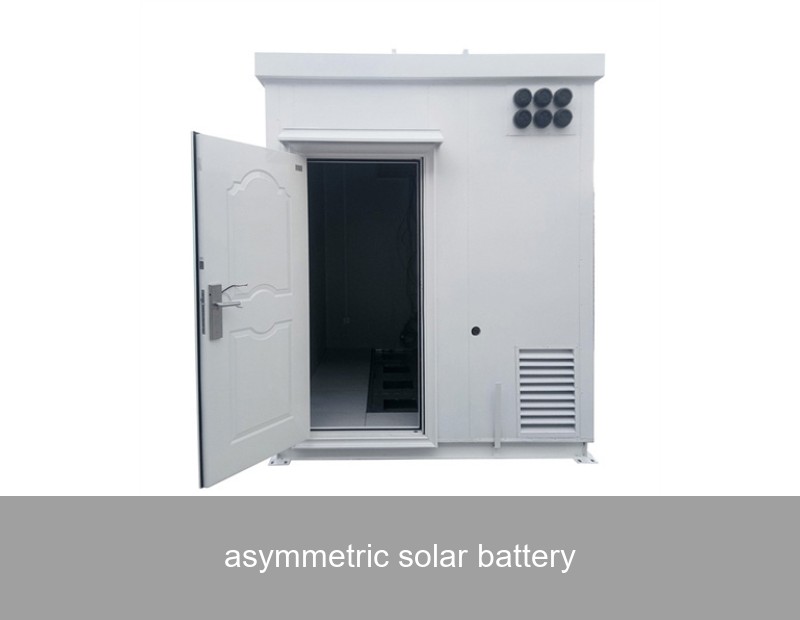
Have you ever felt frustrated that your home solar panels seem to stop working just when you need them most—like on a cloudy afternoon or during the evening peak? You're not alone. Millions of solar adopters face the same challenge: their systems generate a surplus at noon, but the lights go out when the sun sets. This is where the concept of an asymmetric solar battery comes into play, a game-changing innovation designed to perfectly match how we produce and how we consume energy. Unlike traditional, symmetrically designed batteries, an asymmetric system is engineered with a specific, often larger, discharge capacity to power your home through long nights and periods of low solar generation. For over 18 years, Highjoule has been at the forefront of this intelligent energy management, pioneering smart battery systems that don't just store power—they understand your lifestyle.
Table of Contents
The Problem: Why Standard Solar Storage Falls Short
Let's look at the data. A typical household energy consumption curve in Europe or the US shows two distinct peaks: one in the morning and a larger, more pronounced one in the evening. Solar production, however, forms a single, beautiful bell curve centered around solar noon. The mismatch is stark. A 2023 NREL study highlights this "duck curve" phenomenon, showing how net demand plummets during the day and skyrockets after sunset. A symmetric battery, with equal charge and discharge rates, is often sized for daily cycling. It fills up by midday but can be completely drained by 8 PM, leaving you reliant on the grid during the most expensive and carbon-intensive hours. This fundamental design flaw is what asymmetric technology aims to solve.

Image Source: Unsplash (Representative graph of energy mismatch)
What is an Asymmetric Solar Battery?
Think of it like a water tank with two different pipes. One pipe (for charging) is a standard garden hose, perfect for a steady, all-day fill from your solar panels. The other pipe (for discharging) is a fire hose, capable of releasing a large volume of water quickly when you need to put out a fire—or in this case, power your oven, HVAC, and EV charger simultaneously. Technically, an asymmetric solar battery features a higher continuous discharge power (C-rate) relative to its charge power and often its energy capacity (kWh). This allows it to support heavier loads for longer periods from a relatively compact physical and energy footprint.
Core Components of an Asymmetric System
- High-Power Discharge Cells: The battery chemistry and internal architecture are optimized for sustained high-output.
- Advanced Power Conversion System (PCS): This inverter component is rated to handle the high discharge currents efficiently.
- Predictive Energy Management Software: The true brain. It forecasts solar generation and household load to strategically manage the asymmetric resource.
Key Benefits of an Asymmetric Design
Why should homeowners and businesses care about this technical nuance? The advantages translate directly to your wallet and resilience.
| Feature | Symmetric Battery | Asymmetric Solar Battery |
|---|---|---|
| Evening Peak Coverage | May deplete before peak ends | Designed to last through the entire high-demand period |
| System Sizing & Cost | May require a larger kWh capacity to meet power needs, increasing cost | Often a smaller kWh capacity can meet high power demands, optimizing upfront investment |
| Backup Power During Outages | Limited runtime for high-load appliances | Can sustain essential high-wattage circuits (well pumps, heating) for longer |
| Grid Services & Savings | Limited in participation in fast-response programs | Ideal for peak shaving and virtual power plant (VPP) programs due to high dispatchable power |
The Highjoule Solution: Intelligence Meets Asymmetric Power
At Highjoule, we believe hardware is only half the story. Our HPS Series (High-Power Stack) residential battery system embodies the asymmetric philosophy. With a discharge capability significantly surpassing its charge rate, it's built for the real-world evening load profile. But what truly makes it shine is the Highjoule EnergyOS™ platform.
This AI-driven software doesn't just react; it predicts. By integrating hyper-local weather forecasts and learning your consumption patterns, EnergyOS™ decides the optimal times to charge the battery conservatively and when to unleash its high-power potential. For commercial clients, our GridMax ION systems take this further, offering configurable asymmetry to meet specific demand charge reduction targets, a major cost driver for businesses. Whether for a home, factory, or a community microgrid, Highjoule designs the asymmetry into both the battery hardware and the control logic, delivering a complete, future-proof power solution.

Image Source: Unsplash (Modern home with solar and storage)
A Real-World Case: The Munich Bakery
Let's move from theory to practice. Consider "Brot & Mehr," a mid-sized artisan bakery in Munich, Germany. Their challenge was quintessential: high electricity demand for ovens and refrigeration, with a steep demand charge from the utility. Their existing solar array covered base loads but did nothing for the sharp morning baking peak.
The Solution: Highjoule deployed a tailored 50 kWh GridMax ION system with a 3:1 discharge-to-charge asymmetry ratio. This meant the system could discharge at 75 kW to cover simultaneous oven loads, even though it charged gently at 25 kW from the solar canopies.
The Data-Driven Results (After 12 months):
- Demand Charge Reduction: 40% decrease in peak grid draw, saving over €6,800 annually.
- Self-Consumption: Increased from 35% to 82%, maximizing their solar investment.
- Backup Resilience: During a planned grid outage, the bakery powered its critical cold storage for 14 hours without interruption.
This case, verified by Fraunhofer ISE's research on commercial storage, proves that intelligent asymmetry isn't a luxury—it's a strategic tool for energy-intensive businesses.
The Future of Home Energy is Asymmetric
As we move towards electrification of heat and transport, home loads will only become more intense and peaky. The standard EV charger can draw 7-11 kW alone—nearly the entire output of some traditional battery systems. An asymmetric solar battery is not just an upgrade; it's becoming a necessity for a truly energy-independent household. It represents a shift from thinking in kilowatt-hours to thinking in kilowatts and kilowatt-hours: the power you need, for the duration you need it.
So, as you evaluate your path to energy resilience, ask yourself this: Is your storage system designed for the perfect laboratory cycle, or for the messy, high-demand reality of your daily life? How would your energy strategy change if your battery could confidently power your home from sunset to sunrise, every single night?
 Inquiry
 Online Chat