


Understanding the 100 kW Solar System Cost: A Comprehensive Investment Guide
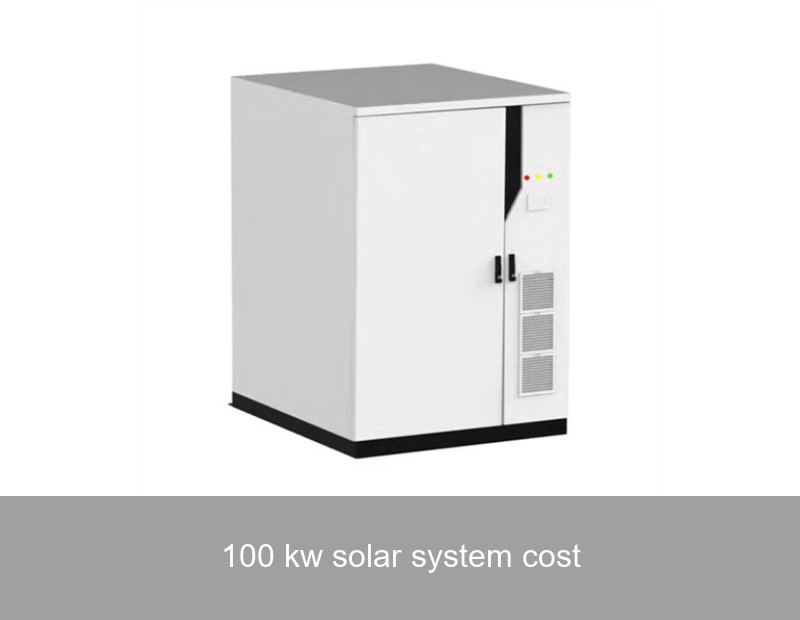
So, you're considering a 100 kW solar system. That's a significant and savvy move towards energy independence and operational cost control. Whether for a medium-sized business, an agricultural operation, or a community project, a 100 kW solar array represents a major step into commercial-scale renewable energy. But the first question on everyone's mind is invariably: "What is the real 100 kW solar system cost?" The answer isn't a single number. It's a spectrum influenced by components, installation complexity, and, most importantly, the intelligence of the storage solution you pair it with. This guide will demystify the investment, moving beyond just the price tag to explore the value and long-term returns of a well-engineered solar-plus-storage solution.
Table of Contents
The 100 kW Solar System Cost Breakdown
Let's address the core question directly. In 2024, for markets like the United States and Europe, the total installed cost for a commercial 100 kW solar photovoltaic (PV) system typically ranges between $150,000 and $250,000 before incentives. This wide range exists for good reasons. Think of it not as a commodity purchase, but as a tailored energy infrastructure project.
The final price hinges on several key factors:
- Equipment Tier: Are you using premium, high-efficiency modules with a 25+ year performance warranty, or more standard, cost-effective panels? The same goes for inverters—centralized string inverters differ in cost from module-level power electronics (MLPE).
- Installation Complexity: A straightforward installation on a large, flat warehouse roof is less labor-intensive than a ground-mount system on sloped or rocky terrain, or a retrofit on a historic building with specific structural requirements.
- Balance of System (BOS): This includes racking, wiring, conduits, switchgear, and monitoring hardware. Quality here ensures durability and safety.
- Permitting and Interconnection Fees: These vary dramatically by municipality and utility company. Some regions have streamlined processes, while others can be lengthy and costly.
| Cost Component | Estimated Range | Notes |
|---|---|---|
| Solar Panels (Modules) | $40,000 - $70,000 | Based on $0.40 - $0.70 per watt. |
| Inverters & Power Conversion | $15,000 - $25,000 | String vs. micro-inverters, includes transformers. |
| Mounting & Racking System | $10,000 - $20,000 | Roof vs. ground mount, material type. |
| Installation Labor & Engineering | $30,000 - $60,000 | Highly dependent on site and region. |
| Permits, Interconnection, Misc. | $10,000 - $20,000 | Non-negotiable but variable soft costs. |
| Estimated Total (Before Storage) | $105,000 - $195,000 | A baseline for the solar array alone. |
Beyond Panels: The Critical Role of Energy Storage
Here's the pivotal insight many first-time buyers miss: the true value of a 100 kW solar system is unlocked when it's paired with a battery energy storage system (BESS). Why? Solar generation is intermittent—it produces power when the sun shines, which often doesn't align perfectly with your facility's energy consumption peaks, especially in the evening.
Without storage, excess solar energy is often sold back to the grid at a low, wholesale rate (feed-in tariff). With storage, you can capture that surplus and use it later during expensive peak-rate periods. This "energy time-shifting" is where the real financial payoff lies. Adding a storage system increases the upfront 100 kW solar system cost, but it dramatically improves the return on investment (ROI) by maximizing self-consumption and providing backup power resilience. According to the National Renewable Energy Laboratory (NREL), pairing storage with solar can increase the value of solar energy by 20-40% for commercial users, depending on local utility rate structures.

Image: A commercial-scale solar installation. Source: Unsplash
Real-World Impact: A Case Study from California
Let's move from theory to hard data. Consider a mid-sized cold storage facility in Fresno, California, facing high "Time-of-Use" (TOU) electricity rates and frequent grid reliability concerns. Their annual electricity bill was approximately $65,000.
The Project: They installed a 100 kW solar PV system coupled with a 240 kWh battery storage system.
The Investment: Total system cost was ~$285,000 (inclusive of storage). After leveraging the federal Investment Tax Credit (ITC) and a local California incentive, their net cost was ~$190,000.
The Outcome:
- Bill Savings: The system now covers 85% of their annual energy needs, slashing their electricity bill to under $10,000 per year.
- Peak Shaving: The battery automatically discharges during the 4-9 pm peak period, avoiding the highest utility charges.
- Backup Power: During a planned utility outage (PSPS event), the battery provided critical backup for refrigeration units, preventing spoilage of $50,000 worth of inventory.
This project demonstrates that the 100 kW solar system cost, when viewed as part of an integrated energy solution, is not just an expense but a strategic capital investment with a compelling payback period—in this case, under 7 years on a system with a 25+ year lifespan.
Highjoule's Intelligent Approach to Solar-Storage Integration
This is where Highjoule's expertise transforms a standard installation into a high-performance energy asset. Since 2005, we have specialized in designing and deploying intelligent storage solutions that make solar investments work harder. For a 100 kW solar system, we don't just add a battery; we integrate a smart, adaptive brain.
Our HPS Series Commercial Battery Systems are engineered for scalability and durability. Using lithium iron phosphate (LFP) chemistry, they offer superior safety, a longer cycle life, and stable performance. For a 100 kW solar array, we might recommend a modular system like the HPS-150, which can be configured from 100 kWh to over 500 kWh to perfectly match your load profile and backup requirements.
The true differentiator is our Energy Management System (EMS) software. This platform uses AI-driven forecasting and real-time utility price data to autonomously decide when to store solar energy, when to discharge to the building, and when to participate in grid services programs (where available). It seamlessly manages the interplay between solar production, battery storage, building load, and the grid to optimize for your number one priority: lowest total cost of ownership.

Image: A modern Battery Energy Storage System (BESS) enclosure. Source: Unsplash
Maximizing Your ROI: Incentives and Strategic Planning
Significant financial incentives can substantially reduce the net 100 kW solar system cost. In the United States, the Federal Investment Tax Credit (ITC) currently stands at 30% for both solar and co-located storage, a massive direct reduction in tax liability. Many states, like California, New York, and Massachusetts, offer additional cash rebates or performance-based incentives. In Europe, programs vary by country but often include feed-in premiums, tax deductions, and grants, particularly for commercial and industrial projects that enhance grid stability. It's crucial to consult with a provider like Highjoule, who has a deep understanding of the incentive landscape across our key markets in the US and Europe, to ensure you capture every available benefit.
Strategic planning is equally important. A detailed energy audit and load profile analysis should precede any system design. Ask yourself:
- What is my primary goal? (Reducing demand charges, achieving backup power, sustainability targets?)
- What is my facility's exact consumption pattern, day and night?
- What are my local utility's specific rate structures and net metering policies?
Answering these questions allows for a system that is not oversized or undersized, but right-sized for maximum economic benefit. The Solar Energy Industries Association (SEIA) provides excellent market data that underscores the importance of tailored system design in achieving projected returns.
Is Your Business Ready for the Next Step?
The conversation about a 100 kW solar system has evolved. It's no longer just about the cost of panels on your roof. It's about investing in an intelligent, resilient energy ecosystem that controls your power expenses for decades. The upfront number is one piece of a larger financial picture that includes decades of avoided utility costs, protection against rising energy prices, and enhanced operational resilience.
What specific energy challenge is your business facing that a smart, Highjoule-powered solar-and-storage solution could solve? We invite you to share your current energy bill and operational goals with our team for a preliminary assessment of your potential savings and system configuration.
 Inquiry
 Online Chat