


The Automated Storage System: Your Intelligent Partner for Energy Independence
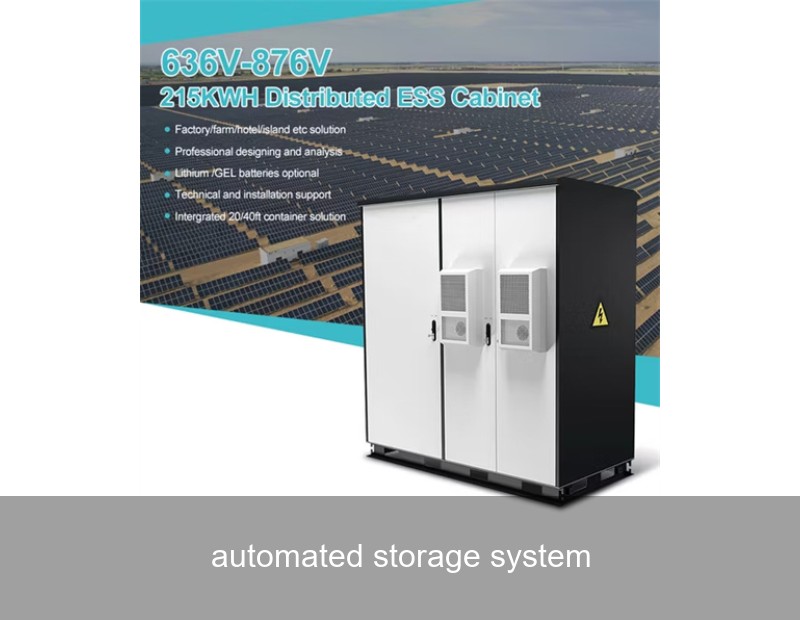
Imagine your energy storage system not just storing power, but thinking for itself. It autonomously decides when to charge from your solar panels, when to power your home or business, and when to sell excess energy back to the grid—all while maximizing your savings and resilience. This isn't science fiction; it's the reality of the modern automated storage system. For homeowners and businesses across Europe and the US, these intelligent systems are transforming renewable energy from a passive source into an active, strategic asset. As a leader in advanced energy storage since 2005, Highjoule is at the forefront of this intelligent energy revolution, crafting solutions that don't just store energy—they manage it with precision.
Table of Contents
- The Phenomenon: From Dumb Batteries to Smart Energy Hubs
- The Data: Why Automation is No Longer Optional
- Case Study: A German Bakery's Recipe for Resilience
- The Highjoule Insight: Intelligence Built-In, Not Bolted-On
- The Future of Your Energy: Questions to Consider
The Phenomenon: From Dumb Batteries to Smart Energy Hubs
For years, battery storage was a relatively straightforward component: it charged when there was excess solar and discharged when the sun went down. But the energy landscape has become a complex chessboard. We now have volatile time-of-use electricity rates, frequent grid instability events, and ambitious sustainability goals. A simple battery can't navigate this complexity. The automated storage system emerges as the grandmaster in this scenario. It's a fully integrated solution combining hardware, advanced software, and often artificial intelligence to make real-time decisions that optimize for cost, carbon footprint, and reliability.
Think of it as the difference between a basic cell phone and a modern smartphone. Both can make calls, but one can manage your entire life, learning your habits and adapting to them. Similarly, an automated system continuously monitors a multitude of data points—from weather forecasts and grid frequency to your energy consumption patterns and real-time electricity prices—to execute the most advantageous energy strategy every minute of the day.

Credit: Unsplash / A modern home energy setup, where an automated storage system intelligently manages solar power.
The Data: Why Automation is No Longer Optional
The financial and practical benefits of automation are backed by compelling data. Let's break down the key drivers:
- Economic Optimization: In regions like California (US) or Germany (EU) with significant differences between peak and off-peak rates, an automated system can increase bill savings by 20-40% compared to a manual or timer-based system. It avoids charging from the grid during expensive periods and can even participate in grid services.
- Grid Stress & Outages: The International Energy Agency (IEA) highlights the growing strain on aging grid infrastructure. Automated systems provide decentralized resilience, automatically switching to backup power during an outage in milliseconds—keeping critical loads running seamlessly.
- Renewable Self-Consumption: By predicting solar production, an automated system can ensure you use as much of your own clean energy as possible, often pushing self-consumption rates above 80%. This reduces reliance on the grid and maximizes the return on your solar investment.
| Feature | Basic Storage System | Automated Storage System |
|---|---|---|
| Decision Making | Pre-set schedules or manual | Real-time, AI-driven optimization |
| Response to Grid Events | Passive or none | Active (can provide grid services, islanding) |
| Savings Potential | Moderate | Maximized (dynamic tariffs, peak shaving) |
| User Involvement | High (requires constant adjustment) | Minimal (set-and-forget operation) |
Case Study: A German Bakery's Recipe for Resilience
Let's look at a concrete example from Bavaria, Germany. Bäckerei Schmidt, a family-run bakery with high energy demands for ovens and refrigeration, faced two challenges: soaring energy costs and the risk of even short power outages ruining production.
In 2023, they installed a Highjoule Industrial Energy Hub, a comprehensive automated storage system integrated with their existing solar array. The system's brain, our Adaptive Core™ software, was configured with three primary goals: maximize solar self-consumption, avoid peak grid charges, and ensure uninterrupted power for critical baking lines.
- Energy Cost Reduction: 34% decrease in electricity bills by strategically charging the battery from excess solar and the grid during low-cost overnight periods, then discharging during expensive morning peaks.
- Self-Consumption Rate: Increased from 55% to 89%, dramatically reducing their carbon footprint.
- Business Continuity: The system seamlessly handled two unexpected grid outages (totaling 4.5 hours), preventing over €15,000 in potential lost product and sales.
"The system runs itself," said owner Klaus Schmidt. "We bake bread, not manage energy software. It gives us peace of mind and direct control over a major cost factor." This case exemplifies how automation transcends simple storage, becoming a strategic business asset.
The Highjoule Insight: Intelligence Built-In, Not Bolted-On
At Highjoule, our nearly two decades of experience have taught us a crucial lesson: true automation cannot be an afterthought. Many systems attempt to add "smart" features onto a standard battery, leading to clunky integration and suboptimal performance. Our philosophy is to engineer intelligence into the very core of the system.
Our flagship product lines for the residential and commercial markets, like the Highjoule HomeSphere and Highjoule PowerStack, are built around our proprietary Adaptive Core™ platform. This isn't just a user app; it's the operating system for your energy ecosystem. It learns your unique load profiles, connects to local weather data and—where available—real-time grid pricing signals via APIs.
For larger-scale microgrid applications, this automation capability scales powerfully. Our systems can orchestrate multiple generation sources (solar, wind), storage banks, and loads, making autonomous decisions to keep a community or facility operational and cost-effective, even in grid-islanded mode. This level of integration is what sets a true automated storage system apart from a basic battery with a Wi-Fi connection.

Credit: Unsplash / The nerve center of an automated storage system, where data drives autonomous decisions.
What Makes a System Truly "Automated"?
When evaluating an automated storage system, look for these non-negotiable features that Highjoule systems are designed to provide:
- Predictive Algorithms: Uses weather and usage forecasts to pre-charge or conserve energy.
- Multi-Mode Operation: Seamlessly switches between grid-tied, backup, and economic modes without user intervention.
- Open Protocol Integration: Can communicate with other smart devices, inverters, and even electric vehicle chargers for whole-home/business optimization.
- Remote Updates & Evolution: The software improves over time via secure updates, ensuring your system gets smarter and adapts to new tariff structures or regulations. The National Renewable Energy Lab (NREL) emphasizes the importance of software-defined energy systems for future flexibility.
The Future of Your Energy: Questions to Consider
The transition to intelligent, automated energy management is well underway. As you contemplate your own path to energy independence and cost control, the question is no longer if you need storage, but how smart that storage needs to be. Are you prepared to let an intelligent system handle the complexity of the modern energy market for you, turning volatility into an opportunity? What would it mean for your home or business to have a resilient, self-optimizing power asset working silently in the background, 24/7?
We invite you to explore what a purpose-built automated storage system from Highjoule could look like for your specific needs. The first step is understanding your energy profile—when you use power, what your goals are, and what challenges you face. From there, the path to a smarter, more sustainable energy future becomes clear.
 Inquiry
 Online Chat