


The Automatic Solar Inverter: Your Smart Gateway to Energy Independence
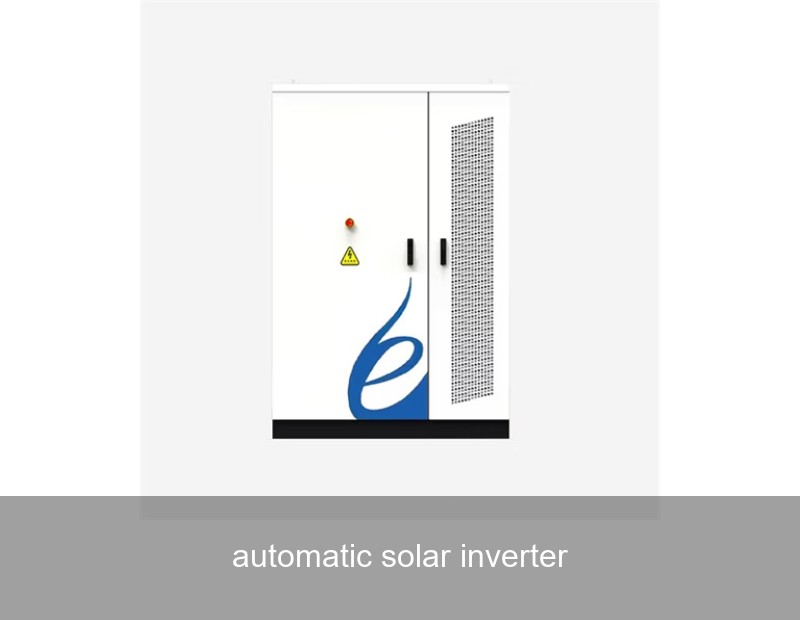
Imagine your solar panels not just generating power, but actively managing it—anticipating your needs, reacting to grid changes, and maximizing every drop of sunshine. This isn't a glimpse of the future; it's the reality enabled by today's automatic solar inverter. For homeowners and businesses across Europe and the US, this intelligent device is the brain of a modern solar energy system, transforming simple generation into sophisticated, self-optimizing power management. Let's explore how this technology works and why it's becoming indispensable for anyone serious about renewable energy.
Table of Contents
What is an Automatic Solar Inverter?
At its core, an automatic solar inverter—often called a smart or hybrid inverter—does the fundamental job of converting the direct current (DC) from your solar panels into usable alternating current (AC) for your home. But its "automatic" capabilities go far beyond that. Unlike traditional inverters, it integrates advanced software, sensors, and communication protocols to autonomously manage energy flow between solar panels, battery storage, the grid, and your household loads. Think of it as a vigilant energy conductor, making real-time decisions to ensure efficiency, resilience, and cost savings.

Image: A modern hybrid inverter, the central hub for automatic solar management. Source: Unsplash
How It Works: Intelligence in Action
The magic of an automatic inverter lies in its continuous decision-making loop. Here’s a simplified breakdown of its logic:
- Monitoring: It constantly monitors solar production, home energy consumption, battery state of charge, and grid conditions (like utility rates or frequency).
- Analysis: Using built-in algorithms and sometimes weather forecasts, it predicts energy generation and consumption patterns.
- Automated Action: Based on this analysis, it automatically directs energy where it's needed most:
- Powering your home appliances directly with solar.
- Charging your battery storage system with excess solar.
- Exporting surplus energy to the grid when rates are favorable.
- Discharging the battery to avoid drawing expensive peak-grid electricity.
- Islanding: In a grid outage, it can automatically disconnect and power critical loads from solar and batteries.
This level of automation removes the guesswork for the user, ensuring the system is always operating at its economic and practical best.
Key Benefits: Beyond Basic Conversion
Investing in an automatic solar inverter system delivers tangible advantages that compound over time.
| Benefit | Explanation | Impact |
|---|---|---|
| Maximized Self-Consumption | Automatically prioritizes using your own solar energy over grid power. | Drastically reduces electricity bills, often by 60-80% for well-sized systems. |
| Enhanced Resilience | Enables seamless backup power during grid failures (when paired with a battery). | Keeps lights, refrigeration, and communications on during outages. |
| Intelligent Grid Interaction | Can be programmed to respond to time-of-use rates or grid support signals. | Optimizes financial returns through smart export and import avoidance. |
| Future-Proofing | Modular design often allows for easy integration of additional batteries or EV chargers. | Protects your investment as your energy needs evolve. |
Where Highjoule Excels: The Synergy of Hardware and Software
This is where a provider's expertise truly matters. At Highjoule, we don't just see the automatic solar inverter as a standalone component. We design it as the core of an integrated ecosystem. Our H-IQ Series Hybrid Inverters are built with this philosophy. They feature advanced grid-forming technology for stable off-grid operation, granular energy monitoring down to individual circuits, and our proprietary Adaptive Learning Engine software. This software analyzes your historical usage data to refine its dispatch strategies over time, making your system smarter the longer you use it. Paired with Highjoule's high-cycle life lithium-ion batteries, it creates a unified, automatic power solution that is greater than the sum of its parts.
Real-World Impact: A Case Study from Bavaria
Let's move from theory to practice. Consider the Müller family in southern Germany. Facing rising electricity costs and an unreliable local grid, they installed a 10 kW solar array with a Highjoule H-IQ8 Hybrid Inverter and 15 kWh of Highjoule battery storage in early 2023.
The Challenge: Maximize their use of solar energy despite highly variable cloud cover and leverage Germany's EEG feed-in-tariff intelligently.
The Automated Solution: The H-IQ8 inverter was configured to:
- Prioritize charging the home's two EVs during peak solar production hours.
- Maintain a minimum 40% battery reserve for anticipated evening loads and grid stability.
- Only export to the grid when the feed-in tariff was above a set threshold, otherwise storing the energy.
The Data-Driven Result: After one full year:
- Self-Consumption Rate: Increased from an estimated 35% (with a standard inverter) to 92%.
- Grid Independence: Achieved an average of 87% grid independence during summer months.
- Financial Return: Reduced their annual electricity bill by €2,150, projecting a system payback period of under 7 years.

Image: Monitoring energy independence in real-time. Source: Unsplash
This case mirrors trends observed in broader studies. For instance, the National Renewable Energy Laboratory (NREL) highlights how smart inverters are critical for enabling high levels of solar penetration while maintaining grid stability.
Choosing the Right System with Highjoule
Selecting an automatic solar inverter system requires careful consideration. Here are key factors, viewed through the lens of what Highjoule offers:
1. Power Rating and Scalability
Your inverter must handle the peak output of your solar array and future expansion. Highjoule's H-IQ Series offers a range from 5kW to 25kW, with modular designs that allow for power stacking, ensuring you can start with what you need and grow later.
2. Battery Compatibility and DC-Coupling
Many of our inverters use DC-coupling for batteries. This means the battery connects directly to the inverter's DC bus, leading to higher round-trip efficiency (often above 97%) compared to some AC-coupled systems. It's a more integrated, efficient approach.
3. Software and Monitoring Capabilities
The hardware is only as good as its software. Highjoule's EnergyOS platform provides an intuitive dashboard accessible via smartphone, offering real-time data, system health alerts, and customizable automation modes (e.g., "Storm Watch" to pre-charge batteries before severe weather).
4. Grid Services and Compliance
For markets in Europe and the US, compliance with local grid codes (like VDE-AR-N 4105 in Germany or UL 1741 SA in the US) is non-negotiable. Highjoule inverters are pre-certified for major markets, and our software can be updated to participate in emerging virtual power plant (VPP) programs, potentially creating a new revenue stream for you.
The Future of Home Energy Management
The automatic solar inverter is the cornerstone of the modern, digitalized home. As we move towards a decentralized energy landscape, its role will expand. We're already seeing integration with smart home systems, electric vehicle charging that syncs with solar surplus, and even peer-to-peer energy trading within microgrids. The inverter is evolving from a converter into a true home energy manager and grid citizen.
At Highjoule, our ongoing R&D focuses on this very intersection. We are pioneering features that allow our systems to automatically respond to grid stress signals (helping prevent blackouts) and creating even more sophisticated AI-driven prediction models. The goal is a system that doesn't just react, but proactively manages your energy ecosystem for ultimate efficiency and value.
The U.S. Department of Energy emphasizes the importance of such technologies for a resilient and clean grid. Similarly, research from institutions like Fraunhofer in Europe consistently underscores the need for intelligent energy management systems.
Ready to See What Automation Can Do for Your Energy Bills?
The journey from a passive solar producer to an active energy manager begins with the right technology partner. With nearly two decades of experience, Highjoule is committed to providing not just products, but complete, intelligent power solutions tailored for the European and American markets. What would you prioritize first—maximizing self-sufficiency, ensuring backup power, or optimizing for financial return? Your answer is the first step in designing your perfect automatic energy system.
 Inquiry
 Online Chat