


Understanding the Rate of Solar Energy Storage Cabinet: Your Key to Unlocking Solar Independence
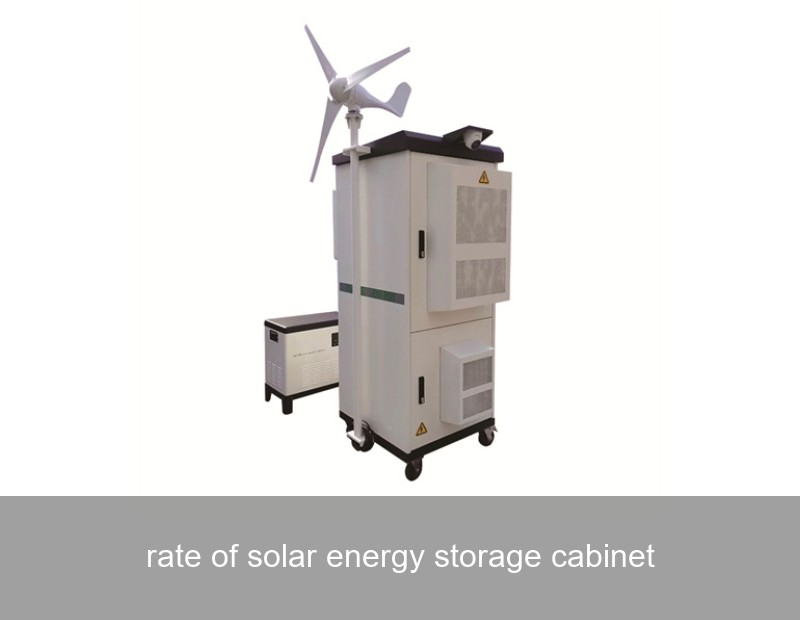
You've made the smart decision to go solar. Your panels are soaking up the sun, slashing your electricity bills, and reducing your carbon footprint. But have you ever wondered what happens when the sun goes down, or on those cloudy days? This is where the rate of solar energy storage cabinet becomes the most critical metric for your energy independence. Simply put, it's not just about having a battery; it's about how quickly and effectively that battery system can absorb and release the solar power you generate. A high-performance cabinet ensures you capture every possible kilowatt-hour and use it exactly when you need it, turning your solar investment from a daytime saver into a 24/7 powerhouse. At Highjoule, a global leader in advanced energy storage since 2005, we engineer our systems with this very rate at the core, ensuring maximum efficiency and return for homeowners and businesses across Europe and the US.
Table of Contents
- What Exactly is the "Rate" of a Solar Energy Storage Cabinet?
- Why the Storage Rate is Your Make-or-Break Metric
- Key Factors Influencing Your Storage Cabinet's Performance
- A Real-World Case: Boosting Self-Consumption in a German Home
- Choosing the Right System: Beyond Basic Specifications
- The Highjoule Solution: Engineered for Optimal Rate and Reliability
What Exactly is the "Rate" of a Solar Energy Storage Cabinet?
Think of your solar energy storage cabinet not as a simple battery, but as a high-performance engine for your electricity. The "rate" encompasses several interconnected speeds and capacities:
- Charge Rate (kW): How fast the system can absorb surplus solar energy. If your panels produce 8 kW at peak sun and your battery can only charge at 5 kW, you're losing 3 kW of potential savings back to the grid, often at a low feed-in tariff.
- Discharge Rate (kW): How much power it can deliver at once to run your appliances. A high discharge rate is crucial for starting heavy loads like heat pumps, air conditioners, or industrial machinery.
- Energy Capacity (kWh): The total "fuel tank" size. The rate at which you can fill and empty this tank defines its practical usefulness.
- Round-Trip Efficiency (%): The percentage of energy put into storage that you can actually use later. A 90% efficiency means for every 10 kWh sent to the battery, you get 9 kWh back—minimizing losses.
In essence, a superior rate of solar energy storage cabinet performance means a system that keeps pace with your solar generation and seamlessly meets your consumption demands, minute by minute.

Image Source: Unsplash - A complete home solar and storage system.
Why the Storage Rate is Your Make-or-Break Metric
Let's move from concept to concrete impact. Why should you, as a solar owner, care deeply about these technical rates?
The Phenomenon: You receive a disappointing utility bill despite having solar panels. Your system seems to export most of its power during the day when you're not home, and you buy expensive grid power in the evening.
The Data: According to the U.S. Department of Energy, the average residential electricity rate in the US has increased by over 4% annually in recent years. In Europe, following the energy crisis, wholesale prices have been highly volatile. Meanwhile, feed-in tariffs for exported solar power have plummeted, often being 70-80% lower than the retail price you pay to import electricity.
The Insight: The economic model of solar has shifted from "sell everything" to "self-consume everything you can." A storage cabinet with a high charge rate captures more of your midday solar peak. One with a sufficient discharge rate and capacity then powers your home through the evening peak when grid prices are highest. This directly maximizes your bill savings and shortens your system's payback period.
Key Factors Influencing Your Storage Cabinet's Performance
Several components work in concert to determine the final rate you experience:
| Factor | Impact on Storage "Rate" | What to Look For |
|---|---|---|
| Battery Chemistry | Dictates inherent power density, cycle life, and safety. Lithium Iron Phosphate (LFP) is now the industry standard for its stability, long life, and good power performance. | LFP (LiFePO4) chemistry for safety and longevity. |
| Inverter & BMS Integration | The brain and nervous system. A sophisticated Battery Management System (BMS) and inverter communication optimize charge/discharge rates in real-time, protecting the battery and maximizing efficiency. | Seamless, proprietary communication between inverter, BMS, and battery modules. |
| Thermal Management | Batteries degrade faster if they overheat. Active liquid cooling or advanced air cooling maintains optimal temperature, allowing the system to sustain high rates safely, even in garages on hot days. | Active thermal management systems for consistent performance. |
| System Scalability | Your energy needs may grow. A modular system allows you to increase capacity (kWh) and often power (kW) later, future-proofing your investment. | Cabinet designs that allow for easy capacity expansion. |
A Real-World Case: Boosting Self-Consumption in a German Home
The Challenge: A family in Bavaria, Germany, had a 9.8 kWp solar array but only consumed 35% of their generation directly. They exported 65% to the grid for a modest feed-in tariff, while still purchasing significant grid power at night. Their goal was to increase energy self-sufficiency and hedge against rising energy costs.
The Solution: They installed a Highjoule HES Series hybrid energy storage cabinet. The system's key feature was its high rate of solar energy storage cabinet capability: a charge/discharge power of 6 kW and a usable capacity of 13.8 kWh, with a round-trip efficiency of 96.5%. Its integrated hybrid inverter could manage full solar production and household load simultaneously.
- Self-Consumption Rate: Jumped from 35% to 92% overnight.
- Grid Independence: The home now covers over 85% of its annual electricity needs from its solar+storage system.
- Financial Impact: Projected annual electricity bill savings increased by approximately €1,800, improving the system's return on investment by several years.
This case, mirrored by thousands of installations across Europe and North America, highlights that the right storage cabinet, optimized for high-rate performance, fundamentally changes the solar economics equation.

Image Source: Unsplash - Energy monitoring dashboard.
Choosing the Right System: Beyond Basic Specifications
When evaluating a solar energy storage cabinet, look beyond just the kWh and kW numbers on the brochure. Ask these critical questions:
- "Can the system handle my peak solar production without clipping?" (This tests the charge rate.)
- "Will it power my most demanding appliances simultaneously during a grid outage?" (This tests the discharge rate and surge power.)
- "How does the system manage itself to ensure the battery lasts 15+ years?" (This probes the intelligence of the BMS and thermal controls.)
- "Is the company a proven partner with local support?" (This ensures long-term reliability.)
The Highjoule Solution: Engineered for Optimal Rate and Reliability
At Highjoule, our 18+ years of specialization in smart storage solutions have led us to design our residential and commercial systems around the principle of optimal energy flow rate. Our HES Series for Homes and CIS Series for Commercial & Industrial applications are built with:
- High-Power LFP Cells: Selected for superior rate capability and safety.
- Advanced Hybrid Inverters: Featuring integrated Highjoule EnergyOS software that intelligently manages the charge/discharge rate based on weather forecasts, usage patterns, and tariff information, maximizing value.
- Patented Thermal Management: Our cabinet-level climate control ensures batteries operate in their ideal temperature window year-round, sustaining high performance and extending lifespan.
- Modular Scalability: Start with what you need and expand capacity seamlessly as your needs evolve, protecting your initial investment.
We don't just sell a battery cabinet; we provide a complete, intelligent energy ecosystem designed to deliver the highest possible rate of solar energy storage cabinet performance for your specific site, ensuring you extract the maximum value from every ray of sunshine.
Ready to See What Your True Rate of Return Could Be?
Your solar potential is unique. What would a detailed analysis reveal about the ideal storage rate and capacity needed to achieve 80%, 90%, or even 100% energy independence for your home or business? What's the first appliance you'd want to power during an outage, and does your current plan account for its surge demand?
 Inquiry
 Online Chat