


Unlocking Energy Independence: The Rise of the Smart Automatic Storage System
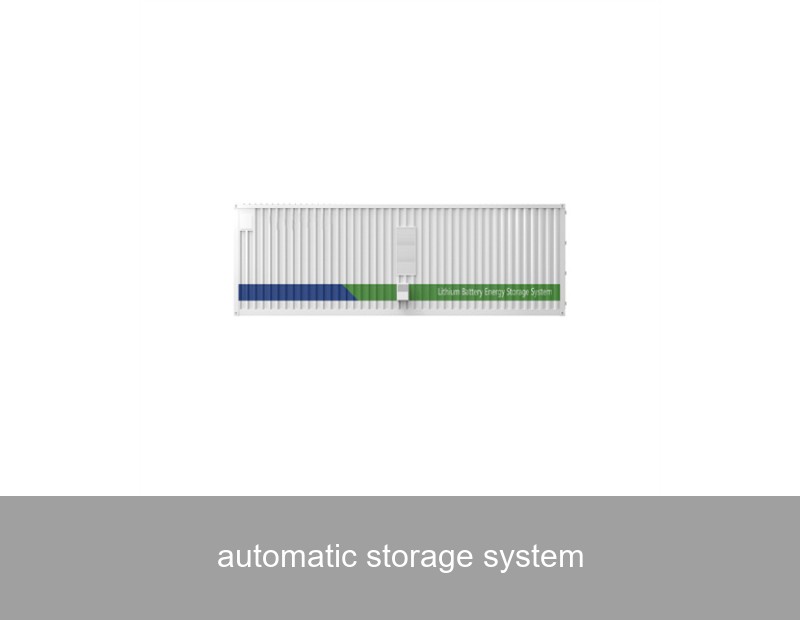
Imagine a world where your home or business seamlessly manages its own power. When the sun shines, it stores the excess; when clouds roll in or energy prices spike, it draws from its reserves—all without you lifting a finger. This isn't science fiction; it's the reality enabled by the modern automatic storage system. For homeowners, businesses, and entire communities, these intelligent systems are transforming from a luxury add-on to a critical component for energy security, cost savings, and sustainability. This article delves into how automatic storage systems work, their tangible benefits, and why they are becoming indispensable in our energy landscape.
Table of Contents
What Exactly is an Automatic Storage System?
At its core, an automatic storage system is an integrated energy solution that combines battery storage with sophisticated software intelligence. Unlike a simple battery backup, it continuously monitors energy generation (like solar panels), consumption patterns, grid conditions, and even weather forecasts. Using this data, it makes autonomous decisions on when to charge, when to discharge, and when to export energy back to the grid. The goal is always to optimize for your specific priorities—be it maximizing self-consumption, reducing electricity bills, or providing unwavering backup power.

Image: A modern home integrated with renewable energy and storage. Credit: Unsplash
The Key Components of an Automated System
- The Battery Bank: The physical storage, typically using advanced lithium-ion chemistry for high density and long cycle life.
- The Intelligent Inverter/Controller: The "brain" that manages AC/DC conversion and power flow.
- Energy Management System (EMS): The software platform that uses algorithms and real-time data to make charging/discharging decisions.
- Grid Interface: Safely connects the system to the public electricity network, allowing for bi-directional flow.
The "Why Now?" Phenomenon: From Passive to Active Energy Management
So, why has the automatic storage system moved to the forefront? The shift is driven by a perfect storm of factors. First, electricity prices, especially in Europe and parts of the US, have become increasingly volatile. Second, the frequency and severity of grid outages due to extreme weather are rising. Third, solar panel adoption has created a new problem: an abundance of daytime energy that often gets sold back to the grid at low rates, only for homeowners to buy it back at night at a premium. It's a frustrating cycle. An automated system solves this by making your generated energy work for you, around the clock.
The Data Behind the Growth: More Than Just a Trend
The numbers paint a clear picture of acceleration. According to the International Energy Agency (IEA), global energy storage capacity is set to multiply exponentially this decade, with behind-the-meter (e.g., home and business) systems accounting for a significant share. In the U.S. alone, residential storage installations saw record growth, often paired with solar over 90% of the time. In Germany and the UK, time-of-use tariffs and attractive self-consumption models have made automated storage a financially savvy investment, with payback periods shortening significantly.
| Region | Key Driver | Estimated Annual Growth (Storage) |
|---|---|---|
| Western Europe | High Retail Electricity Prices, Energy Security Concerns | 30%+ |
| United States | Grid Resilience, Net Metering Policy Changes, Federal Tax Credits | 40%+ |
| Australia | Extreme Grid Volatility, High Solar Penetration | 25%+ |
Case Study: Brewing Resilience with an Automatic Storage System
Let's look at a concrete example. Craft Ales Microbrewery in California faced a critical challenge. Their operation is energy-intensive, requiring precise temperature control. Public Safety Power Shutoffs (PSPS) and grid instability threatened to spoil batches and halt production, costing thousands per hour. They needed a solution that would keep the lights on and the fermenters cold automatically.
They installed a 250 kWh commercial automatic storage system integrated with their existing solar array. The system was programmed with two primary modes:
- Cost Optimization: On normal days, it stores excess solar energy and discharges during peak evening rate periods, slashing demand charges.
- Backup Priority: Upon grid failure, it automatically and instantaneously (within milliseconds) isolates the brewery into a microgrid, powering critical loads for over 8 hours.
The Results? Compelling.
- 30% Reduction in monthly electricity costs through peak shaving and increased self-consumption.
- Zero Production Downtime during 5 grid outages in the first year, protecting an estimated $85,000 in potential lost product and revenue.
- A projected return on investment (ROI) in under 5 years, factoring in available incentives.
This case underscores that for businesses, an automatic storage system isn't just about backup; it's a strategic asset for financial and operational resilience.
The Highjoule Solution: Intelligence Meets Reliability in Storage
At Highjoule, we've been at the forefront of this intelligent energy revolution since 2005. We understand that a true automatic storage system must be more than just hardware; it must be a seamless, user-centric experience. Our product suite, like the Highjoule Hive for residential applications and the Highjoule Matrix for commercial & industrial use, is built on this principle.
The Highjoule Hive features our proprietary Adaptive Learning Engine. The system doesn't just follow pre-set rules; it learns your household's energy habits and adapts to seasonal changes, all while prioritizing your comfort and savings. You can monitor and adjust everything via a simple app, but the beauty is—you don't have to. It runs itself.
For larger-scale needs, the Highjoule Matrix is a modular, scalable automatic storage system designed for businesses, factories, and microgrids. It offers advanced features like demand response readiness, three-phase balancing, and remote fleet management. A dairy farm in the Netherlands, for instance, uses a Matrix system to automatically shift its cooling operations to off-peak hours and provide backup for its milking parlors, ensuring animal welfare and business continuity no matter what happens on the regional grid.

Image: An industrial-scale battery energy storage system. Credit: Unsplash
What Sets a Highjoule System Apart?
- Predictive, Not Just Reactive: Our EMS integrates weather data to forecast solar generation and plan storage cycles accordingly.
- Cybersecurity by Design: From the chip level to the cloud, we build in robust security protocols to protect your energy data and system controls.
- Global Service & Support: With a network of certified partners across Europe and North America, we ensure professional installation and lifelong support.
The Future is an Automated, Decentralized Grid
The trajectory is clear. As noted by research from the National Renewable Energy Laboratory (NREL), the aggregation of thousands of individual automatic storage systems can form virtual power plants (VPPs), providing grid stability services and deferring the need for costly infrastructure upgrades. This means your home or business battery could one day play a direct role in supporting your community's broader energy transition, all automatically and with financial compensation.
The question is no longer if automated storage will become standard, but when. With technology advancing, costs declining, and the need for resilient, clean energy more urgent than ever, the shift is inevitable. Is your home or business ready to take control of its energy flow and start operating on its own intelligent terms?
 Inquiry
 Online Chat