


Back Up Solaire: How Much Power Can Your Solar Battery Really Store?
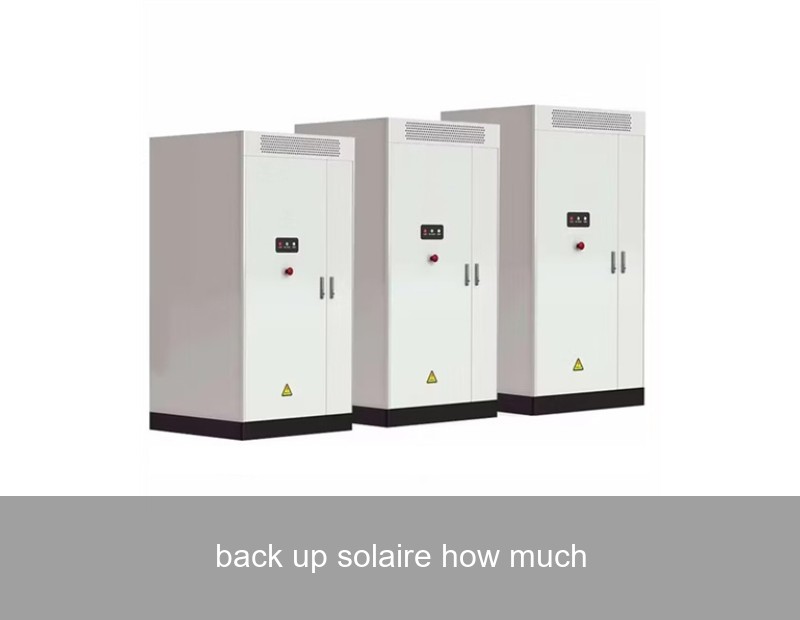
You've made the smart investment in solar panels. You're generating clean energy, reducing your carbon footprint, and watching your daytime electricity bills plummet. But what happens when the sun goes down, or during a grid outage? This is where the critical question arises: for a back up solaire system, how much storage is actually enough? Determining the right capacity isn't just about picking the biggest battery; it's about understanding your energy patterns, your needs, and the intelligent technology that manages it all. Let's demystify the numbers and explore what it takes to achieve true energy independence.
Table of Contents
- The Phenomenon: From Sunlight to Nightlight
- The Data: Breaking Down "Kilowatt-Hours" and Your Home's Appetite
- The Case Study: A Real-World Example from Southern California
- The Insight: It's Not Just Size, It's Intelligence
- The Highjoule Solution: Engineered for Real-Life Performance
- Making Your Choice: Key Questions to Ask
The Phenomenon: From Sunlight to Nightlight
Imagine your solar panels as a bustling daytime factory. They produce a fantastic amount of energy, often more than your home can use at that very moment. Without a battery, this excess typically gets sold back to the grid. A back up solaire system changes that dynamic entirely. It acts as a personal energy reservoir, capturing that surplus production for you to use later. The core challenge is that every home is a unique ecosystem of energy consumption. A family working from home with an electric vehicle has a radically different profile than a couple who travels frequently. So, the pivotal question isn't just "how much battery do I need?" but rather "how much of *my specific energy life* do I need to back up?"
The Data: Breaking Down "Kilowatt-Hours" and Your Home's Appetite
Battery capacity is measured in kilowatt-hours (kWh). Think of it as the size of your energy tank. To estimate your needs, you need to look at two key data points:
- Your Daily Energy Consumption: The average U.S. household consumes about 29 kWh per day. In Europe, this figure is often lower, typically between 10-20 kWh per day, due to smaller home sizes and more efficient appliances.
- Your Critical Loads: During a grid outage, you likely don't need to power everything. Prioritizing "critical loads" like refrigeration, lighting, internet, and a few outlets can drastically reduce the required capacity. These might total 5-15 kWh per day.
Let's put this in a simple table:
| Scenario | Typical Energy Need (per 24h) | Recommended Battery Capacity (Useable) |
|---|---|---|
| Backing up essential circuits only (basics) | 5-10 kWh | 10-15 kWh |
| Powering most of the home (comfort) | 15-25 kWh | 20-30 kWh |
| Full energy independence + EV charging | 30+ kWh | 35+ kWh (often multiple batteries) |
Why is the recommended capacity higher than the daily need? You should never regularly drain a battery to 0%. Systems are designed with a depth of discharge (DoD) to prolong lifespan. Also, you need a buffer for cloudy days.
The Case Study: A Real-World Example from Southern California
Consider the Johnson family in San Diego. Their 8.5 kW solar system produced ample energy, but they faced frequent short Public Safety Power Shutoffs (PSPS). They wanted seamless backup for their 2,800 sq. ft. home. An energy audit revealed their critical loads (fridge, HVAC fan, lights, home office) used about 18 kWh on a typical evening and night. They also wanted to keep their pool pump running for a few hours.
They installed a back up solaire system with 25 kWh of useable storage. The results over one year were telling:
- Outage Coverage: The system handled 14 grid outages, the longest being 32 hours, without interruption.
- Self-Consumption: They increased their use of self-generated solar power from 35% to over 80%, drastically reducing their net electricity bill.
- ROI Acceleration: Combined with local incentives, their calculated payback period dropped from 12 years to under 8 years.
This case highlights that sizing isn't just about outage survival; it's about daily economics. A correctly sized system maximizes your solar investment 365 days a year.

Image source: Unsplash (Professional photo of a residential solar and battery installation)
The Insight: It's Not Just Size, It's Intelligence
Here's where many homeowners get stuck: focusing solely on kWh capacity. The true magic of a modern back up solaire system lies in its brain, not just its brawn. An advanced energy management system (EMS) is what turns a simple battery into a smart home energy hub. It constantly learns your usage patterns, forecasts weather, and decides the most economical moment to charge from solar or the grid, and when to discharge. This intelligence is what truly determines how much value you extract from every kilowatt-hour stored. Without it, you could have a large battery but still make poor financial and operational decisions.
The Highjoule Solution: Engineered for Real-Life Performance
At Highjoule, with nearly two decades of experience, we've learned that the perfect back up solaire system is a harmonious blend of capacity, power, and intelligence. Our HelioCore Residential Energy Storage System is designed with this philosophy.
It starts with modular, scalable lithium-ferro-phosphate (LFP) battery units. You can start with a 10 kWh base and expand up to 30 kWh+ as your needs change—answering "how much" with "exactly what you need, when you need it." But the core is the SmartESS AI Controller. This system doesn't just react; it proactively manages your energy flow. It can:
- Prioritize solar self-consumption to maximize savings.
- Use time-based control to charge from the grid during low-cost, off-peak hours (if permitted) and discharge during expensive peak periods, a practice known as peak shaving.
- Seamlessly island your home during a blackout in less than 20 milliseconds—so fast that your Wi-Fi won't even drop.
- Provide detailed analytics via a user-friendly app, so you see exactly how much you're saving and storing.
For commercial and industrial clients, our GridMax Pro series offers even greater scale and sophisticated grid-interactive functionalities, supporting microgrid formation and large-scale demand charge management.

Image source: Unsplash (Close-up of an energy monitoring app on a digital device)
Making Your Choice: Key Questions to Ask
So, how do you move from theory to your perfect system? Start by asking these questions:
- What are my goals? Is it pure backup security, maximizing financial return, or both?
- What are my critical loads? Walk through your home and list what must stay on during an outage.
- What is my current solar production and consumption? Your installer should provide this data.
- Does the system have scalable capacity and built-in intelligence? Can it adapt and make smart decisions for me?
Beyond the Basics: The Future-Proof Investment
The energy landscape is evolving. Electric vehicles are becoming commonplace, and utility rate structures are shifting. A forward-thinking back up solaire system, like those from Highjoule, is designed to integrate with EV chargers and adapt to new tariff models. When you think about how much to invest, consider not just today's needs, but tomorrow's possibilities. Are you simply buying a battery, or are you investing in a resilient, adaptive home energy platform?
Ready to move beyond the guesswork and discover what a truly intelligent energy storage solution can do for your home and your peace of mind? What's the first appliance you would want to keep running during a power outage, and how would that shape your vision for energy independence?
 Inquiry
 Online Chat