


Your Guide to Choosing a Reliable BACS Battery Supplier for Smart Energy Management
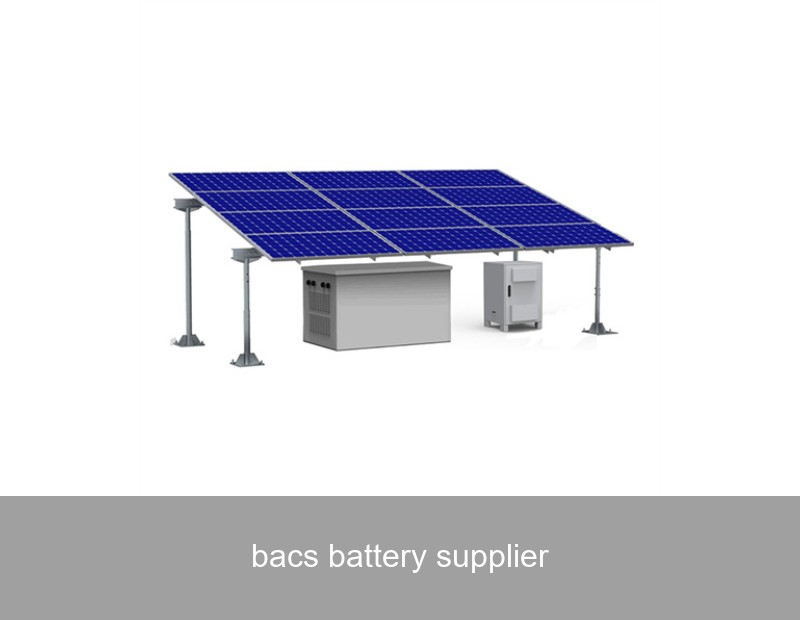
You've likely heard the buzz about battery storage. But if you're a business owner, facility manager, or a homeowner with significant energy needs, you're probably looking beyond a simple battery box. You're searching for a system that thinks, adapts, and optimizes. That's where the conversation shifts from just a "battery" to finding the right BACS battery supplier. BACS, or Building Automation and Control Systems, represent the intelligent brain that transforms passive storage into an active, profit-generating, and resilient asset. This guide will demystify what a modern BACS-integrated energy storage system is and how to select a supplier that delivers not just hardware, but true energy intelligence.
What is a BACS and Why is it a Game-Changer?
Think of a standard battery system as a powerful muscle. It can store and release energy, but it operates on simple, pre-set commands. A BACS is the sophisticated nervous system and brain for that muscle. In essence, a BACS battery supplier provides a solution that seamlessly integrates electrochemical storage with advanced software control. This system connects to your building's energy meters, local generation (like solar PV), the grid, and even weather forecasts. It makes real-time decisions: should it store solar excess, discharge to avoid peak grid tariffs, provide backup power, or participate in grid-balancing services? The BACS does this autonomously, maximizing financial return and operational reliability.

Image: A modern, integrated battery storage system with control interfaces. Credit: Unsplash
Beyond Basic Storage: The Intelligent Core of BACS
A top-tier BACS solution from a credible supplier will offer several key layers of intelligence:
- Predictive Analytics: Using weather and usage data to forecast generation and consumption, pre-charging the battery before a price spike or a cloudy period.
- Multi-Mode Operation: Seamlessly switching between self-consumption, time-of-use optimization, backup, and grid-service modes without manual intervention.
- Open Protocol Integration: The ability to "speak" to other building systems (HVAC, lighting) via protocols like Modbus, BACnet, or KNX, enabling holistic energy management. For instance, it can coordinate with an HVAC system to reduce load while the battery supports critical equipment.
- Remote Monitoring & Diagnostics: Offering you and the supplier a cloud-based dashboard for performance tracking, alerting, and preventative maintenance.
The Evolution of a BACS Battery Supplier
The role of a BACS battery supplier has dramatically evolved. They are no longer just equipment vendors; they are energy solution partners. The market, especially in Europe and North America, demands this. According to a 2023 IEA report on energy storage, behind-the-meter commercial and industrial storage is one of the fastest-growing segments, driven by rising electricity prices and the need for resilience. A leading supplier today must master three domains: battery chemistry and safety, power electronics (inverters), and sophisticated software development. This convergence is critical for delivering a reliable, UL/Certified and CE-compliant system.
A Real-World Case: The German Dairy Farm
Let's look at a concrete example from our target market. A medium-sized dairy farm in Bavaria, Germany, faced two problems: volatile electricity costs and the critical need for uninterrupted cooling for its milk storage. A simple solar-plus-storage system helped, but not optimally.
By working with a BACS battery supplier (in this case, Highjoule), the farm installed a 120 kWh battery system with advanced BACS. The system was integrated with the farm's 250 kWp solar array, the refrigeration compressors, and the grid connection point. The BACS was programmed with Germany's specific electricity tariff structure and the farm's 24/7 load profile.
| Metric | Before BACS | After BACS Implementation |
|---|---|---|
| Grid Energy Cost Savings | ~15% (from solar only) | 41% |
| Peak Demand Charge Reduction | None | 68% |
| Backup for Critical Cooling | Diesel Generator only | Seamless 8-hour battery backup |
| ROI Period | Estimated 9+ years | 5.2 years |
The intelligence made the difference. The BACS learns the compressor cycles and uses predictive charging to ensure the battery is full before the evening milking and cooling peak. It also strategically shaves peak loads by supplementing grid power during compressor startup, drastically reducing demand charges. This case, documented with customer consent, exemplifies the tangible value of an intelligent system over a basic one.
Choosing the Right BACS Battery Supplier: Key Considerations
Selecting a partner is crucial. Here’s a checklist:
- Proven Integration: Do they provide a single, pre-integrated solution, or are they piecing together components from different vendors? A unified system from a single BACS battery supplier reduces compatibility risk.
- Software Platform: Request a demo of their user interface. Is it intuitive? Does it provide actionable insights, or just raw data? Can it receive remote updates for new features?
- Compliance & Safety: Insist on full certifications for your region (e.g., UL 9540 in the US, CE with relevant directives in the EU). Ask about their battery management system (BMS) safety architecture.
- Service & Support: What is their remote monitoring capability? Do they offer performance guarantees or service-level agreements (SLAs)? The best suppliers stand by their system's performance.
The Highjoule Approach: Integrated Intelligence
At Highjoule, our journey since 2005 has been focused on mastering this exact convergence. We don't just supply batteries; we engineer intelligent energy ecosystems. Our H-IQ BACS Platform is the cornerstone of this approach. Pre-integrated with our high-cycle life lithium-ion battery cabinets and bi-directional inverters, the H-IQ Platform acts as the autonomous energy manager for your site.
For a commercial bakery in California, the H-IQ Platform manages a complex dance: it prioritizes using solar power for the ovens during the day, stores energy for the early morning baking shift before the sun is up, and avoids drawing grid power during the 4-9 pm peak period. It even provides "firm frequency response" to the California grid operator in milliseconds when called upon, creating an additional revenue stream. This is the level of sophistication a modern BACS battery supplier must deliver. We handle the complexity so our clients can enjoy the savings and reliability.

Image: Commercial solar and storage installation. Credit: Unsplash
What Does Your Future Energy Independence Look Like?
The question is no longer if you should consider energy storage, but how smart that storage needs to be. As you evaluate potential partners, ask them not just for a spec sheet, but for a simulation of how their system's intelligence will interact with your specific load profile, tariff, and sustainability goals. Can your prospective BACS battery supplier demonstrate that their system learns and adapts, or does it just follow a static schedule? The future of energy is adaptive, resilient, and intelligent. Is your infrastructure ready to meet it?
 Inquiry
 Online Chat