


Balcony Solar Panels in Germany: Your Personal Gateway to Energy Freedom
Have you ever looked at your sunny balcony or terrace and wondered if it could do more than host your morning coffee? In Germany, a quiet energy revolution is taking place right on people's balconies. Driven by rising electricity prices and a strong desire for energy self-sufficiency, thousands are turning to "Balkonkraftwerke" – plug-and-play balcony solar panels. But what exactly are they, and how can you ensure you're making a smart, safe, and efficient investment? Let's explore the phenomenon that's empowering German households, one balcony at a time.
Table of Contents
What Are Balcony Solar Panels? Demystifying the "Balkonkraftwerk"
Unlike traditional rooftop solar installations, balcony solar panels are compact, plug-in systems designed for easy self-installation. A typical setup includes one or two photovoltaic (PV) modules, a micro-inverter that converts the generated direct current (DC) into household alternating current (AC), and a secure plug to connect to a standard outdoor socket. The beauty lies in their simplicity: once plugged in, the system immediately starts feeding solar power into your home's circuit, directly offsetting electricity drawn from the grid from appliances like refrigerators, routers, and computers.
It's crucial to understand that these are supplemental power sources. They won't typically run your entire home, but they can significantly chip away at your base load—the constant, background energy consumption that occurs 24/7. Think of it as having a tiny, silent, sun-powered generator working tirelessly to lower your bill.
The Meteoric Rise in Germany: Data & Drivers
The adoption curve in Germany is nothing short of spectacular. But why here, and why now? Several powerful forces converge:
- Regulatory Tailwinds: Germany simplified the registration process. In many cases, a simple online notification to your grid operator and local authority is sufficient, removing a major bureaucratic hurdle.
- Economic Pressure: With European energy prices experiencing volatility, the payback period for a ~€500-€1,000 balcony system has shrunk to just a few years. The appeal is immediate and financial.
- Cultural Shift: There's a growing "energy autonomy" movement. People want to participate in the energy transition (Energiewende) directly, and balcony panels offer the most accessible entry point.
Let's look at the numbers. According to the German Federal Network Agency (Bundesnetzagentur), registrations for plug-in solar devices skyrocketed. While exact nationwide figures are aggregated with larger systems, industry estimates suggest several hundred thousand units were installed in 2023 alone, with projections showing continued explosive growth. This isn't a niche trend; it's mainstream energy behavior.
A Note on Safety and Standards
With great popularity comes the need for great responsibility. Reputable systems use a special plug-in device that prevents back-feeding into the public grid when the home's electricity demand is low. They also comply with the German VDE-AR-N 4105 standard. Always ensure your chosen system has this certification—it's non-negotiable for safety and insurance purposes.
Beyond Theory: The Real Impact on a Household Bill
Let's move from macro data to a micro, real-world example. Meet the Schmidt family in Munich.
- Household: 2-person apartment, south-facing balcony.
- System: 2 x 400W panels (800W peak), with a compatible 600W micro-inverter.
- Annual Production: Approximately 680 kWh (based on Munich's solar irradiance).
- Electricity Price: €0.35 per kWh (current average in Germany).
| Metric | Value | Explanation |
|---|---|---|
| Annual Energy Value | €238 | 680 kWh * €0.35/kWh |
| System Cost (approx.) | €850 | Including panels, inverter, mounting |
| Simple Payback Time | ~3.6 years | €850 / €238 per year |
After the payback period, the next 15+ years of production are essentially free electricity, providing a resilient buffer against future price hikes. The Schmidts now check their inverter's display with a sense of pride, knowing they are actively reducing their carbon footprint with every sunny day.

Image Source: Unsplash - Example of a balcony solar panel installation.
Choosing Your System: It's About the Ecosystem, Not Just the Panel
While the solar panel is the visible hero, the inverter is the intelligent brain, and the ecosystem is the supporting cast. Here’s what to consider:
- Panel Efficiency: Monocrystalline panels offer higher efficiency in limited space—key for balconies.
- Inverter Quality: This is where safety and efficiency are managed. Look for certified devices with good warranties.
- Monitoring & Integration: Can you track your production via an app? Could this system later work with a home battery?
This last point on integration is critical. A balcony solar system is a fantastic first step. But what happens on cloudy days or at night? Your journey towards true energy independence might not stop at the plug.
Highjoule's Role: From Balcony Power to Whole-Home Energy Intelligence
This is where a company like Highjoule, with nearly two decades of expertise in advanced energy storage, provides a compelling vision for the future. While we don't manufacture simple plug-and-play balcony kits, we see them as a vital component in a modern, distributed energy landscape.
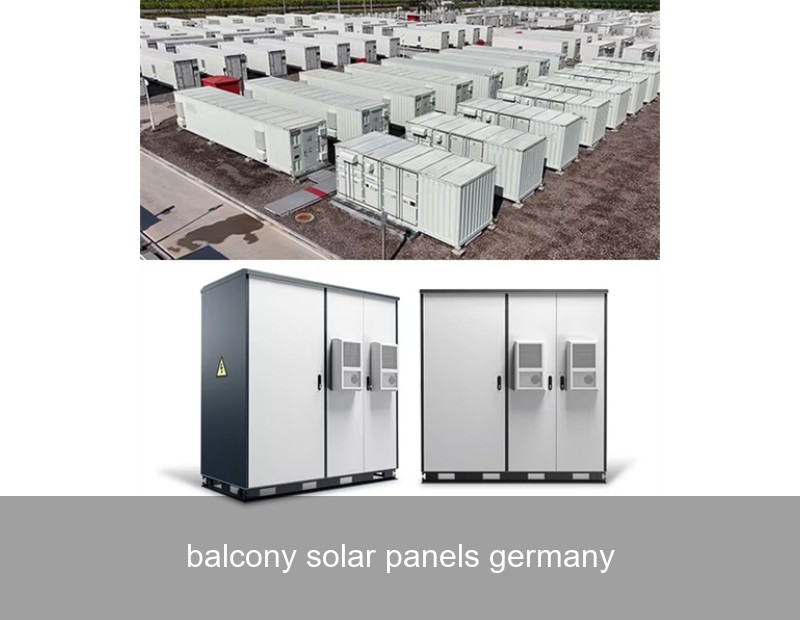
Imagine your balcony panels as your personal power plant. Now, imagine pairing that with an intelligent home battery system like the Highjoule HomePower. The solar energy you generate but don't use immediately during the day isn't just fed minimally into the grid; it's stored in your high-capacity, safe battery. Then, you can use that clean, free energy in the evening, dramatically increasing your self-consumption rate from maybe 30% with a plug-in system alone to over 70% or more.
For homeowners with larger roofs or businesses, Highjoule's commercial and industrial (C&I) storage solutions take this principle to scale, managing complex loads and maximizing renewable usage. Our systems are built on a foundation of safety, longevity, and smart software that learns and adapts to your consumption patterns. Think of it this way: your balcony panels start the conversation with solar energy; Highjoule's technology helps you have a complete, uninterrupted dialogue with energy independence.
Image Source: Unsplash - Example of a modern home battery storage unit.
Looking Ahead: What Questions Should You Ask Yourself?
The story of balcony solar panels in Germany is a testament to innovation meeting demand. It proves that the energy transition is not only about utility-scale wind farms; it's happening on our balconies, in our communities. As you consider joining this movement, ask yourself:
- Is my primary goal to reduce my bill today, or am I planning for a more comprehensive, resilient home energy system tomorrow?
- How does my "Balkonkraftwerk" fit into my long-term vision, potentially with an electric vehicle or a heat pump?
- Am I choosing components that are not only safe and certified but also compatible with future storage technology?
The journey to energy awareness starts with a single question, much like the one that might have brought you here. What will your first step be?
 Inquiry
 Online Chat