


Unlocking True Power Independence: Your Guide to a Solar Generator with a 240V Outlet
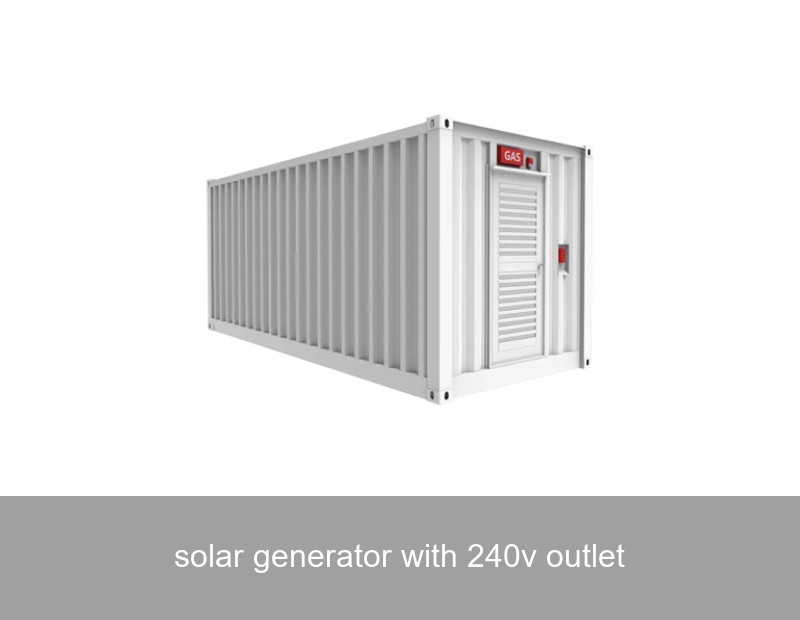
Imagine this: you’ve invested in a solar setup, ready to harness the sun's energy. But when you need to run your heavy-duty appliances—the well pump, the workshop tools, or even an EV charger—your standard solar generator just can't plug in. That's where the game-changer arrives: a solar generator with a 240V outlet. This isn't just about having backup power; it's about achieving true energy independence for your home, business, or remote site. Let's explore how this technology works and why it's becoming essential for modern energy resilience.
What Exactly is a Solar Generator with a 240V Outlet?
Let's clear up the terminology first. A "solar generator" is typically an all-in-one system that includes a battery, an inverter, a charge controller, and the ability to recharge from solar panels. Most consumer units offer standard 120V (in North America) or 230V (in Europe) household outlets. However, a unit with a dedicated 240V outlet incorporates a more powerful inverter capable of delivering split-phase or pure 240V AC power.
This higher voltage is crucial because many large appliances and machinery are designed to run on 240V for efficiency and performance. Without it, you simply cannot operate these essential devices during a grid outage or in an off-grid scenario.

Image Source: Unsplash (Representative image of high-power electrical outlet)
Key Components of a High-Power Solar Generator
- High-Capacity Battery (LiFePO4 Preferred): The energy reservoir, measured in kilowatt-hours (kWh). Lithium Iron Phosphate (LiFePO4) batteries, like those used by Highjoule, offer superior safety, longevity (6,000+ cycles), and stable power delivery.
- Pure Sine Wave Inverter (240V Capable): The brain that converts DC battery power to clean AC power. A pure sine wave output is mandatory for sensitive electronics and motor-driven appliances.
- MPPT Solar Charge Controller: Maximizes the energy harvested from your solar panel array, crucial for efficient recharging.
- Robust 240V NEMA Outlet: The physical interface, often a NEMA 14-50 or L6-30 receptacle, ready for heavy-duty plugs.
Why 240V Power is Non-Negotiable for Modern Energy Needs
The shift to electrification means our dependence on 240V circuits is growing, not shrinking. Think beyond the traditional clothes dryer. Today, it's about:
| Application | Typical Power Requirement | Why 240V is Essential |
|---|---|---|
| Electric Vehicle (EV) Charging (Level 2) | 7.2 kW - 11.5 kW | Cuts charging time from days to hours. Impossible on 120V. |
| Whole-House Heat Pumps | 3 kW - 8 kW | Runs the compressor efficiently for heating/cooling your entire home. |
| Water Well Pumps | 1 HP+ (≈ 1.5 kW+) | Provides necessary starting surge and running power for deep wells. |
| Power Tools & Workshop Equipment | 1.5 kW - 5 kW | Delivers full torque and prevents motor damage from undervoltage. |
According to the International Energy Agency (IEA), global EV sales exceeded 10 million in 2022, underscoring the rapid need for compatible, resilient charging infrastructure. A 240V solar generator future-proofs your energy system against this growing demand.
How to Choose the Right High-Power Solar Generator
Selecting a system isn't just about the outlet. It's about matching capability to your lifestyle or operational needs. Follow this logical ladder:
Step 1: Audit Your Critical 240V Loads
List the appliances you must run, their wattage (found on the nameplate), and estimated run-time. Don't forget starting surges, which can be 3-7 times the running wattage for motors.
Step 2: Calculate Your Energy & Power Budget
- Inverter Power (kW): Must exceed the surge requirement of your largest device and the combined running wattage of devices on simultaneously.
- Battery Capacity (kWh): Determines how long you can run those devices. For example, a 10kWh battery could run a 2kW well pump for about 5 hours (accounting for inverter efficiency).
Step 3: Prioritize Scalability and Professional Integration
For whole-house or commercial backup, a modular system that can be integrated with your main electrical panel via a transfer switch is vital. This is where professional-grade systems from providers like Highjoule excel, offering seamless integration that portable "power stations" cannot match.
Real-World Impact: A Case Study from a California Vineyard
Phenomenon: A family-owned vineyard in Sonoma County, California, faced frequent public safety power shutoffs (PSPS) during wildfire season. Their irrigation pumps (240V, 5HP), refrigeration units, and processing equipment were at risk, threatening an entire year's harvest.
Data & Solution: Their analysis showed a critical need for 15kW of continuous power and 40kWh of storage to sustain operations for 8-10 hour outages. They installed a Highjoule HPS Series Hybrid Power System, featuring a 20kW inverter with 240V split-phase output and 48kWh of LiFePO4 battery storage, paired with a 25kW existing solar array.
Outcome: During a 9-hour grid outage in October 2023, the system:
- Maintained uninterrupted operation of all critical 240V agricultural equipment.
- Preserved temperature-controlled storage for harvested grapes.
- Enabled the business to continue operations, avoiding an estimated $120,000 in potential lost product and revenue.
This case illustrates the tangible ROI of a correctly sized solar generator with a 240V outlet for commercial resilience.

Image Source: Unsplash (Representative image of solar panels in a vineyard)
The Highjoule Solution: Engineered for Demanding Applications
At Highjoule, we've been designing advanced energy storage systems since 2005. We understand that a true solar generator with 240V outlet capability is more than a product—it's a integrated power solution. Our systems are engineered for reliability, scalability, and intelligent management.
For residential and commercial clients in Europe and the U.S., our HPS (Hybrid Power System) Series is a prime example. It offers:
- Powerful 240V/230V Output: Scalable from 10kW to 100kW inverter power, handling the surge demands of heavy equipment.
- Modular LiFePO4 Battery Banks: Start from 10kWh and expand as your needs grow, ensuring a long service life and safety.
- Smart Energy Management System (EMS): Automatically prioritizes solar charging, manages grid interaction, and ensures your critical 240V loads are always powered during an outage.
- Professional Grid Integration: Designed for safe installation with automatic transfer switches by certified electricians, providing whole-home or critical-loads panel backup.
Our systems move beyond the concept of a portable generator, offering a permanent, silent, and zero-emission backbone for your energy independence. Learn more about our technology and design philosophy on the U.S. Department of Energy's resource page for efficient buildings.
The Future of High-Voltage Solar Backup
As IRENA highlights, the integration of renewables with flexible storage is the cornerstone of the energy transition. The future points towards bi-directional systems where your 240V-capable solar generator doesn't just power your home but can also intelligently support the grid or create microgrids with neighbors.
The question is no longer if you need backup power, but how capable that backup needs to be. Can your current plan power your life and livelihood when the grid goes down, or does it leave your most critical, high-power assets in the dark?
What's the one 240V appliance in your home or business that, if it stopped, would create the most urgent challenge for you?
 Inquiry
 Online Chat