


Finding the Best Cheap 12V 250Ah Solar Battery: A Smart Buyer's Guide
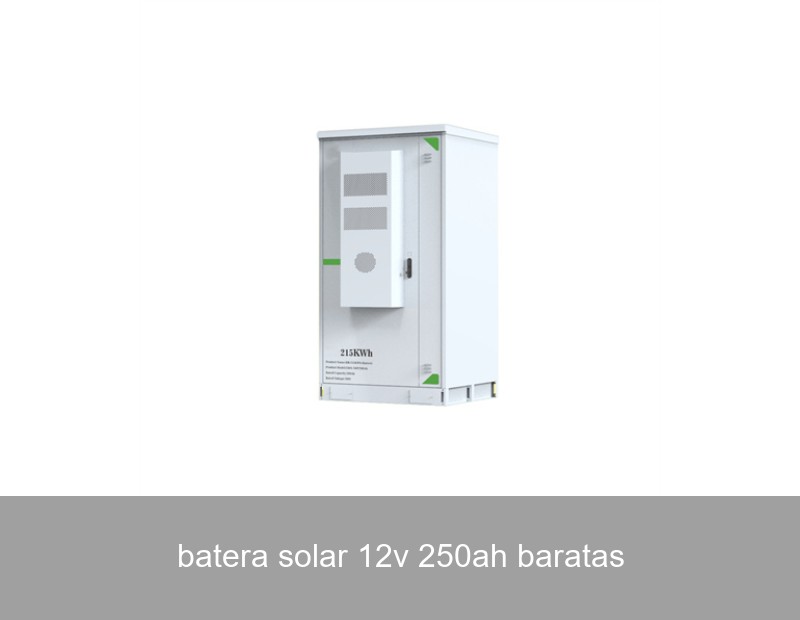
So, you're searching for a cheap 12V 250Ah solar battery. It's a common quest for homeowners and small business owners looking to harness solar power for energy independence. The promise of an affordable, high-capacity battery to store your precious solar energy is compelling. But here's the phenomenon many encounter: the initial excitement of a low price tag often fades when the battery's performance dwindles after just a season or two. Why does this happen, and what should you really be looking for? Let's demystify the world of solar batteries and ensure your investment truly powers your future.
Table of Contents
What Exactly is a 12V 250Ah Solar Battery?
Let's break it down. A 12V 250Ah solar battery is a deep-cycle battery, typically using Lead-Acid (Flooded, AGM, or Gel) or increasingly, Lithium Iron Phosphate (LiFePO4) chemistry. The "12V" is its nominal voltage, and "250Ah" (Amp-hours) measures its capacity. In simple terms, in theory, it could supply 250 amps for one hour, or 25 amps for 10 hours, before needing a recharge. This capacity is popular for medium-scale solar storage, like powering RVs, boats, off-grid cabins, or as part of a home energy backup system.
However, the term "solar battery" isn't just about capacity. It signifies a battery built to handle the unique demands of solar charging cycles—daily discharging and recharging from solar panels. This is where not all batteries are created equal.

Image Source: Unsplash - A professional solar battery installation.
The True Cost of a "Cheap" Battery: Data You Need to Know
The allure of a low upfront cost is understandable. But in the battery world, the real metric is Levelized Cost of Storage (LCOS)—the total cost of owning and operating the storage system over its lifetime, divided by its total useful energy output.
Consider this data: A budget-friendly 12V 250Ah Lead-Acid AGM battery might cost $300 and offer 500-800 cycles (to 50% Depth of Discharge). A premium LiFePO4 battery with the same capacity might cost $800 but deliver 4000-6000 cycles. While the lithium option costs more initially, its cost per cycle is dramatically lower. You might replace the AGM battery 5-6 times to match the lifespan of one lithium unit, not to mention the labor and downtime costs.
| Battery Type (12V 250Ah) | Estimated Upfront Cost | Typical Cycle Life (to 50% DoD) | Approx. Total Energy Delivered Over Life | Key Consideration |
|---|---|---|---|---|
| Economy Lead-Acid (AGM) | $250 - $400 | 500 - 800 cycles | ~750 kWh | Low entry price, high long-term replacement cost |
| Premium LiFePO4 | $700 - $1000 | 4000 - 6000 cycles | ~4500 kWh | Higher initial investment, superior lifetime value |
As you can see, the cheap 12v 250ah battery might end up being the most expensive choice over a 10-year period. This is the core insight many miss during their initial search.
Key Factors to Evaluate Beyond the Price Tag
When assessing a solar battery, consider these critical technical and performance factors:
- Chemistry & Cycle Life: LiFePO4 batteries are the new standard for solar due to their longevity, safety, and depth of discharge capability (often 80-100% usable vs. 50% for lead-acid).
- Depth of Discharge (DoD): A battery rated for 250Ah at 100% DoD provides more usable energy than one limited to 50% DoD.
- Charge/Discharge Efficiency: High-quality batteries lose less energy as heat during charging. Lithium batteries are typically >95% efficient, while lead-acid can be 80-85%.
- Built-in Battery Management System (BMS): A quality BMS is non-negotiable. It protects the battery from overcharge, deep discharge, overheating, and balances cells. Many "cheap" options have minimal or faulty BMS, leading to premature failure.
- Warranty & Support: A strong warranty (e.g., 10 years on LiFePO4) reflects manufacturer confidence. Does the supplier offer technical support?
Real-World Case Study: The Off-Grid Cabin in Colorado, USA
Let's look at a concrete example. In 2021, a family upgraded their off-grid cabin in the Rocky Mountains. Their old lead-acid bank (four 12V 250Ah AGM batteries) needed replacement after just 3 years due to sulfation from inconsistent solar charging in winter.
Their Goal: Reliable year-round power for lights, fridge, water pump, and electronics (approx. 3 kWh daily load).
Initial "Cheap" Path Considered: They almost purchased a new set of economy AGM batteries for $1,200.
Smart Pivot: After analysis, they invested in a modular 48V LiFePO4 system from a reputable provider. While the initial cost was $3,500, the data projected a clear advantage:
- Cycle Life: 6000 cycles vs. 800 for AGM.
- Usable Capacity: Nearly 100% of rated capacity vs. 50%.
- Space & Weight: 70% smaller and lighter.
- Maintenance: Zero maintenance vs. regular watering and equalizing charges.
Three years later, their system performance shows no degradation. They avoided two potential AGM replacements already, saving over $2,400 in battery costs alone, not to mention the hassle and risk of power outages. This case underscores that value, not just price, defines a truly cheap 12v 250ah solar battery in the long run.
For more on battery lifecycle analysis, see this resource from the U.S. Department of Energy.
A Smarter Solution: Highjoule's Integrated Energy Storage Approach
At Highjoule, we understand that a battery is not an island. It's the heart of a broader energy ecosystem. Since 2005, we've moved beyond simply selling components to providing intelligent, integrated power solutions. While we offer robust battery modules suitable for diverse applications, our real value lies in the system intelligence.
For residential and small commercial clients considering a 12V 250Ah setup, we often recommend evaluating a system-level upgrade. Our HES-I Series integrated storage units combine high-density LiFePO4 batteries with a hybrid inverter, MPPT solar charge controller, and advanced energy management software in one sleek cabinet. This eliminates compatibility issues and optimizes every watt from your solar panels.
Why is this relevant to your search for a battery? Because pairing a premium battery with a poorly matched charge controller can ruin it. Our systems are designed holistically. For instance, our AI-powered energy management software can predict weather patterns and adjust charging strategies to maximize battery life—a feature no standalone "cheap" battery can offer.
For larger-scale needs, our commercial and microgrid solutions provide scalable, containerized storage that prioritizes longevity and total cost of ownership. We believe the most affordable battery is the one you only buy once.

Image Source: Unsplash - Modern home with solar and storage.
Making the Right Choice for Your Energy Needs
Before you buy, ask yourself these questions:
- What is my daily energy consumption in kWh? (This determines if 12V 250Ah - roughly 3kWh usable for lead-acid, 6kWh for LiFePO4 - is even sufficient).
- What is the total system voltage (12V, 24V, 48V)? Higher voltage systems are more efficient for larger installations.
- Am I prepared for the maintenance and monitoring required by some battery types?
- Does my inverter/charge controller have the correct charging profiles for my chosen battery chemistry?
Understanding these points will guide you toward a solution that offers genuine value. For authoritative, independent advice on system sizing, the National Renewable Energy Laboratory (NREL) offers excellent educational resources.
Your Next Step Towards Reliable Solar Energy
The journey to energy independence is exciting. While the search for a cheap 12v 250ah solar battery is a logical starting point, we invite you to reframe the question: How can I secure the most reliable and cost-effective energy storage solution for my home or business over the next decade? The answer often lies not in a single component, but in a harmonious, intelligent system.
What specific energy challenge are you hoping to solve with your solar battery system, and how can a more holistic view of performance and lifespan change your investment decision today?
 Inquiry
 Online Chat