


Unlocking Energy Independence: A Deep Dive into the SAKO Lithium Battery 48V 200Ah
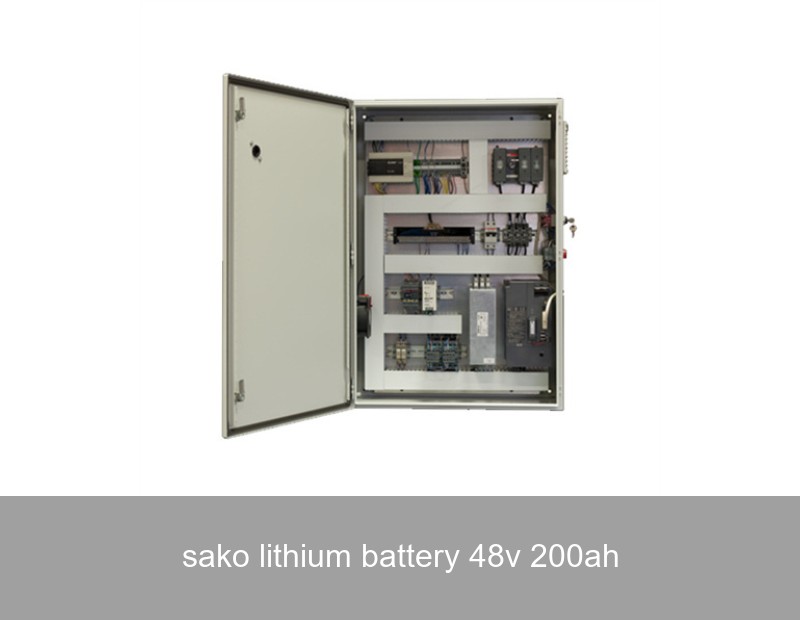
Have you ever calculated how much power your home or business truly needs to run smoothly when the grid goes down? Or wondered what it takes to make a meaningful shift to solar energy that lasts through the night? The answer often lies in a single, powerful component: the energy storage system. At the heart of many modern, reliable setups is a workhorse like the SAKO lithium battery 48V 200Ah. This isn't just a battery; it's a substantial reservoir of power, typically offering around 9.6 kWh of usable energy. But what makes it such a sought-after solution for homeowners and businesses across Europe and the U.S. seeking energy resilience and cost savings? Let's explore the technology, the real-world benefits, and how integrating such a system with a provider like Highjoule can transform your energy landscape.
Table of Contents
- The Rise of 48V Energy Storage: More Than Just a Trend
- SAKO 48V 200Ah Specs Decoded: What the Numbers Really Mean
- Why Lithium Iron Phosphate (LFP) is the Gold Standard
- From Theory to Reality: A German Case Study in Energy Autonomy
- Beyond the Battery: The Highjoule Advantage for Your System
- Making the Choice: Is a 48V 200Ah System Right for You?
The Rise of 48V Energy Storage: More Than Just a Trend
You might be asking, "Why 48 volts?" In the world of residential and commercial energy storage, 48V systems have emerged as the sweet spot. They strike a perfect balance between safety, efficiency, and power. Compared to lower-voltage systems, they reduce current flow for the same power output, meaning thinner, less expensive wiring and lower energy losses. For a SAKO lithium battery 48V 200Ah, this translates into a system that can efficiently handle the substantial loads of a modern household or small business—from refrigerators and HVAC systems to office equipment and machinery—without unnecessary complexity or cost.

Image Source: Unsplash - A modern home energy system combining solar and storage.
SAKO 48V 200Ah Specs Decoded: What the Numbers Really Mean
Let's break down the key specification: 48V 200Ah. Voltage (V) is the electrical pressure, and Ampere-hours (Ah) is the capacity—how much "fuel" is in the tank. Multiply them (V x Ah = Wh) to get the total energy capacity. So, 48V x 200Ah = 9,600 Watt-hours, or 9.6 kWh. For context, the average U.S. home uses about 30 kWh per day. This means a fully charged SAKO 48V 200Ah battery could cover a significant portion of a home's critical nighttime or backup load. It's a substantial capacity designed for serious energy users.
Key Features to Look For:
- Depth of Discharge (DoD): Quality lithium batteries like these often allow 90-100% DoD, meaning you can use almost all of the 9.6 kWh.
- Cycle Life: A critical metric. Look for ratings of 6,000+ cycles at 80% depth of discharge, indicating a lifespan of 15+ years with daily use.
- Built-in Battery Management System (BMS): The brain of the battery, protecting it from overcharge, deep discharge, and overheating.
Why Lithium Iron Phosphate (LFP) is the Gold Standard
Most high-quality SAKO lithium battery 48V 200Ah units utilize Lithium Iron Phosphate (LFP) chemistry. Here’s why that matters for your safety and investment:
| Feature | LFP Chemistry | Traditional Lithium-ion (NMC) |
|---|---|---|
| Thermal & Chemical Stability | Exceptionally high, much safer | Lower, requires more robust management |
| Cycle Life | Typically longer (6,000+ cycles) | Shorter (2,000-4,000 cycles) |
| Operating Temperature Range | Wider, performs better in varied climates | Narrower |
LFP's inherent stability makes it an ideal choice for stationary storage, where safety and longevity are paramount. It's the technology trusted by leading providers, including Highjoule, for our core residential and commercial storage solutions.
From Theory to Reality: A German Case Study in Energy Autonomy
Let's move beyond specs to a real-world application. Consider a medium-sized bakery in Bavaria, Germany. Facing rising electricity costs and a desire to reduce its carbon footprint, the owner installed a 25 kW rooftop solar array. However, surplus energy produced at midday was being exported to the grid at low rates, while the ovens and refrigeration needed power in the early morning and evening.
The solution was integrating a robust storage system built around a SAKO lithium battery 48V 200Ah bank (four units in parallel for ~38 kWh of storage) with a Highjoule intelligent energy management system. The results after one year were compelling:
- Grid Independence: Increased self-consumption of solar power from 35% to over 80%.
- Cost Savings: Reduced grid electricity purchases by 65%, achieving a return on investment in under 7 years.
- Backup Power: The system provides seamless backup during grid outages, ensuring no spoilage of perishable goods.
This case mirrors findings from the Fraunhofer ISE, which consistently shows that solar-plus-storage is now cost-competitive with retail electricity in many parts of Europe.
Beyond the Battery: The Highjoule Advantage for Your System
While a reliable battery like the SAKO 48V 200Ah is the cornerstone, it's only one part of a high-performing energy ecosystem. This is where Highjoule's expertise as a global system provider becomes critical. We don't just supply components; we deliver integrated, intelligent power solutions.
Our H-Joule Nexus residential and commercial systems are designed to seamlessly integrate with major battery brands and solar inverters. Our proprietary energy management software acts as the conductor of your personal energy orchestra, dynamically deciding when to store solar energy, power your home, or sell back to the grid based on weather forecasts, usage patterns, and real-time tariffs.

Image Source: Unsplash - A close-up of a modern, wall-mounted battery storage unit.
For larger applications, our Microgrid Controller can manage multiple generation sources (solar, wind, generator) and storage banks, creating resilient energy islands for communities or industrial facilities. Choosing Highjoule means investing in a future-proof system where every component, from the SAKO lithium battery 48V 200Ah to the user interface, is optimized for performance, safety, and longevity.
Making the Choice: Is a 48V 200Ah System Right for You?
So, how do you know if this capacity is your ideal match? Ask yourself these questions:
- What are my critical loads during a power outage (e.g., sump pump, medical equipment, refrigeration)?
- What is my average daily electricity consumption, and how much do I want to offset with solar + storage?
- Am I looking to participate in grid services or time-of-use rate arbitrage?
A single 9.6 kWh battery is a powerful start for many homes. For larger needs, systems can be easily scaled by connecting multiple units. The key is a professional assessment.
As you contemplate taking control of your energy future, what specific challenge—be it unpredictable utility bills, grid instability, or a commitment to sustainability—is driving you to consider a solution like the SAKO lithium battery 48V 200Ah today?
 Inquiry
 Online Chat