


How Much Does a Lithium Battery Cost? A Complete Breakdown for Home and Business
You've decided to explore energy independence. Maybe it's the rising electricity bills in Europe, the grid instability in California, or simply a desire to power your home or business with clean solar energy. Naturally, the question arises: how much does a lithium battery cost? The answer, like the technology itself, isn't a single number. It's a matrix of capacity, power, chemistry, and the intelligence of the system surrounding it. This guide will demystify the true cost of lithium battery storage, moving beyond the price tag per kilowatt-hour to the real value of reliable, sustainable power.
Table of Contents
The Price Puzzle: It's More Than Just a Battery
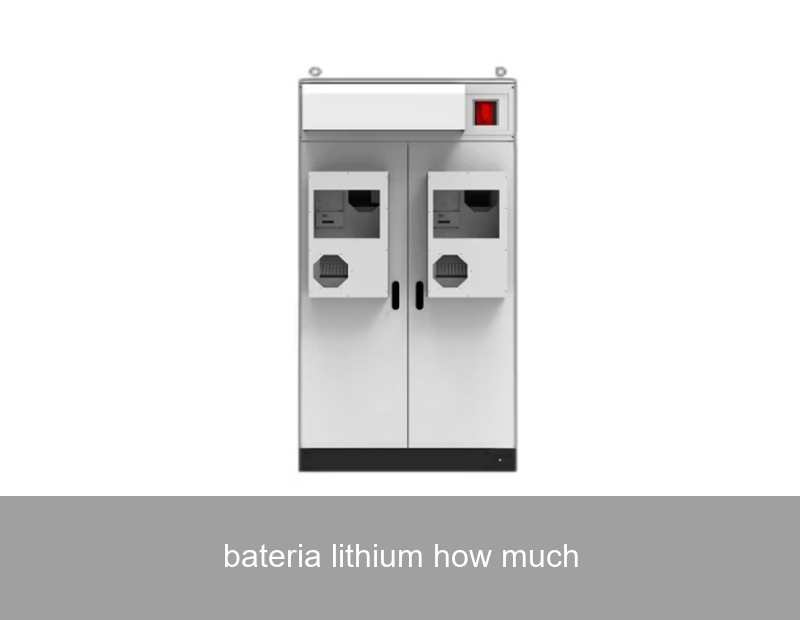
Ask "how much is a lithium battery?" and you might get quotes ranging from €3,000 to over €30,000. Why the vast difference? Think of it like buying a car. The cost isn't just the engine (the battery cells); it includes the transmission, safety features, software, and brand reputation. A standalone battery module has a price, but a fully integrated Battery Energy Storage System (BESS) delivers the value. This system includes the lithium-ion cells, a sophisticated Battery Management System (BMS) for safety and longevity, an inverter to convert power, thermal management, and critical installation and integration services.

The market has seen a dramatic cost decline. According to BloombergNEF, the volume-weighted average price for a lithium-ion battery pack fell 82% between 2013 and 2022 (BloombergNEF, 2021). However, recent supply chain fluctuations have shown that price is only one part of a more complex equation focused on quality, safety, and total lifecycle value.
Key Cost Factors: Breaking Down the Components
To understand your specific quote, you need to know what drives the cost. Here are the primary levers:
1. Capacity (kWh): Your Energy "Fuel Tank"
This is how much energy the battery can store, measured in kilowatt-hours (kWh). It determines how long you can power your loads during an outage or after sunset. Residential systems typically range from 5 kWh to 20+ kWh, while commercial systems can scale into the megawatt-hour (MWh) range.
2. Power (kW): Your Energy "Highway"
This is the rate at which the battery can deliver electricity, measured in kilowatts (kW). High-power needs, like starting heavy machinery or an air conditioner, require a battery with a high continuous and peak power rating. A system with ample capacity but insufficient power is like a large fuel tank with a tiny hose—it can't deliver energy fast enough when you need it most.
3. Chemistry and Cycle Life
Not all lithium is equal. Lithium Iron Phosphate (LFP) has become the dominant chemistry for stationary storage due to its superior safety, longer cycle life (often 6,000+ cycles), and excellent stability, even if its energy density is slightly lower than Nickel Manganese Cobalt (NMC). A battery with a 10-year or 15-year warranty, backed by a robust cycle life, offers a much lower cost per cycle over its lifetime.
4. System Integration and Intelligence
A premium system like those from Highjoule integrates advanced software for energy management. This "brain" allows for smart scheduling—charging from solar or off-peak grid power and discharging during expensive peak hours—directly translating to faster ROI. This intelligent layer is a critical part of the system's value, not just an add-on.
| Application | Typical Capacity Range | Estimated Installed Cost Range* | Key Drivers |
|---|---|---|---|
| Residential (with Solar) | 5 - 15 kWh | €4,000 - €15,000 | Brand, inverter compatibility, smart features, installation complexity. |
| Commercial & Industrial | 50 kWh - 2 MWh+ | €300 - €600 / kWh | Scale, grid interconnection fees, electrical infrastructure upgrades, use case (peak shaving, backup). |
| Microgrid / Utility-Scale | 5 MWh+ | €200 - €400 / kWh | Extreme scale, long-duration storage requirements, complex control systems. |
*Costs are highly variable by region, project specifics, and market conditions. These are illustrative ranges.
The Real Cost: From Purchase Price to Lifetime Value
The savvy buyer looks at Levelized Cost of Storage (LCOS) – the total cost of owning and operating the storage system per unit of electricity discharged over its lifetime. Factors that improve LCOS include:
- Longer Warranty & Cycle Life: More usable energy over time.
- Higher Efficiency: Loses less energy during charge/discharge (Highjoule systems often exceed 95% round-trip efficiency).
- Lower Degradation: Maintains more of its original capacity over 10 years.
- Smart Software: Maximizes revenue or savings through automated optimization.
Choosing a cheaper system with lower efficiency, a shorter warranty, and basic software often results in a higher LCOS. You pay less upfront but get significantly less value over 15 years.
A Real-World Case: The German Bakery
Let's ground this in data. A medium-sized bakery in Bavaria, Germany, faced high electricity costs, especially during early morning operational peaks. They installed a 120 kWh Highjoule PrimeLine C&I system paired with an existing rooftop solar array.
- Phenomenon: High demand charges and grid dependency.
- Data: The system cost approximately €65,000 (before incentives). It was programmed for peak shaving and solar self-consumption maximization.
- Case Result: Within the first year, the bakery reduced its grid peak demand by 85% and increased its solar self-consumption from 35% to over 80%. The combined savings on energy bills and demand charges led to a projected payback period of under 7 years. The system also provides backup power for critical refrigeration, protecting inventory.
- Insight: The business case wasn't just about "battery cost." It was about the system's intelligence to target the bakery's specific cost drivers (demand charges) and its robust design for daily, deep cycling—turning an capital expense into a strategic investment with a clear ROI.

Beyond the Battery: The Highjoule Advantage
Since 2005, Highjoule has evolved from a battery innovator to a global provider of intelligent energy ecosystems. We understand that the question "how much does a lithium battery cost?" is really a question about value, reliability, and partnership. Our answer is a suite of products and services designed to deliver that value precisely:
Highjoule Product Lines
- HomePower+ Series: For residential users, our all-in-one units combine LFP battery, hybrid inverter, and AI-driven energy management in one sleek cabinet. They are designed for seamless integration with new or existing solar and are scalable to match growing family needs.
- PrimeLine C&I Series: For businesses and industry, these modular, rack-mounted systems offer unparalleled flexibility and power. Their advanced BMS and compatibility with energy management platforms enable critical applications like peak shaving, backup power, and participation in grid services.
- MicroGrid Core: Our containerized, utility-grade solutions are the building blocks for community resilience and off-grid projects, integrating storage, control, and dispatch for complex multi-source energy networks.
The Highjoule Service Promise
Our cost quote includes more than hardware. It encompasses site assessment, system design, professional installation, grid compliance support (a crucial factor in the US and EU), and ongoing monitoring via our Highjoule Energy Hub platform. We provide the certainty that your system will perform as promised, safely and efficiently, for decades. You're investing in a partnership for energy resilience.
For deeper technical insights into battery safety and performance standards, organizations like the U.S. Department of Energy provide valuable research resources.
Your Energy Future: What's Your Priority?
The journey to answering "how much does a lithium battery cost?" begins with your own goals. Is your primary driver financial savings through bill management, unwavering backup power for your home office or critical business operations, or achieving a specific sustainability target by maximizing your renewable energy use?
The most effective systems are designed with these priorities at the core. So, we leave you with this: What single event—a blackout, a shocking utility bill, or a sustainability goal—would finally make investing in your own energy independence an urgent priority?
 Inquiry
 Online Chat